College Interview Prep: The Confident Applicant Guide
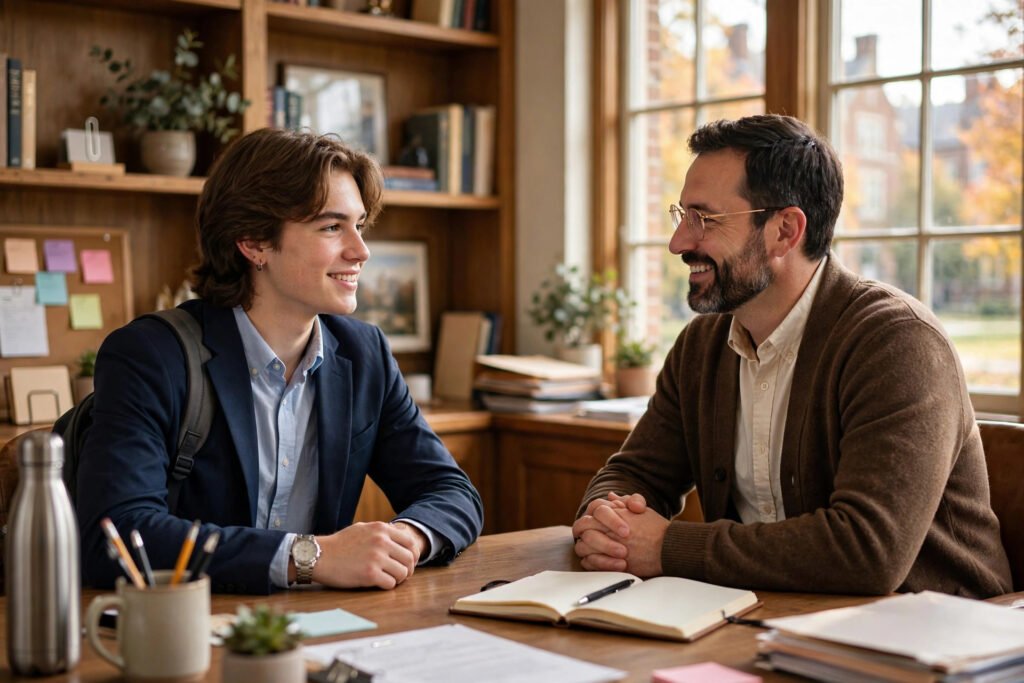
The email arrives: “We’d like to invite you to interview.” Your stomach drops. For many American students, the college interview is their first real professional evaluation — 30 to 45 minutes where a stranger decides whether you’re as interesting as your application claims. The good news: college interviews are far more learnable than they feel, most are conversational rather than interrogational, and preparation transforms them completely.
This guide covers what college interviews actually are (and aren’t), how to prepare your stories, what to wear, the questions you’ll face, and the follow-up that most applicants skip.
What the interview actually is
First, calibrate: for most American colleges, the interview is a small positive factor, not a make-or-break exam. Alumni interviews (the most common type, offered by schools like Harvard, Yale, Princeton, and many liberal arts colleges) are typically informational and evaluative in gentle measure — the alum writes a report, but it rarely overrides the academic record. On-campus interviews with admissions staff can carry slightly more weight. Some programs — notably BS/MD tracks, honors colleges, and scholarship competitions — run genuinely selective interviews where performance matters more.
What interviewers are actually assessing: intellectual curiosity (do you light up talking about ideas?), fit with the school’s culture, maturity and self-awareness, and communication skills. They’re not testing knowledge — there are no right answers, only revealing ones. The student who speaks thoughtfully about a genuine passion beats the student reciting rehearsed perfection every time.
Preparation: the story inventory
Great interviews run on stories, not adjectives. “I’m passionate about biology” is forgettable; the story of the summer you spent cataloging pond microorganisms and what it taught you about patience is memorable. Before the interview, prepare 5–7 stories covering:
- An intellectual passion (a class, book, project, or idea that genuinely excites you)
- A challenge you overcame (academic, personal, or extracurricular)
- A leadership or teamwork experience (with specific details, not just titles)
- Something you failed at and what you learned
- Why this specific college (concrete reasons — programs, professors, culture — not “great reputation”)
- What you’d contribute to campus (specific, not generic “diversity of thought”)
- A question or curiosity you’re currently pursuing
Practice telling each in 90 seconds — concise, vivid, with a point. The STAR structure (Situation, Task, Action, Result) keeps stories tight. Rehearse out loud, not in your head; your mouth needs the practice. The delivery skills overlap heavily with general speaking ability — see how to improve your public speaking skills for the mechanics of confident delivery.
Questions you’ll actually be asked
“Tell me about yourself.” Not your life story — a 60–90 second narrative arc: where you’re from, what drives you intellectually, and what you’re looking for in college. End with forward momentum.
“Why this college?” The most important question. Generic answers (“great academics, beautiful campus”) signal you haven’t done homework. Name specific programs, professors, research opportunities, or campus traditions — and connect them to your interests. This answer alone separates prepared applicants from the rest.
“What are you reading / what’s your favorite class?” They’re testing intellectual vitality. Pick something you genuinely care about and explain why — enthusiasm with reasoning beats impressive-sounding titles you can’t discuss.
“Tell me about a challenge.” Choose something real with a genuine lesson — not humblebrags (“I work too hard”). Show self-awareness and growth.
“What questions do you have for me?” Always have 3–4 ready — about the interviewer’s own experience (“What surprised you most about attending?”), campus culture, or academic opportunities. “No questions” reads as disinterest, and it wastes your best chance to learn what the brochures never tell you. Never ask anything Googleable.
Logistics: format, dress, and etiquette
Format: alumni interviews often happen at coffee shops or over video — both fine. For video: test tech beforehand, frame yourself well-lit from the front, and look at the camera (not the screen) when speaking. For in-person: arrive 10 minutes early, bring nothing you don’t need.
Dress: business casual — neat, comfortable, yourself at your best. You don’t need a suit; you need to look like someone who takes the meeting seriously. When in doubt, slightly overdress rather than underdress. For broader interview-dress guidance, see how to dress for a job interview in a creative field — the principles transfer.
Etiquette: firm handshake (or warm video greeting), phone silenced and out of sight, thank the interviewer for their time at the start and end, and send a thank-you email within 24 hours — brief, specific (reference something you discussed), and genuine. The thank-you note is the most-skipped step and the easiest differentiator.
Mistakes that sink interviews
Reciting your resume. They’ve read it. The interview is for what’s between the lines — personality, curiosity, fit.
Badmouthing your school or teachers. Instant red flag — interviewers wonder what you’ll say about their college later.
Over-rehearsed perfection. Polished to the point of robotic reads as inauthentic. Prepared but conversational wins.
Disparaging other colleges. Especially the interviewer’s rivals — just don’t.
Having no questions. Covered above, but worth repeating: it’s the most common unforced error.
Conclusion
Preparing confidently for a college interview means: understanding it’s a conversation about fit and curiosity (not an exam), building a story inventory of 5–7 genuine 90-second stories, nailing “why this college” with specifics, handling logistics professionally, and sending a thoughtful thank-you within 24 hours. The prepared applicant doesn’t just perform better — they feel better walking in, and that confidence is visible. You’ve earned the interview; now earn the impression.
After the interview: what happens next
Once the conversation ends, your work isn’t quite done. Send that thank-you email within 24 hours — then let go. Alumni interviewers typically submit reports within a week or two, and admissions offices won’t share feedback regardless of outcome. Don’t read tea leaves into the interviewer’s friendliness; warm interviewers reject and reserved ones advocate. If the school allows updates to your application, a brief note about a major new achievement is appropriate — but don’t pester admissions with repeated contacts. One polished follow-up, then patience: the decision timeline is theirs, and confident applicants wait it out rather than anxiously circling. For authoritative guidance, see the College Board and the NCES College Navigator.
Frequently Asked Questions
How important is the college interview?
For most colleges, it’s a small positive factor — rarely decisive. Alumni interviews are typically gentle evaluations of fit and curiosity. Selective programs (BS/MD, honors colleges, major scholarships) weigh interviews more heavily.
What should I wear to a college interview?
Business casual — neat, comfortable, and authentic to you. No suit required; just look like someone taking the meeting seriously. When in doubt, slightly overdress.
How do I answer “why this college”?
With specifics: named programs, professors, research opportunities, or traditions connected to your interests. Generic praise (“great reputation”) signals lack of preparation. Research deeply before the interview.
Should I bring anything to a college interview?
Bring nothing required — but having your story inventory rehearsed, 3–4 questions prepared, and (for in-person) arriving 10 minutes early covers it. A portfolio is only relevant for arts programs that request one.
How do I follow up after a college interview?
Send a brief thank-you email within 24 hours: thank them for their time, reference something specific you discussed, and reaffirm your enthusiasm. It’s the most-skipped step and an easy differentiator.