Cat Losing Belly Hair in Patches? Causes and Treatment Guide

You notice it during a belly rub: a thinning patch on your cat’s tummy, then a genuinely bald spot, then symmetrical bare patches spreading up the inner legs. Your cat is losing hair in patches on her belly — and unlike normal shedding, this isn’t growing back. Before you panic about mange or something exotic, know this: in American house cats, belly hair loss has a short list of usual suspects, and the pattern of the loss tells you a lot about which one you’re dealing with. Here’s how to read the signs and what to do about each cause.
First Distinction: Falling Out vs. Pulled Out
This is the most important diagnostic fork, and your vet will ask about it first. Is the hair falling out on its own (leaving smooth skin, possibly with flakes or redness), or is the cat actively removing it? Look closely at the bald areas: chewed or barbered hair has blunt, stubbly ends — the cat has been biting or licking it off. Naturally shed hair loss leaves smooth skin with fine regrowth or none. Check for evidence: does she groom the area obsessively? Are there hairballs increasing? Blunt stubble means over-grooming; smooth bare skin points to a follicle problem. This single observation narrows the field enormously.
Cause #1: Over-Grooming (Psychogenic or Pain-Related Alopecia)
The most common cause of belly baldness in indoor cats. Cats over-groom the easily reached belly and inner legs for two main reasons:
Stress and anxiety. Over-grooming is the feline equivalent of nail-biting — a self-soothing displacement behavior. Triggers: new pets, new baby, moving, construction noise, inter-cat conflict, boredom in under-stimulated indoor cats. The skin underneath usually looks normal (maybe slightly pink) — no redness, no flakes, just barbered stubble. Pattern: symmetrical, belly and inner thighs, the areas easiest to reach.
Pain. Cats lick what hurts. Bladder inflammation, urinary discomfort, or abdominal pain can manifest as belly over-grooming — the cat is trying to soothe an internal ache. Clues: the over-grooming started alongside litter box changes, vocalization, or appetite shifts. This is why “just stress” should never be assumed without ruling out medical causes — particularly urinary issues, which are common and sometimes urgent.
Addressing it: for stress, identify and reduce the trigger (more on this below); Feliway diffusers, predictable routines, and environmental enrichment help. For suspected pain, vet visit promptly. Learning to read feline stress accurately matters — the same skill as recognizing anxiety versus ordinary stress helps you distinguish a boredom habit from genuine distress.
Cause #2: Allergies and Skin Disease
Feline allergies — environmental (dust mites, pollens), food sensitivities, or flea allergy — commonly cause itchy skin that the cat grooms into baldness. Distinguishing features: the skin may show redness, small scabs (especially around the head and neck with flea allergy), or darkened thickened areas. Flea allergy deserves special mention: a single flea bite can trigger weeks of itching in allergic cats, and indoor cats get fleas more often than owners believe. Year-round flea prevention isn’t optional, even for indoor cats.
Other skin causes: ringworm (a fungal infection, not a worm — look for scaly, circular patches, and note it’s contagious to humans), bacterial skin infections secondary to scratching, and hormonal imbalances (less common). Diagnosis usually needs a vet visit: skin scrapings, fungal culture, or cytology identify the specific culprit. Supporting skin resilience helps overall — foods that support healthy skin and omega fatty acid supplements benefit cats’ coats too, though they’re adjuncts, not cures.
Cause #3: Hormonal and Systemic Issues
Less common but important: hyperthyroidism, Cushing’s-like conditions, and sex hormone imbalances can cause symmetrical hair loss. Pattern clue: hormonal hair loss is usually symmetrical and non-itchy — the cat isn’t bothered, the hair is just gone. If your cat is losing belly hair without any over-grooming behavior and seems otherwise normal, hormonal or systemic causes move up the list, and bloodwork becomes the diagnostic tool. Senior cats with new symmetrical alopecia warrant a full senior blood panel.
What to Do: The Step-by-Step Plan
Step 1: Observe for a week. Note the pattern (symmetrical? which areas?), the skin condition (red? flaky? normal?), grooming behavior (obsessive? absent?), and any concurrent changes (appetite, litter box, behavior). Photos help track progression.
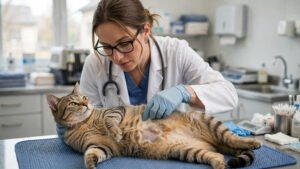
Step 2: Vet visit. Belly hair loss that persists beyond a couple of weeks, is spreading, or comes with skin changes, itching, or behavior changes deserves diagnosis — not guesswork. Expect: physical exam, skin evaluation, possibly skin scraping/cytology/fungal culture, and bloodwork if hormonal causes are suspected. VCA’s overview of feline hair loss causes and PetMD’s cat alopecia guide describe the same workup. Bring your observations; “symmetrical belly barbering, normal skin, started after we moved” is a diagnostic shortcut.
Step 3: Treat the cause, not the symptom. Anti-itch medication without addressing fleas fails. Anxiety medication without reducing the stressor fails. The treatment must match the diagnosis — which is why the vet visit comes before the internet remedies.
Step 4: Support recovery. While treating: ensure flea prevention is current, enrich the environment (stress reduction helps regardless of cause), avoid over-bathing (dries feline skin), and monitor regrowth — hair typically regrows in 4–8 weeks once the cause resolves, though full coat restoration takes a few months.
When Hair Loss Needs Urgent Attention
Most belly hair loss is a gradual issue for a routine vet visit — but a few presentations shouldn’t wait. Sudden, rapid hair loss over days (not weeks) suggests an acute trigger worth investigating promptly. Hair loss with skin lesions — open sores, bleeding, foul odor, or significant swelling — needs same-week attention; secondary infections can escalate quickly. Hair loss plus systemic signs — lethargy, appetite loss, vomiting, or hiding — means the skin is the messenger for something internal, and the internal issue is the priority.
Suspected ringworm deserves prompt diagnosis because it’s contagious to humans and other pets — don’t wait and wonder while spores spread through the house. And any hair loss in a kitten under 6 months warrants a quicker visit, since kittens have less reserve and parasites or infections hit them harder. The general rule: gradual, symmetrical, non-itchy thinning can wait for a scheduled appointment; anything sudden, lesioned, or combined with illness signs moves up the timeline. When in doubt, call — describing the pattern to the clinic helps them triage correctly.
What NOT to Do
Don’t apply human creams, essential oils (many are toxic to cats — tea tree oil can be lethal), or over-the-counter anti-itch products without veterinary guidance. Don’t assume it’s “just stress” and skip the vet — pain-related and allergic causes need treatment. And don’t shave or trim the surrounding hair “to even it out” — you’ll just stress the cat further and obscure the diagnostic pattern.
Conclusion
Patchy belly hair loss in cats usually traces to over-grooming (stress or pain), allergies (especially flea allergy), or less commonly hormonal issues. The pattern — barbered stubble versus smooth loss, itchy versus non-itchy, symmetrical versus patchy — points toward the cause, but persistent or spreading loss deserves a vet visit for proper diagnosis. Treat the driver, not the baldness, and the fur comes back. Your cat’s belly is telling you something — listen to it.
Frequently Asked Questions
Why is my cat losing hair on her belly?
Most commonly over-grooming from stress or pain, allergies (especially flea allergy), or hormonal issues. Check whether the hair looks chewed (over-grooming) or is falling out smoothly (follicle problem).
Is it normal for cats to have thin belly hair?
Some thinning on the belly is normal in many cats. Distinct bald patches, spreading loss, or barbered stubble are not normal and warrant investigation.
Can stress cause hair loss in cats?
Yes — stress over-grooming (psychogenic alopecia) is a leading cause of belly baldness. But pain and allergies cause identical patterns, so rule out medical causes first.
How long does cat hair take to regrow?
Typically 4-8 weeks for visible regrowth once the cause is resolved, with full coat restoration over a few months. If hair isn’t regrowing, the underlying cause may not be fully addressed.
Should I worry about ringworm?
Ringworm causes scaly, sometimes circular patches and is contagious to humans. If bald patches are scaly or spreading, or anyone in the household develops itchy ring-shaped rashes, see your vet promptly for a fungal culture.