How Do I Manage Screen Time for Kids Who Love Gaming
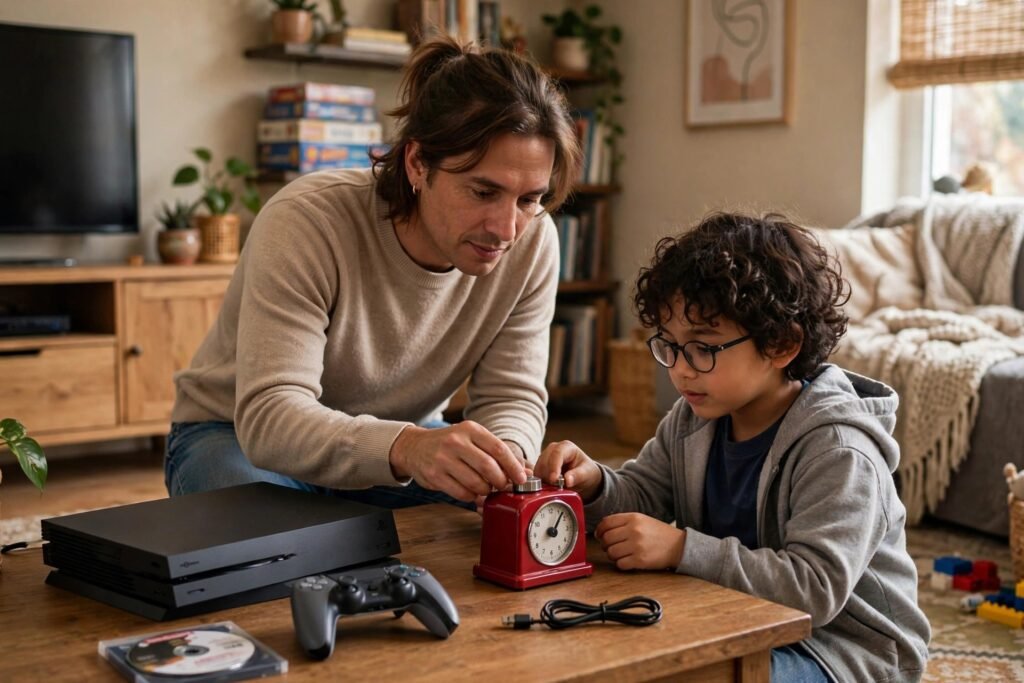
Your kid would play eight hours straight if allowed. You’ve read the headlines about screen time rotting brains, but you’ve also watched them problem-solve, collaborate with friends, and light up explaining game mechanics with genuine expertise. The reality of kids and gaming is neither the panic nor the utopia — it’s a management challenge with real trade-offs, real benefits, and strategies that actually work. Here’s the evidence-based guide for parents who want sanity without warfare.
What the Research Actually Says
First, discard both extremes. The evidence on screen time and gaming:
The legitimate concerns
Displacement: The most robust finding — every hour of gaming displaces an hour of something else (sleep, physical activity, homework, face-to-face socializing). The harm is mostly in what’s not happening, not in the gaming itself. Sleep: Evening screen use, especially stimulating gaming, disrupts sleep onset and quality — blue light, arousal, and “one more game” bedtime creep. This is the single most important mechanism to manage. Content risks: Exposure to toxic voice chat, predatory monetization, and age-inappropriate content are real — the risks are in the ecosystem, not the pixels.
The genuine benefits
Action gaming improves visual attention, spatial reasoning, and decision speed (well-replicated in cognitive science); strategy and building games develop planning and systems thinking; multiplayer games build genuine friendships and teamwork skills (dismissing online friends as “not real” misunderstands modern social life); and gaming can be a legitimate domain of mastery and confidence — the kid who struggles in school but leads a raid team is developing real leadership. The HealthyChildren.org (American Academy of Pediatrics) resources frame this balance better than most parenting media.
The nuance the headlines miss
Effects are dose-dependent and content-dependent — moderate gaming (1–2 hours daily) shows neutral to positive associations in most studies; problems concentrate at high doses (4+ hours) and with displaced sleep. Not all screen time is equal — creative gaming (Minecraft builds, game design) differs from passive consumption; social gaming differs from isolated grinding. And family context dominates — the same gaming hours in an engaged family versus a disengaged one produce different outcomes. Manage the context, not just the clock.
The Management Framework That Works
1. Structure beats restriction
Arbitrary limits (“one hour, because I said so”) breed resentment and evasion. Structured systems work better: the “after” rule — gaming after responsibilities (homework, chores, physical activity, family time), not before. This teaches prioritization rather than deprivation. Natural breakpoints — end at match/quest completion, not mid-game (yanking a kid mid-match is the number one trigger for meltdowns — and it’s genuinely unfair). Consistent schedule — same gaming windows daily beats negotiated chaos. Predictability reduces conflict more than any limit.
2. Manage the environment, not just the time
Gaming location: Common areas, not bedrooms — this single change improves sleep, enables casual supervision, and keeps gaming social. Device-level controls: Use the built-in tools — they’re good now. Console parental controls (time limits, content filters, spending blocks, activity reports) and router-level scheduling handle enforcement without you playing bad cop. The monetization conversation: Explain explicitly that games are designed to extract money and time — media literacy is protection. Set spending rules clearly (no saved payment methods on kids’ accounts, ever).
3. Engage rather than just restrict
The highest-leverage parenting move: take gaming seriously as their interest. Watch them play. Ask about the game. Learn what they’re achieving. Parents who engage gain influence; parents who dismiss (“it’s just a game”) lose it. Co-play when possible — some of the best family time available is a co-op session. And connect gaming to growth: the kid who loves Minecraft might love coding (many young programmers started there); the strategist might enjoy chess or robotics; the storyteller might try game design. Gaming interests are leads, not dead ends.
Age-Specific Guidance
Ages 5–8: Heavy structure
Short sessions (30–45 minutes), co-play or nearby supervision, curated age-appropriate titles (creative/sandbox over competitive), no voice chat with strangers, no in-game purchases. At this age, you’re building the habits and norms that make later years manageable.
Ages 9–12: Guided autonomy
Longer sessions (1–2 hours), introduction to multiplayer with friends (voice chat with known friends, not strangers), the spending and safety conversations, and beginning self-regulation practice (timers they set themselves). This is the training-wheels phase for independence.
Ages 13+: Negotiated responsibility
Shift from imposed limits to negotiated agreements — teens who help set the rules follow them better. Focus on the non-negotiables (sleep protection, school performance, physical activity, respectful online behavior) and flex on the rest. The goal is a young adult who manages their own screen time — which requires practicing self-management, not just obeying limits. Discuss the harder topics directly: toxic communities, predatory design, and the questions around AI and schoolwork that increasingly intersect with their digital lives.
When Gaming Becomes a Problem: The Warning Signs
Distinguish enthusiastic hobby from problematic use: concerning signs — gaming displacing sleep regularly, dropping grades, withdrawing from all other activities and relationships, inability to stop despite wanting to, lying about time spent, emotional dysregulation (extreme anger/anxiety) specifically around gaming, physical symptoms (headaches, eye strain, repetitive strain). Not concerning — enthusiasm, talking about games constantly, preferring gaming to some activities, being upset when interrupted mid-game (that’s normal frustration, not addiction).
If genuinely concerned, the Common Sense Media resources help assess, and pediatricians can screen for gaming disorder (now recognized by the WHO) versus underlying issues (ADHD, anxiety, depression) that gaming may be self-medicating. Treat the cause, not just the symptom — problematic gaming is often a coping mechanism, and removing it without addressing the underlying need backfires.
The Bottom Line
Manage kids’ gaming with: structure over restriction (after-responsibilities, natural breakpoints, consistent schedules), environment design (common areas, device controls, no saved payments), genuine engagement (take their interest seriously, co-play, connect to growth), age-appropriate autonomy (heavy structure → guided → negotiated), and attention to the real risks (sleep displacement, toxic communities, predatory monetization) rather than screen-time panic. The goal isn’t less gaming — it’s gaming in a life that’s full otherwise. And for the hours beyond screens, indoor activities for rainy days with kids offer the offline balance every family needs.
Frequently Asked Questions
How much screen time is OK for kids?
The AAP avoids a single number, focusing instead on balance: 1-2 hours of recreational gaming is generally fine if sleep, activity, school, and family time are protected. Problems concentrate at 4+ hours and when sleep is displaced.
Should kids play video games in their bedroom?
Better in common areas — it improves sleep hygiene, enables casual supervision, and keeps gaming social. Bedroom gaming is strongly associated with later bedtimes and less oversight.
Are violent video games harmful to kids?
The research link to real-world aggression is weak and contested; the stronger concerns are age-inappropriate content, toxic online communities, and time displacement. Choose age-appropriate titles and monitor the social environment.
How do I get my kid to stop gaming without a meltdown?
End at natural breakpoints (not mid-match), give 10-15 minute warnings, keep schedules consistent and predictable, and validate the frustration. Most meltdowns come from unfair-feeling interruptions, not the limit itself.
When should I worry about gaming addiction?
Watch for: regular sleep displacement, dropping grades, withdrawal from all other activities, inability to stop, lying about time, and extreme emotional dysregulation around gaming. Consult a pediatrician if several are present — underlying issues like ADHD or anxiety often drive problematic use.