Road Trip Car Prep: The Complete Pre-Trip Checklist
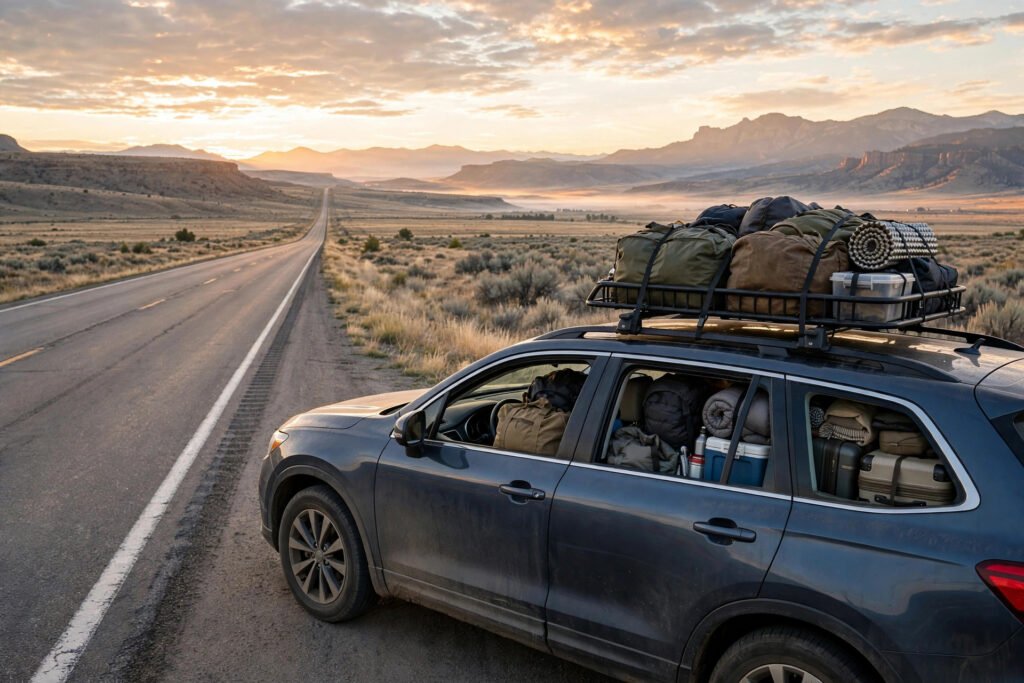
Two thousand miles of open highway, the playlist queued, the cooler packed — and somewhere in rural Nebraska, a preventable breakdown turns the adventure into a $400 tow and a lost day. Most road trip disasters aren’t bad luck; they’re skipped preparation. The difference between an epic drive and an expensive ordeal is a systematic pre-trip inspection that takes about an hour and catches the problems that strand travelers: tired batteries, worn tires, depleted fluids, and cooling systems about to quit in summer heat. Here’s the complete checklist for preparing your car for a long road trip in America.
Two Weeks Before: The Mechanical Inspection
Start with the systems that strand people. Tires: check pressure against the door jamb sticker (not the sidewall maximum), inspect tread depth (the quarter test — insert a quarter upside down; if you see all of Washington’s head, replace), look for uneven wear, bulges, or cracking, and verify the spare is inflated and the jack and lug wrench are present. Tires are the number one road-trip failure point — a blowout at 75 mph is the nightmare scenario, and it’s almost always preventable. If your tires are marginal, replace them before the trip, not during it in a strange town at premium prices.
Battery: if it’s over three years old (or two in hot climates), get it load-tested free at any auto parts store — batteries love to die on road trips, where heat, vibration, and heavy electrical loads (phone chargers, AC) stress them maximally. Fluids: check oil level and change it if the trip will push past the interval; verify coolant, brake fluid, power steering fluid, and windshield washer fluid (you’ll use gallons of it — bugs are undefeated). Belts and hoses: look for cracking, fraying, or soft spots — a $25 belt that fails remotely costs a tow. Brakes: if they’re due within the trip’s mileage, do them before — mountain descents on worn brakes are genuinely dangerous. Lights: verify every bulb, including brake lights and turn signals — a burnt brake light is both a safety hazard and a traffic-stop invitation across state lines. The National Highway Traffic Safety Administration’s vehicle safety checklists cover these inspection points systematically.
One Week Before: Systems, Supplies, and Paperwork
Cooling system: the summer road trip killer. Verify coolant level and condition, check for leaks under the car after parking overnight, and ensure the temperature gauge reads normal on a test drive — overheating in 100°F desert heat with no shade for miles is the classic trip-ruiner. Air conditioning: confirm it blows cold now, not hopefully later; AC repair on the road means suffering or schedule destruction. Wipers: replace worn blades — a $30 investment against the blinding rainstorm you’ll inevitably hit.
Assemble the emergency kit: jumper cables or a portable jump pack, tire pressure gauge, basic tool set, flashlight with fresh batteries, first aid kit, blanket, water (a gallon per person), non-perishable snacks, phone charger and battery bank, paper maps or offline downloads (cell dead zones are real across the rural West), and your insurance and roadside assistance information — physical copies, not just phone apps. Verify your roadside assistance coverage details before departure: towing mileage limits, whether you’re covered out of state, and the dispatch number saved in your phone. AAA’s road trip resources provide packing checklists and state-by-state driving law summaries worth reviewing.
Loading and Packing: The Overlooked Safety Factor
How you pack affects safety more than most drivers realize. Heavy items go low and centered, against the rear seatback — in a sudden stop, a 50-pound cooler becomes a projectile with devastating force. Never stack cargo above the seatback where it can fly forward. Distribute weight evenly side to side; a lopsided load affects handling, especially in crosswinds common on western interstates. If using a roof carrier, know that it raises your center of gravity (gentler cornering required) and cuts fuel economy 10–25% — pack it only with light, bulky items.
Secure everything: bungee cords and cargo nets aren’t optional for truck beds and roof racks — road debris from unsecured loads causes thousands of crashes yearly. Check your vehicle’s maximum load rating (door jamb sticker) including passengers — overloaded suspensions overheat tires and degrade braking. For pet travelers, proper restraints aren’t just safety; they’re legal requirements in some states. And plan your packing around access: the emergency kit, water, and snacks should be reachable without unpacking — because you’ll need them at the least convenient moment, which is the entire point. Our broader guide to planning a road trip across the US on a budget covers route and lodging strategy to pair with this mechanical preparation.
On the Road: Monitoring and Smart Driving
Preparation doesn’t end at departure — the first 30 minutes are a shakedown cruise. Listen for new noises, watch the temperature gauge, feel for vibrations or pulling, and confirm the AC, cruise control, and all electronics work under load. If something feels wrong in the first hour, turn back — problems never improve with distance. Check tire pressure at your first fuel stop (tires heat up and reveal issues) and glance under the car for fresh drips whenever you park overnight.
Drive for the long haul: maintain steady speeds (every 5 mph over 50 costs roughly 7% in fuel economy — at 80 mph you’re burning money), use cruise control on flat interstates, and take breaks every 2 hours or 100 miles — fatigue impairs like intoxication, and drowsy driving kills. In mountains, downshift on descents rather than riding brakes (overheated brakes fade catastrophically), and watch temperature gauges on long climbs. In desert heat, run the AC but monitor the temp gauge; if it climbs, turn off the AC and turn on the heater full blast (miserable but effective — it dumps engine heat into the cabin). Keep the tank above a quarter full in remote stretches — running dry 40 miles from the next station is a rookie mistake with easy prevention. If you’re considering a rental for the trip instead of your own car, review what to know before renting a car — many of the inspection principles apply to rental pickups too.
The Bottom Line
Preparing your car for a long road trip means a systematic two-weeks-out mechanical inspection (tires, battery, fluids, belts, brakes, lights), a one-week-out systems check plus emergency kit and paperwork, smart weight-distributed packing, and attentive on-the-road monitoring with sensible driving habits. The hour of preparation and the $100–$200 in preventive maintenance buys something priceless: a trip remembered for the Grand Canyon, not the tow truck outside Amarillo. The open road rewards the prepared — be prepared.
Frequently Asked Questions
How far in advance should I prepare my car for a road trip?
Start mechanical inspections two weeks out (time to fix what you find), finalize supplies and paperwork one week out, and do a last walkaround the day before. Finding a problem the morning of departure helps no one.
What’s the most common cause of road trip breakdowns?
Tire failures lead the list, followed by battery failures and cooling system/overheating issues — all three are preventable with pre-trip inspection. Together they account for the majority of roadside assistance calls.
Should I get an oil change before a long road trip?
If the trip’s mileage will push you past your change interval, yes — do it before, not during. Fresh oil for a 3,000-mile trip is cheap insurance for the engine’s hardest sustained workload.
What should be in a road trip emergency kit?
Jumper cables or jump pack, tire gauge, basic tools, flashlight, first aid kit, blanket, water, snacks, phone charger/battery bank, paper maps or offline downloads, and your insurance/roadside assistance info in physical form.