
What Foods Should I Avoid If I Have High Cholesterol
A high cholesterol reading can feel like a verdict — but it is really more like a warning light. And diet is one of the most powerful tools for turning that light off: the right dietary changes can lower LDL cholesterol by 15-25%, comparable to low-dose statins for some people. If you are asking what foods should I avoid if I have high cholesterol, here is the evidence-based list — plus what to eat instead, because avoidance without replacement is just deprivation.
The old advice (“avoid all dietary cholesterol”) has been refined. Current science focuses on saturated fat, trans fat, and overall dietary pattern — not the cholesterol in an egg.
What Foods Should I Avoid if I Have High Cholesterol? The Main Culprits
1. Trans Fats (Avoid Completely)
Partially hydrogenated oils raise LDL and lower HDL — the worst possible combination. Largely banned in the US, but still lurking in some imported products, shortening, and deep-fried fast food. Check labels for “partially hydrogenated” — if present, put it back.
2. Fatty and Processed Meats
Bacon, sausage, hot dogs, salami, fatty beef cuts, and processed deli meats are loaded with saturated fat and sodium. Red meat is not forbidden — lean cuts in moderation are fine — but processed meats are consistently linked to cardiovascular harm. Instead: skinless poultry, fish (especially fatty fish twice weekly), legumes, tofu.
3. Full-Fat Dairy in Excess
Butter, cream, full-fat cheese, and whole milk contribute significant saturated fat. You do not need to eliminate dairy — switch to low-fat or fat-free versions, and treat butter as a flavoring (teaspoons) rather than a cooking medium (tablespoons). Instead: olive oil for cooking, low-fat yogurt, modest cheese portions.
4. Deep-Fried Foods
French fries, fried chicken, tempura — frying adds saturated/trans fats and massive calories. The occasional indulgence will not kill you, but regular fried food is one of the fastest routes to bad lipid panels. Instead: baked, grilled, air-fried, or roasted versions.
5. Commercial Baked Goods and Pastries
Croissants, donuts, packaged cakes, pie crusts — made with butter, palm oil, or shortening, delivering saturated fat plus refined sugar. Instead: oatmeal-based breakfasts, fruit for dessert, homemade treats with olive oil.
6. Fast Food (Generally)
Burgers, fries, shakes, fried chicken sandwiches — engineered for taste with saturated fat, sodium, and refined carbs in combinations your arteries hate. Occasional is survivable; weekly is measurable on your labs.
7. Coconut Oil and Palm Oil
Despite health halos, both are ~90% saturated fat — higher than butter. Fine in tiny amounts for flavor, terrible as primary cooking fats. Instead: olive oil, avocado oil.
8. Excessive Alcohol and Sugary Drinks
These primarily raise triglycerides (the other lipid that matters) and contribute to fatty liver. Sugary drinks are uniquely harmful — liquid sugar with zero satiety.
What About Eggs and Shrimp?
The nuance everyone misses: dietary cholesterol (in eggs, shrimp, shellfish) has modest effects on blood cholesterol for most people — saturated fat matters far more. Most people can eat eggs regularly (up to one daily) without meaningful LDL impact. If you have diabetes or familial hypercholesterolemia, be more cautious and follow your doctor’s specific guidance.
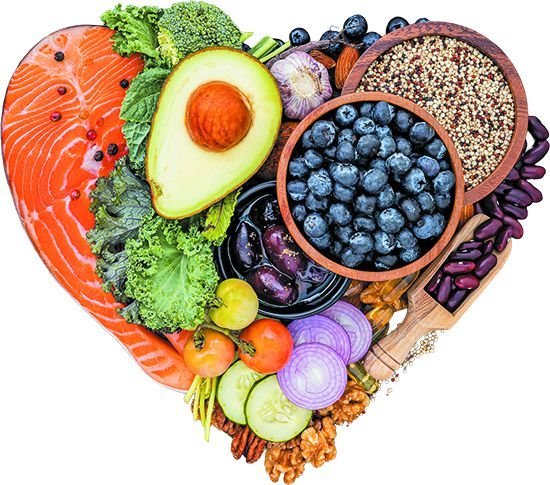
What to Eat More Of (The Replacement Strategy)
- Soluble fiber: oats, beans, lentils, apples, flaxseed — binds cholesterol in the gut; 5-10g daily lowers LDL measurably
- Fatty fish: salmon, mackerel, sardines — omega-3s lower triglycerides
- Nuts: almonds, walnuts — a daily handful improves lipid profiles
- Olive oil: the cornerstone fat of the Mediterranean pattern
- Plant sterols: fortified foods can block cholesterol absorption modestly
- Soy protein: 25g daily linked to small LDL reductions
This pairs directly with my guide on foods that lower blood pressure — the heart-healthy eating patterns overlap almost completely.
Beyond Diet: The Full Cholesterol Picture
Diet is powerful but not everything: 150+ minutes of weekly exercise raises HDL and lowers triglycerides, weight loss of even 5-10% improves lipids significantly, quitting smoking raises HDL within weeks, and some people need medication regardless of perfect habits (genetics loads the dice — statins are safe, effective, and nothing to fear). Diet plus lifestyle first, medication as needed, both without shame.
The American Heart Association provides detailed dietary guidelines for cholesterol management.
Understanding Your Lipid Panel
Your lab report is more than one number. Here is what each line means:
- LDL (“bad” cholesterol): the primary treatment target — carries cholesterol to artery walls. Optimal under 100 mg/dL; near-optimal 100-129; high 160+. This is the number diet changes and statins primarily address.
- HDL (“good” cholesterol): carries cholesterol away from arteries. Higher is better — 60+ is protective; under 40 (men) / 50 (women) is a risk factor. Raised by exercise, not much by diet directly.
- Triglycerides: blood fats driven by sugar, alcohol, and excess calories. Normal under 150; high 200+. Very high levels (500+) risk pancreatitis. Often the fastest-improving number with dietary change.
- Total cholesterol: the sum — less useful alone than the components. A high total driven by high HDL is very different from high total driven by high LDL.
- Non-HDL cholesterol: total minus HDL — increasingly preferred as a risk marker because it captures all atherogenic particles. Target is typically 30 points above your LDL target.
- What changes fastest: triglycerides respond to diet within weeks; LDL within 2-3 months; HDL improves slowly with sustained exercise. Retest 3 months after dietary changes for a meaningful comparison.
- When numbers do not budge: if 3 months of genuine dietary change barely moves LDL, genetics (familial hypercholesterolemia affects ~1 in 250 people) may be the driver — discuss with your doctor. Medication in this case is not failure; it is appropriate treatment for a genetic condition.
Bring this understanding to your next appointment — patients who grasp their numbers have better conversations with their doctors and better adherence to whatever plan they agree on. Knowledge is the first treatment.
This article is for informational purposes only and is not medical advice.
Related reading: cholesterol and weight are deeply connected — the best diet for losing belly fat shares most of the same heart-healthy principles.
The Bottom Line
Eliminate trans fats, minimize processed meats, fried foods, full-fat dairy excesses, commercial pastries, and tropical oils — while loading up on soluble fiber, fatty fish, nuts, olive oil, and legumes. Focus on saturated fat, not dietary cholesterol. Combine with exercise and healthy weight, get retested in 3 months, and work with your doctor on whether lifestyle alone suffices or medication should join the team. Your arteries respond to what you eat; give them reasons to thank you.
This article is for informational purposes only and is not medical advice.







1 thought on “What Foods Should I Avoid If I Have High Cholesterol”