How Do You Know If You Have a Real ID? What You Need to Know
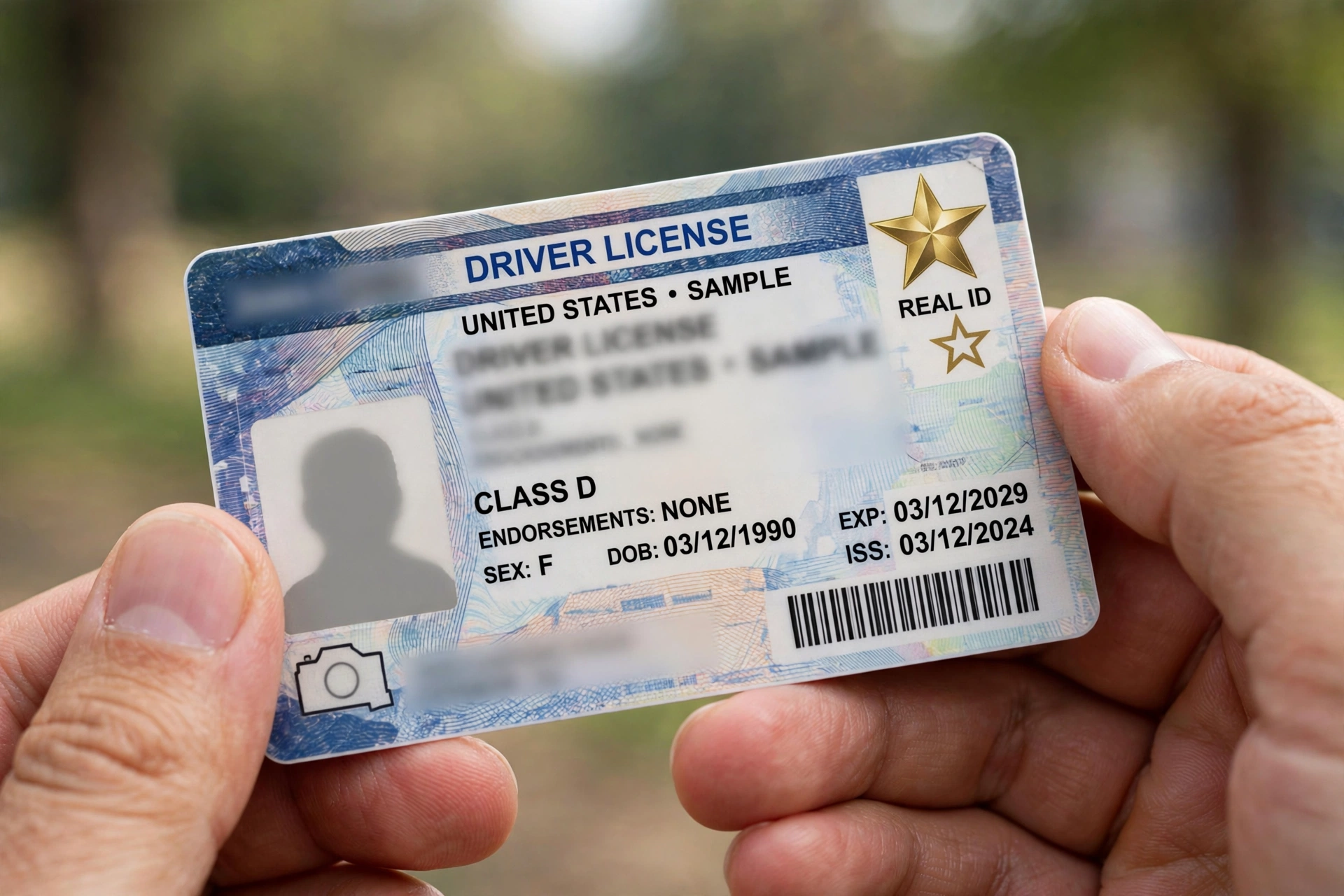
After years of deadline extensions, REAL ID enforcement is now in effect for domestic air travel and federal building access in the United States. If you are unsure whether your license qualifies, here is how do you know if you have a real id — what to look for on the card, how to get one if you do not, and what happens if you show up without it.
The Quick Answer
Look at the upper portion of your driver’s license or state ID. A REAL ID-compliant card has a star in the upper corner — usually gold or black, sometimes inside a state outline or bear (California). No star means it is a standard license, not REAL ID compliant. Enhanced driver’s licenses (EDLs) from certain states have a U.S. flag icon instead of a star and are also compliant.
What REAL ID Is (and Is Not)
REAL ID is a federal security standard for state-issued identification, created by the REAL ID Act of 2005. It sets minimum requirements for how states verify identity before issuing licenses. It is not a national ID card, and it does not replace your passport for international travel. Its main everyday impact: since enforcement began, you need a REAL ID (or another acceptable document like a passport) to board domestic flights and enter secure federal facilities.
How to Check Your Card
- Find the star. Check the top corner of your license for a star symbol. Gold stars are most common; some states use black stars.
- Check for state variations. California puts the star inside a gold bear; other states may embed it in the state outline. The star is what matters, not the decoration.
- Look for “Federal Limits Apply.” If your card says this (or “Not for federal identification”), it is explicitly not REAL ID compliant.
- When in doubt, check online. Most state DMV websites let you verify your card’s compliance status, or just compare against the sample images on the Department of Homeland Security REAL ID page.
What If You Do Not Have One?
You can still fly domestically with a valid U.S. passport, passport card, or other TSA-accepted ID. But getting a REAL ID is straightforward:
- Visit your state DMV in person (most states require an in-person visit for first issuance).
- Bring proof of identity — typically a birth certificate or valid passport.
- Bring proof of Social Security number — Social Security card, W-2, or pay stub.
- Bring two proofs of residency — utility bills, lease, bank statements with your current address.
- Pay the fee — usually the same as a standard license renewal ($10–$60 depending on state).
Processing takes 2–4 weeks for the physical card in most states, though you typically get a temporary paper credential immediately.
Common Confusion Points
“My license was renewed recently — isn’t it automatically REAL ID?”
Not necessarily. Many states issued standard licenses by default unless you specifically requested REAL ID and provided the extra documents. Check for the star.
Do I need REAL ID if I have a passport?
No. A valid passport works for all federal purposes REAL ID covers. REAL ID is mainly a convenience so you do not have to carry your passport for domestic flights.
What about children?
TSA does not require ID for children under 18 traveling domestically with an adult. REAL ID matters for adult travelers.
Does REAL ID track me?
No. It standardizes how states verify identity at issuance. It does not create a federal database of license holders or add tracking technology to the card.
REAL ID and Everyday Transactions
Beyond airports, REAL ID-compliant identification is increasingly useful for identity verification in financial life. When you do a money order over certain thresholds or open new financial accounts, federally compliant ID smooths the process. If a job change has you sorting out benefits paperwork, see how to qualify for unemployment — where identity verification is part of the application.
REAL ID for Non-Drivers
You do not need to drive to get a REAL ID. Every state issues REAL ID-compliant identification cards for non-drivers using the same star system and document requirements. These are ideal for teenagers, seniors who no longer drive, and city residents who never needed a license. The process mirrors the driver’s license version: proof of identity, Social Security number, and two proofs of residency, with a similar fee.
Travel Day Checklist
Even with a compliant ID, smooth travel takes preparation:
- Check your ID’s expiration date weeks before any trip — expired IDs are not accepted even if REAL ID compliant.
- Keep a backup: photograph both sides of your ID and store securely in the cloud.
- Arrive with the ID you will present already in hand, not buried in a bag.
- If your name changed recently (marriage, divorce), ensure your ID matches your ticket exactly — mismatches cause delays.
- For international trips, remember REAL ID is irrelevant — you need a passport, full stop.
What Enforcement Looks Like at the Airport
At TSA checkpoints, officers now verify that adult IDs are REAL ID compliant or on the accepted-alternatives list. If your license lacks the star and you have no passport, you may face additional identity verification — a lengthy process involving personal questions — or be denied passage. Do not test this on a tight connection. The few minutes spent checking your card now prevents a missed flight later. TSA’s website maintains the current list of all acceptable identification documents.
REAL ID and Domestic Cruise Travel
A common confusion: closed-loop cruises (departing and returning to the same U.S. port) currently accept a birth certificate plus government photo ID for U.S. citizens — REAL ID is not strictly required. However, cruise lines strongly recommend passports because any emergency requiring a flight home from a foreign port becomes enormously complicated without one. If you cruise regularly but dislike carrying a passport, at minimum ensure your ID is REAL ID compliant for the flight to the port.
Frequently Asked Questions
Can I still get a REAL ID after the deadline?
Yes — DMVs continue issuing them. There is no cutoff for applying; the deadline only affects what ID you need at airports and federal buildings.
How much does a REAL ID cost?
Usually the same as a standard license in your state. Some states charge a small premium ($5–$15 extra).
Will my old license still work for driving and voting?
Yes. Standard licenses remain valid for driving, age verification, and voting (voting ID rules vary by state). They just do not work for federal purposes like domestic flights.
What is an Enhanced Driver’s License?
EDLs (offered by Michigan, Minnesota, New York, Vermont, and Washington) prove both identity and U.S. citizenship and work for land/sea border crossings to Canada, Mexico, and the Caribbean. They show a U.S. flag rather than a star and satisfy REAL ID requirements.
For official requirements by state, check USA.gov’s ID page which links to every state DMV.
The Bottom Line
Star in the corner means you are set; “Federal Limits Apply” means you are not. If you fly domestically and do not carry a passport, getting a REAL ID is a one-time DMV visit that saves hassle for years. Check your card today — it takes ten seconds.