
How to Identify Fake Perfume vs Authentic: Step-by-Step Guide (2026)
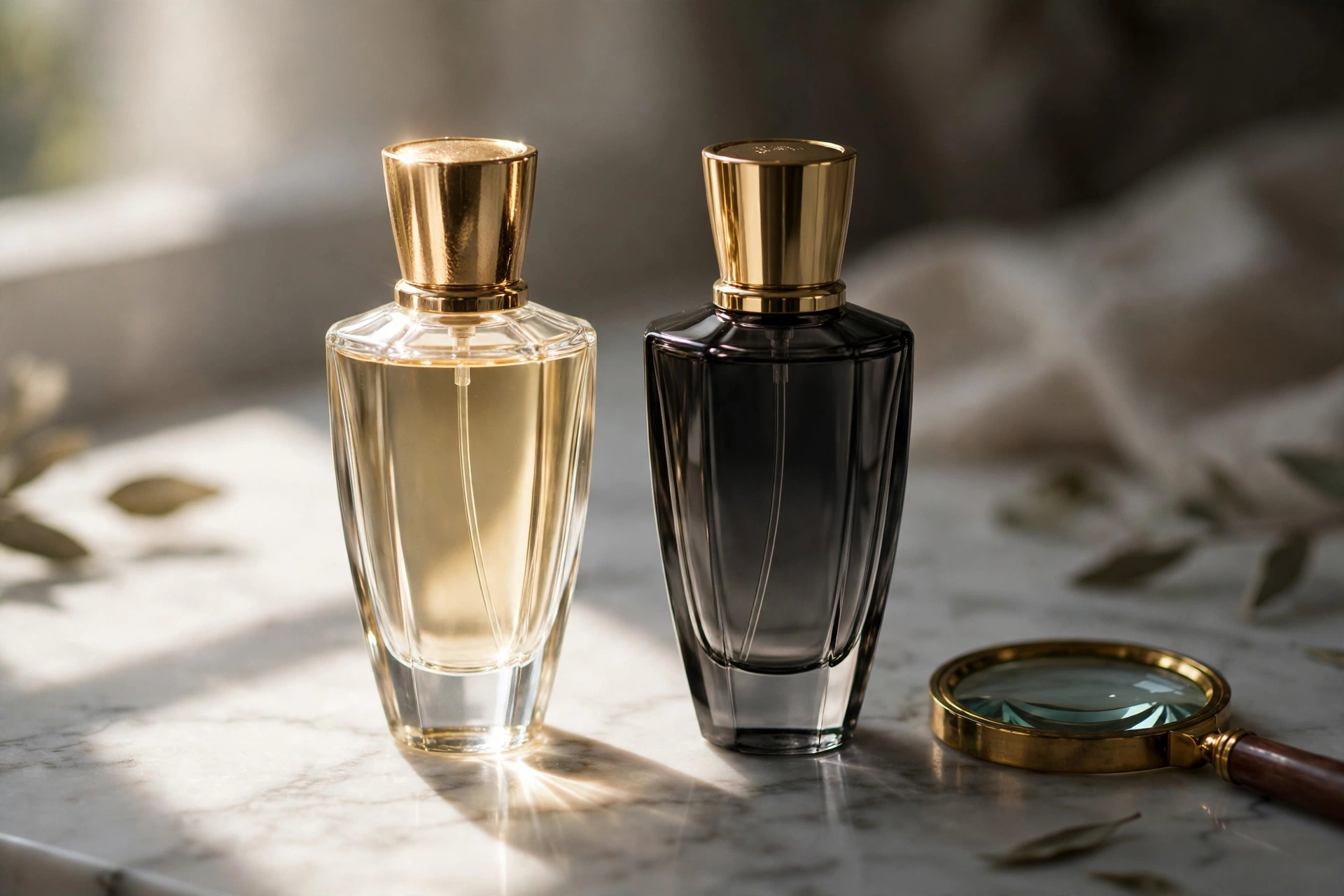
Counterfeit perfume is a multi-billion-dollar industry, and fakes have gotten frighteningly convincing — the box, the bottle, even the first spray can fool you. But fake fragrances often contain unregulated chemicals that irritate skin and fade within an hour. Here is how to identify fake perfume vs authentic before you waste money or risk a reaction.
The Quick Answer
Check the packaging quality (sharp printing, tight cellophane, straight labels), the bottle (smooth glass, quality cap, fine-mist sprayer), the scent itself (fakes smell harsh or alcoholic and fade fast), and the batch code (verify it on a batch-code checker). Buy from authorized retailers. If the price is dramatically below retail, it is almost certainly fake.
Packaging Red Flags
- Printing quality: authentic boxes have crisp, perfectly aligned text. Fakes often show blurry logos, spelling errors, or off-center printing.
- Cellophane wrap: real perfume is wrapped tightly with clean seams. Loose, wrinkled, or overly thick plastic is a warning sign.
- Cardboard quality: luxury houses use heavy, rigid board. Flimsy, thin cardboard suggests a fake.
- Labels and stickers: crooked labels, bubbling stickers, or missing ingredient lists point to counterfeits.
- Box contents: authentic perfume includes inserts and paperwork; fakes often skip them.
Bottle and Sprayer Clues
- Glass quality: real bottles use smooth, flawless glass. Bubbles, seams, or rough edges indicate cheap manufacturing.
- The cap: should fit snugly and feel weighty. Loose, plastic-feeling caps are classic fake tells.
- The sprayer: authentic atomizers deliver a fine, even mist. Squirting, dripping, or uneven spray means fake.
- The tube: the dip tube inside should reach the bottom and sit straight; fakes often have crooked or overly long tubes.
The Scent Test
This is the most reliable check. Authentic perfume unfolds in layers — bright top notes, a heart that develops over 30–60 minutes, and a base that lingers for hours. Fakes typically:
- Smell harsh, overly alcoholic, or chemical on first spray
- Lack complexity — one flat note that never develops
- Fade within 1–2 hours (authentic eau de parfum lasts 6–8+ hours)
- Smell “close but wrong” — similar idea, cheaper ingredients
Spray on skin (not just a paper strip) and give it an hour. Your nose knows.
Verify the Batch Code
Every authentic bottle has a batch code etched or printed on both the bottle and the box — and they must match. Enter the code on a batch-code checker site to confirm the manufacture date. Mismatched codes, missing codes, or codes that do not validate are strong fake indicators.
Where You Buy Matters Most
The single best protection is buying from authorized sources: department stores, brand boutiques, official websites, and established retailers like Sephora or Ulta. Be extremely cautious with:
- Street vendors and flea markets
- Social media sellers with no verifiable business
- Deeply discounted “wholesale” sites you have never heard of
- Auctions with stock photos instead of actual bottle pictures
Once you own authentic perfume, protect your investment — read how to store perfume to keep it fresh so heat and light do not destroy what you paid for.
Why Fakes Are More Than a Rip-Off
Counterfeit fragrances are unregulated. Lab tests have found them containing excessive methanol, urine, antifreeze compounds, and bacteria at levels far above safe limits. Skin reactions, headaches, and eye irritation are common — if a “designer” scent gives you a rash, suspect a fake. This is the same reason eye-area irritation from unknown cosmetics deserves attention; see how to get rid of swelling around the eyes if scented products bother your eyes.
The FDA regulates cosmetics in the U.S. but cannot police every counterfeit — consumer vigilance is the real defense.
How to Report Counterfeit Sellers
Reporting fakes protects other buyers and creates a record if you need a refund. Steps to take:
- On marketplaces: use the platform’s counterfeit reporting tool (Amazon, eBay, and others all have them) and include photos of the discrepancies.
- To the brand: most luxury houses have anti-counterfeiting teams and appreciate reports with seller details.
- To the FTC: file at ReportFraud.ftc.gov — individual reports build the cases that shut down large operations.
- Payment dispute: if the item was misrepresented as authentic, file a chargeback or PayPal claim with your evidence.
Decants, Samples, and Splits
Buying decants (small portions of authentic perfume) from reputable decanters is a legitimate way to try expensive fragrances affordably. Stick to well-reviewed decant businesses with transparent sourcing. Avoid random social media sellers offering “100% authentic” full bottles at 70% off — that discount does not exist in legitimate wholesale. And remember that proper storage matters even for samples: learn how to store perfume to keep it fresh so your decants do not degrade before you finish them.
Price Benchmarks: What Discounts Are Realistic
Knowing normal discount ranges helps you spot impossible prices. Authorized retailers typically discount fragrances 10–25% during sales; department store gift sets offer similar value. Discounters like FragranceNet or Strawberrynet sell authentic overstock at 30–50% off — legitimate but with older batch codes. Anything beyond 60% off retail on a current popular fragrance is a red flag. Niche and luxury houses (Creed, Parfums de Marly) rarely discount deeply anywhere legitimate — steep discounts on these are almost always fakes.
Storing Your Authentication Evidence
For expensive bottles, keep your proof of authenticity: order confirmations, receipts from authorized retailers, and photos of batch codes. If you ever resell on the legitimate secondhand market, this documentation dramatically increases buyer trust and resale value. Photograph the bottle, box, batch codes, and receipt together when the perfume is new — once packaging is discarded, proving authenticity later becomes much harder.
Teaching Others to Spot Fakes
Once you know the signs, share them. Counterfeit perfume thrives on uninformed buyers — every person who learns to check batch codes and packaging quality shrinks the market for fakes. If a friend shows off a suspiciously cheap “designer” fragrance, walk them through the checks gently rather than accusing them of being fooled. Many fake buyers are victims, not bargain hunters, and a quick education protects their health as well as their wallet. The more consumers demand authenticity, the harder the counterfeit business becomes.
Frequently Asked Questions
Are “tester” bottles sold online authentic?
Sometimes — testers are real products in plain packaging. But the tester market is flooded with fakes using the tester story as cover. Only buy testers from reputable sellers.
Can fake perfume smell exactly like the real one?
The opening can be close, because counterfeiters copy top notes. The dry-down almost always gives them away — cheap base ingredients cannot replicate the real formula’s depth and longevity.
What should I do if I bought a fake?
Stop using it (health risk), report the seller to the platform and the FTC, and dispute the charge with your payment provider if the seller misrepresented it.
Do fakes have batch codes?
Often yes — but they are frequently copied from real bottles, so the code may validate while the bottle code and box code do not match each other. Always check both.
The Bottom Line
Spotting fake perfume comes down to quality at every level: packaging, bottle, sprayer, scent development, and batch codes. When in doubt, buy from authorized retailers — the discount from a shady seller is never worth the health risk or the wasted money.



