
How to Store Perfume to Keep It Fresh: Step-by-Step Guide (2026)
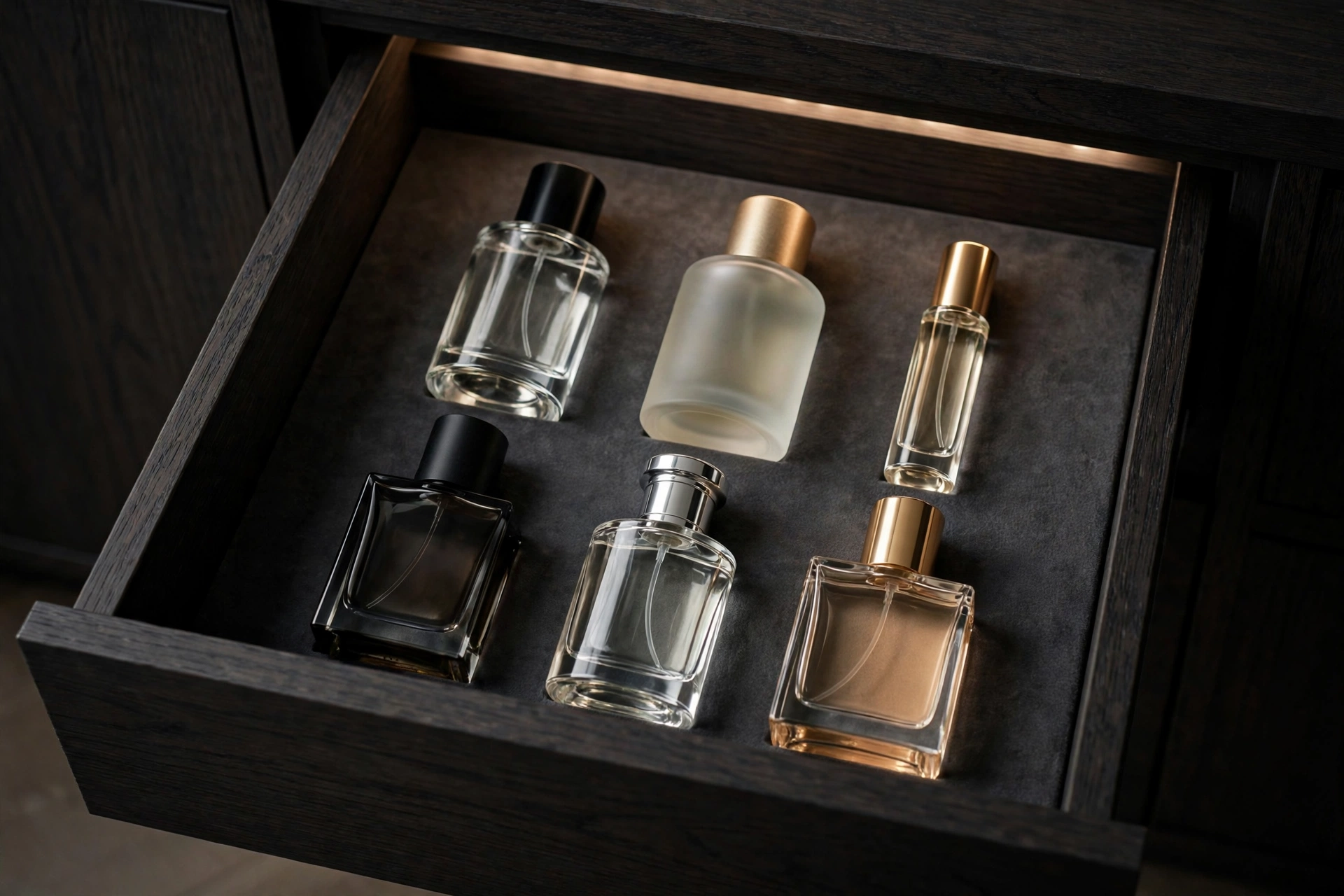
Perfume is chemistry in a bottle — and like all chemistry, it degrades. Heat, light, and air are the enemies that turn a vibrant fragrance flat, sour, or weak. Here is how to store perfume to keep it fresh so every bottle lasts years instead of months.
The Quick Answer
Store perfume in a cool, dark, dry place — ideally 55–65°F — away from windows, bathrooms, and heat sources. Keep bottles in their original boxes, standing upright, with caps on tight. Stored properly, most perfumes stay fresh 3–5 years (often longer); stored badly, they can turn in under a year.
Why Perfume Goes Bad
Fragrance molecules are volatile by design — that is what makes them project and evolve on skin. But the same volatility means they react with:
- Light (especially UV) — breaks down molecules fastest; this is why good perfume comes in tinted or boxed bottles.
- Heat — accelerates every chemical reaction, dulling top notes first.
- Air — oxygen oxidizes the juice, particularly once a bottle is half empty.
- Humidity and temperature swings — bathrooms are the worst possible storage spot despite being the most common.
The Ideal Storage Setup
Location
A bedroom closet, dresser drawer, or interior cabinet — anywhere dark with a stable, cool temperature. Avoid windowsills (light + heat), bathrooms (humidity + temperature swings), and cars (extreme heat).
Position
Store bottles upright. Lying on their side keeps the juice in constant contact with the sprayer mechanism and can degrade seals. Splash bottles (no sprayer) are the exception where minimal air matters most — keep them tightly capped.
Original boxes
Keep the box. It blocks light completely and adds insulation against temperature swings. Collectors who keep boxes enjoy noticeably longer-lasting fragrances.
Refrigeration?
A dedicated fragrance fridge (or a cool wine fridge) is excellent for expensive or natural-heavy perfumes. Do not use your kitchen fridge — food odors can seep in, and constant door-opening creates temperature swings. Room-temperature dark storage is perfectly fine for most bottles.
How Long Does Perfume Last?
- Eau de parfum / parfum: 3–5+ years stored well; higher oil concentration = more stable.
- Eau de toilette: 2–4 years; lighter formulas fade faster.
- Citrus-dominant scents: the most fragile — often 1–2 years even with good storage.
- Oud, amber, woody orientals: can improve with age like wine, lasting 5–10 years.
Signs Your Perfume Has Turned
- The color has darkened significantly
- Top notes smell sharp, sour, or vinegary
- It fades within an hour when it used to last all day
- It smells noticeably different from a fresh tester
A turned perfume will not usually harm you, but it will not smell like itself either. Before assuming a bottle is off, make sure it was authentic to begin with — see how to identify fake vs authentic perfume, since counterfeits degrade far faster than the real thing.
Travel Tips
Decant into small atomizers for trips rather than carrying full bottles — less air exposure for the main bottle, less breakage risk, and no heat damage in checked luggage. Never leave perfume in a hot car, even for an hour; interior temperatures can top 170°F in summer.
Special Cases
Vintage and discontinued fragrances
Store these like museum pieces: boxed, dark, cool, upright, rarely opened. Every spray introduces air. Some collectors add inert gas sprays (wine preserver) to displace oxygen in precious bottles.
Natural and niche perfumes
All-natural formulas without synthetic stabilizers are more fragile — prioritize cool, dark storage and use them within 1–2 years.
Body sprays and mists
Lower concentration means shorter life anyway (1–2 years). Do not overthink storage, but keep them out of the bathroom.
If scented products ever irritate your eyes, our guide on how long it takes for eyelashes to grow back covers lash recovery — a common concern when fragrances migrate.
Displaying Your Collection Without Damaging It
Many collectors want to show off beautiful bottles, but display and preservation conflict. The compromise: display empty or backup bottles, and store the working bottles in the dark. If you must display full bottles, use a closed cabinet with UV-filtering glass, keep it away from windows and heat vents, and rotate which bottles are displayed so none sits in light for months. LED lighting inside the cabinet is safe (no UV); halogen and fluorescent are not.
Perfume Storage Myths Debunked
- “The freezer preserves perfume.” Freezing can damage delicate top notes and cause condensation inside the bottle. Cool is good; frozen is not.
- “Shaking the bottle helps.” Shaking introduces air and does nothing beneficial. Never shake perfume.
- “Expensive perfume never goes bad.” Price does not stop chemistry. A $300 bottle in a sunny bathroom degrades just like a $30 one.
- “Dark bottles do not need boxes.” Dark glass helps but does not block all light or insulate against heat. Keep the box.
- “Old perfume is always ruined.” Oriental and woody compositions often age beautifully for a decade or more when stored well.
Organizing by Season and Use
Serious collectors rotate fragrances seasonally — fresh citruses and aquatics for summer, warm orientals and gourmands for winter. Store off-season bottles boxed in the coolest dark spot you have, and keep only the current rotation accessible. This minimizes how often stored bottles are handled and exposed to air. A simple spreadsheet or fragrance-tracking app prevents the classic collector problem: forgetting what you own and buying duplicates. Use oldest opened bottles first, since opened fragrance degrades faster than sealed backups.
For authoritative guidance on cosmetic product safety and storage, the American Academy of Dermatology recommends keeping all skincare and fragrance products away from heat and direct sunlight.
When to Decant vs. Keep Original
For daily-wear fragrances, decanting a small amount into a travel atomizer keeps the main bottle sealed and air-free most of the time — each opening introduces fresh oxygen. But do not decant your entire collection into plastic atomizers for long-term storage; cheap plastic can interact with fragrance oils over months. Glass atomizers are fine for the few milliliters you will use within weeks. The original bottle, kept boxed and cool, remains the best long-term home.
Quick-Reference Storage Rules
Tape this inside your closet door: cool (55–65°F), dark (no windows), dry (not the bathroom), upright (never on its side), boxed (original packaging), capped tight. Break any one rule and a bottle’s life shortens; follow all five and most fragrances outlive their expected shelf life by years.
Frequently Asked Questions
Can I store perfume in the bathroom?
It is the worst common choice — humidity, heat from showers, and light all attack the fragrance. Move bottles to a closet today.
Does perfume expire?
There is no safety expiration, but quality declines. Unopened bottles stored well can last many years; opened bottles in bad conditions can turn within months.
Should I keep the plastic wrap on new bottles?
For long-term storage of backups, yes — it adds a moisture and air barrier. For bottles in use, it makes little difference.
Can expired perfume be used?
As a room spray or on fabric, sure. On skin, a turned fragrance may irritate — do a small patch test first. The FDA’s cosmetics guidance notes that degraded products carry higher irritation risk.
The Bottom Line
Cool, dark, dry, upright, boxed — five words that double or triple your perfume’s life. The bathroom counter is convenient and destructive in equal measure; a closet shelf costs nothing and preserves everything.



