
What Tools Does Every Homeowner Need for Basic Repairs
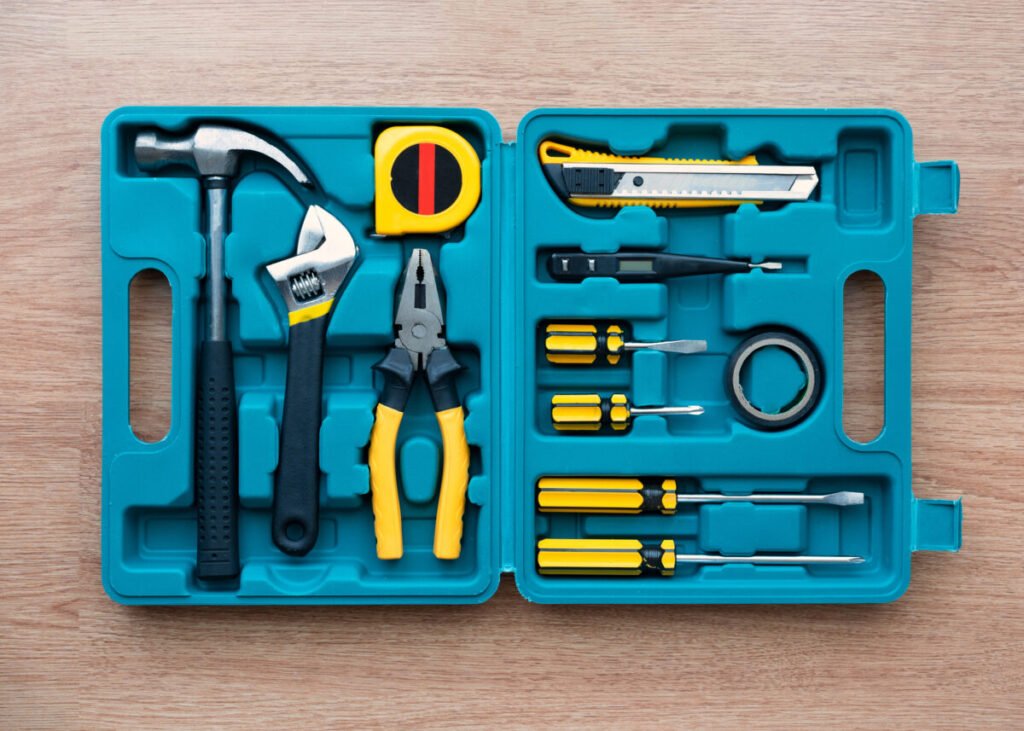
New square tool box on wooden texture background. Top view
Every homeowner eventually faces the moment: something breaks, it’s 9 p.m., and you either own the right tool or you’re making an emergency hardware store run. I’ve been on both sides of that moment enough times to know that a small, well-chosen toolkit handles roughly 90 percent of basic home repairs. You don’t need a workshop — you need about fifteen tools that earn their keep.
Here’s what every homeowner needs for basic repairs, why each tool matters, and what you can skip.
What Tools Does Every Homeowner Need for Basic Repairs?
The philosophy: buy quality on the tools you use constantly, go cheap on the ones you use rarely. A $30 hammer you’ll swing for decades is a bargain; a $200 specialty tool you’ll use twice is not. Start with the essentials below — total cost around $150–$250 — and add specialty tools only when a specific project demands them.
The Absolute Essentials
1. Cordless Drill/Driver
The single most useful power tool a homeowner can own. Driving screws, drilling pilot holes, assembling furniture, hanging curtains — a 12V or 18V cordless drill/driver kit ($60–$120) with two batteries handles all of it. Stick with a major brand (DeWalt, Milwaukee, Makita, Ryobi) so batteries are available for years. This is the tool to invest in; everything else can wait.
2. Hammer (16 oz Curved Claw)
For nails, light demolition, and tapping things into place. A 16-ounce curved-claw hammer ($15–$30) suits most homeowners — heavy enough for framing nails, light enough for trim work. Fiberglass handles absorb vibration better than wood.
3. Screwdriver Set
Get a set with multiple Phillips and flathead sizes ($15–$25), or a quality multi-bit ratcheting screwdriver. You’ll use these constantly: outlet covers, cabinet hardware, appliances, toys. Magnetic tips are worth the small premium — they hold screws in place when you’re working at awkward angles.
4. Tape Measure (25 ft)
Non-negotiable for everything from hanging pictures to buying furniture. A 25-foot tape ($10–$15) with a wide blade (so it extends without collapsing) and clear markings. Pro tip: the metal tip moves slightly by design — that’s to account for its own width in inside vs. outside measurements, not a defect.
5. Adjustable Wrench
A 10-inch adjustable wrench ($12–$20) handles most plumbing connections, bolts, and nuts. It won’t replace a full wrench set, but for basic repairs it’s the versatile workhorse. Wrap the jaws with tape when working on chrome fixtures to prevent scratches.
6. Pliers: Slip-Joint and Needle-Nose
Slip-joint pliers ($10–$15) grip, bend, and hold. Needle-nose pliers ($10–$15) reach into tight spaces and handle small parts, wire, and jewelry-like precision work. Between the two, most gripping tasks are covered.
7. Level (2 ft and/or Torpedo)
A 2-foot level ($15–$25) for hanging shelves, pictures, and curtain rods. A small torpedo level ($8–$12) fits in a pocket for quick checks. Your phone has a level app, but a real level is faster and more accurate.
8. Utility Knife
Opening boxes, scoring drywall, trimming caulk, cutting rope — a retractable utility knife ($8–$12) with replaceable blades is endlessly useful. Keep spare blades on hand; a dull blade is dangerous because it requires more force.
9. Stud Finder
Essential before drilling into walls for anything heavy. An electronic stud finder ($20–$35) locates studs reliably; the magnetic type ($10) finds the screws holding drywall to studs and never needs batteries. Either beats the knock-and-guess method. Pair this knowledge with our guide to hanging heavy shelves on drywall safely.
10. Hex Key / Allen Wrench Set
Flat-pack furniture, bikes, and many appliances use hex bolts. A folding hex key set ($8–$12) in metric and SAE covers everything. You’ll reach for this more than you’d expect.
The Second Tier: Extremely Useful
- Plunger (both types): a flange plunger for toilets and a cup plunger for sinks ($10 each). Every home needs both before the emergency happens.
- Hacksaw: for cutting metal, plastic pipe, and bolts ($12–$18).
- Caulk gun: a dripless model ($15–$20) makes recaulking tubs and windows dramatically easier.
- Putty knife set: for spackling, scraping, and applying fillers ($8–$12).
- Flashlight or headlamp: a headlamp ($15–$25) keeps both hands free under sinks and in attics.
- Step ladder: a sturdy 4-foot stepladder ($50–$80) — never stand on chairs.
- WD-40 and duct tape: the cliché holds. Penetrating oil frees stuck parts; duct tape temporarily fixes almost anything.
- Voltage tester: a non-contact tester ($15–$20) that tells you whether a wire is live before you touch it. Cheap life insurance for any electrical work.
Storage and Organization
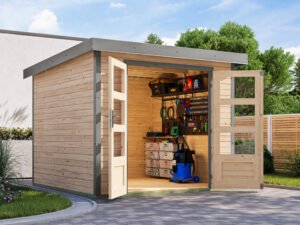
Tools you can’t find might as well not exist. A toolbox or tool bag ($20–$40) keeps the essentials together and portable. As the collection grows, a pegboard or small tool cabinet earns its keep. Our guide to storing tools in a small shed covers the next level of organization.
What You Can Skip (For Now)
Don’t buy: a circular saw, miter saw, or table saw until you have actual projects for them. A full socket set before you need one. Specialty plumbing tools — rent or buy per project. Cheap multi-tools that do twelve things badly instead of one thing well. Buy tools for the project in front of you, not hypothetical future projects. The hardware store will still be there.
For tool reviews and recommendations, Pro Tool Reviews offers thorough, independent testing.
Don’t Forget Basic Safety Gear
Tools are only half the kit — protecting yourself is the other half. Every homeowner should own: safety glasses ($5–$10; wear them for drilling, cutting, hammering, and anything overhead), work gloves ($10–$15; leather-palmed for demolition and yard work, snug nitrile for detail work), ear protection ($10 foam plugs or $20 earmuffs for power tools), and a dust mask or respirator ($15–$30; essential for sanding, insulation, and anything that creates fine dust).
Keep a basic first aid kit with the tools, not in the bathroom — when you cut yourself mid-project, you want bandages within arm’s reach. And know where your main water shutoff, electrical panel, and gas shutoff are before you ever need them in a hurry. Label them. Future-you, dealing with a burst pipe at midnight, will be grateful.
Practical Takeaway
Start with a cordless drill, hammer, screwdrivers, tape measure, adjustable wrench, pliers, level, utility knife, stud finder, and hex keys — about $150–$250 total. Add a plunger, caulk gun, ladder, and voltage tester as tier two. Buy quality on what you’ll use constantly, store everything where you can find it, and resist buying specialty tools until a real project demands them. With this kit, you’re ready for the vast majority of what homeownership throws at you.




1 thought on “What Tools Does Every Homeowner Need for Basic Repairs”