How Do I Unclog a Drain without Harsh Chemicals
Chemical drain cleaners promise a quick fix, but they’re nasty stuff — caustic enough to burn skin, damage pipes (especially older ones), kill septic systems, and create toxic fumes in your bathroom. I’ve seen what Drano does to a plumber’s hands, and I stopped using it years ago. The truth is that mechanical and natural methods clear most clogs just as well, without the risks.
Here’s how to unclog a drain without harsh chemicals, ordered from simplest to most involved — start at the top and work down until the water flows.
How Do I Unclog a Drain Without Harsh Chemicals?
Before anything else, remove the drain stopper or cover if you can. In bathroom sinks and tubs, an astonishing percentage of “clogs” are just hair and gunk wrapped around the stopper mechanism. Pull it out, clean it off, and the drain may work perfectly. This two-minute check solves the problem more often than people expect.
Method 1: Boiling Water (Simplest First Step)
For slow drains caused by grease or soap buildup — especially kitchen sinks — try boiling water first. Boil a full kettle, then pour it slowly down the drain in two or three stages, pausing between pours. The heat melts grease and loosens soap scum.
Important exception: don’t use boiling water on PVC pipes if the water is at a full rolling boil — water above 140°F can soften PVC joints over time. Let it cool for a minute after boiling, or just use very hot tap water for PVC systems. Porcelain sinks can also crack from thermal shock, so pour directly into the drain, not onto the basin. This method won’t fix hair clogs or solid obstructions, but it’s the right first move for greasy slow drains.
Method 2: Baking Soda and Vinegar (With Realistic Expectations)
The famous volcano mixture: pour half a cup of baking soda down the drain, followed by half a cup of white vinegar. Cover the drain for 15–30 minutes, then flush with hot water. Let’s be honest about what this does — the fizzing action loosens light buildup and deodorizes, but it won’t dissolve a serious hair clog. Think of it as maintenance and mild-clearing, not a miracle cure. It works best as a monthly preventive treatment to keep drains flowing freely.
For a stronger natural approach, follow the baking soda with washing soda (sodium carbonate) instead of vinegar — it’s more alkaline and cuts grease better. Or use an enzyme-based drain cleaner (like Bio-Clean): these contain live bacteria that eat organic matter overnight. They’re slower than chemicals (8+ hours) but genuinely effective on organic clogs and completely safe for all pipes and septic systems.
Method 3: The Plunger (Most Underrated Tool)
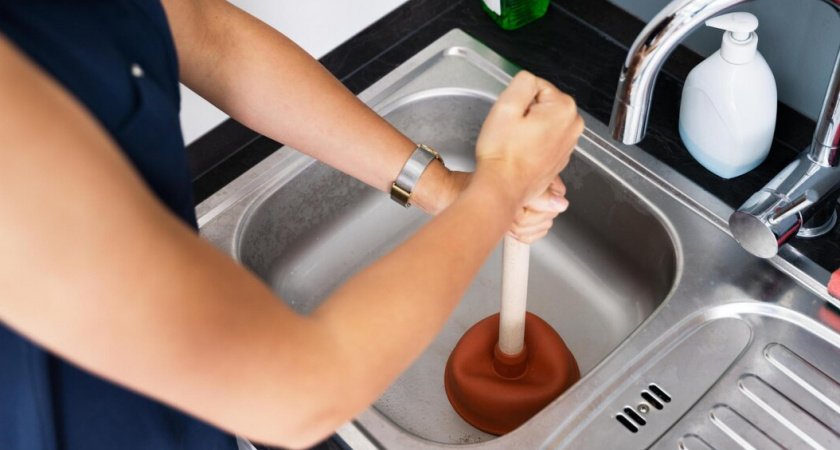
A plunger clears more clogs than any chemical ever will. The technique matters: for sinks and tubs, use a cup plunger (not the flange type meant for toilets). Seal the overflow drain with a wet rag (this is critical — without sealing it, pressure escapes), add enough water to cover the plunger cup, and plunge vigorously with quick, forceful strokes for 20–30 seconds. The pushing and pulling action dislodges the clog. Repeat a few times if needed.
Method 4: Drain Snake / Hair Removal Tool (The Real Fix for Hair Clogs)
For bathroom drains, hair is the culprit 90 percent of the time, and the best tool is a simple plastic hair snake — a $5 barbed strip you push down the drain and pull back up. What comes out is disgusting. What goes down afterward is water, flowing freely. Every household should own two of these.
For deeper clogs, a hand-crank drain auger ($25–$40) reaches 15–25 feet into the pipe. Feed the cable in slowly, crank when you feel resistance, and retract carefully. It’s straightforward, and there are excellent video tutorials online. Wear gloves — this is gloriously gross work.
Method 5: Clean the P-Trap (Kitchen Sinks)
If a kitchen sink won’t drain and plunging fails, the clog may be in the P-trap — the curved pipe under the sink. Place a bucket underneath, unscrew the slip nuts (usually hand-tight or gently persuaded with pliers), and dump out the contents. You’ll often find the clog sitting right there. Clean it out, reassemble, and run water to check for leaks. This is a 15-minute job that sounds intimidating and isn’t.
Prevention: Keeping Drains Clear
An ounce of prevention beats every method above:
- Use drain screens ($5 for a pack) in every shower, tub, and sink. They catch hair before it becomes a clog.
- Never pour grease down the kitchen drain. Let it cool, then wipe it into the trash or a container. Grease solidifies in pipes and causes the worst clogs.
- Run hot water for 30 seconds after each sink use to keep grease moving.
- Monthly enzyme treatment keeps organic buildup from accumulating.
- In the garbage disposal, run cold water (not hot) while grinding, and grind citrus peels occasionally to deodorize.
When to Call a Plumber
Call a professional if: multiple drains back up simultaneously (this signals a main-line clog, not a fixture clog — it needs professional equipment), water backs up into other fixtures (flush the toilet and the shower gurgles), you’ve tried mechanical methods and nothing works, or you smell sewage. Main-line clogs can involve tree roots or collapsed pipes — definitely not DIY territory. A professional drain cleaning typically costs $150–$400, far less than the water damage from a sewage backup.
If you’re dealing with a slow bathroom sink specifically, our guide to fixing a leaky faucet pairs well — while you’re under there, you might as well address both. And for keeping the whole bathroom in shape, see preventing mold in the bathroom.
Special Case: Garbage Disposal Clogs
Disposals clog differently than regular drains — usually from fibrous foods (celery, potato peels), grease, or overloading. First, never put your hand in the disposal, even when it’s off. Turn off the power at the breaker (not just the wall switch), then check for the jam: most disposals have a hex-shaped socket underneath where you can insert an Allen wrench and manually turn the motor to free it. Press the red reset button on the bottom afterward.
For a disposal that’s draining slowly, grind a tray of ice cubes — the hard cubes scour the grinding chamber — followed by citrus peels for freshness. Avoid chemical cleaners in disposals entirely; they can damage the rubber seals and splash back dangerously. If the disposal hums but doesn’t spin, it’s jammed (fixable as above). If it’s completely dead, check the breaker and the reset button before assuming it needs replacement.
Practical Takeaway
Start simple (check the stopper, try hot water), escalate mechanically (plunger, hair snake, auger, P-trap cleaning), and use baking soda/vinegar or enzyme cleaners for maintenance rather than miracles. Skip the caustic chemicals — they’re bad for your pipes, your septic system, and anyone who has to work on your plumbing later. Most clogs surrender to a $5 hair snake and ten minutes of effort. Family Handyman’s plumbing repair guides have detailed diagrams if you want a visual walkthrough of the auger technique.