How Do I Hang Heavy Shelves on Drywall Safely
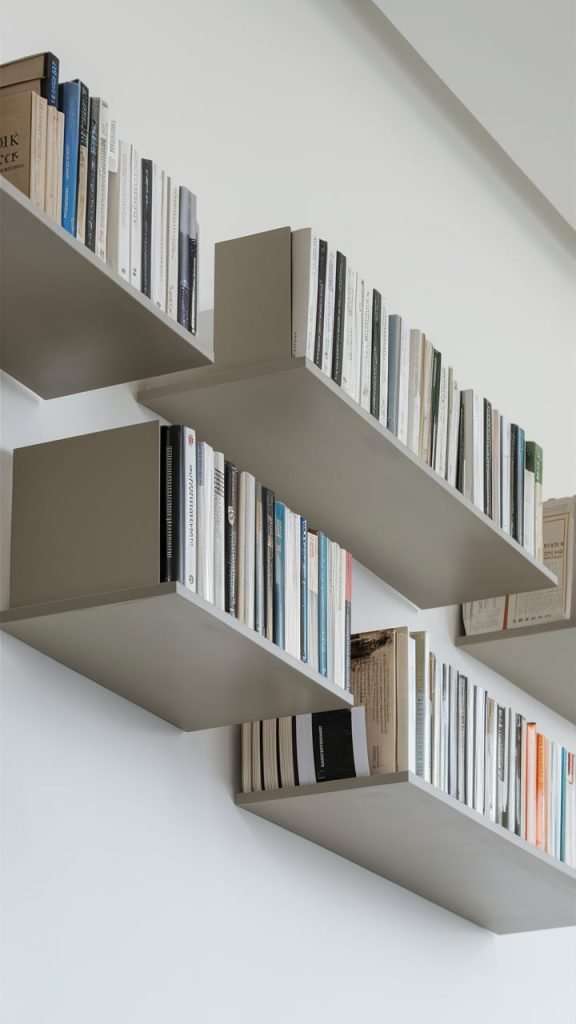
Hanging a heavy shelf on drywall is one of those projects where doing it wrong has immediate, dramatic consequences — I’ve seen a fully loaded bookshelf peel off a wall at 2 a.m., and it’s not something you forget. Drywall alone can hold almost nothing; a single screw in bare drywall might support 10 pounds if you’re lucky. But drywall with the right anchors or into studs can hold hundreds of pounds safely. The difference is entirely technique.
Here’s how to hang heavy shelves on drywall safely, whether you’re mounting a bookshelf, floating shelves, or a wall-mounted cabinet.
How Do I Hang Heavy Shelves on Drywall Safely?
The hierarchy of holding power, from strongest to weakest: screws into studs (strongest — 50+ pounds per screw), toggle bolts (50–100 pounds per anchor in 1/2-inch drywall), moly bolts / hollow-wall anchors (25–75 pounds), self-drilling threaded anchors (25–50 pounds), plastic expansion anchors (10–25 pounds), and bare screws or nails in drywall (basically nothing — never for heavy loads).
Rule one: always hit studs when you can. Everything else is a backup plan. A shelf bracket screwed into two studs will hold more than the shelf itself can carry. Use a stud finder to locate them — studs are typically 16 inches apart (sometimes 24 in newer construction).
Method 1: Mounting Into Studs (Best)
Locate studs with an electronic stud finder, then confirm by driving a thin nail or using a strong magnet to find the drywall screws (they’re always in studs). Mark the stud centers with painter’s tape — mark the edges too, since studs are 1.5 inches wide and you want center.
Position your shelf brackets so each bracket hits at least one stud. Drive 2.5 to 3-inch wood screws or lag screws (for very heavy loads) through the bracket into the stud. Pre-drill pilot holes slightly smaller than the screw to prevent splitting. Tighten firmly — the bracket should not flex or shift at all when you pull on it. Test with your body weight before loading the shelf: if it holds you leaning on it, it’ll hold books.
For floating shelves with hidden brackets, the bracket’s mounting plate must hit studs — this is non-negotiable for heavy loads. A floating shelf anchored only with drywall anchors will fail; it’s a matter of when.
Method 2: Toggle Bolts (Best When Studs Aren’t Available)
Sometimes studs just aren’t where you need them. Toggle bolts (also called butterfly anchors) are the strongest drywall-only option: a spring-loaded wing folds to pass through a drilled hole, then opens behind the drywall, spreading the load across a wide area. In 1/2-inch drywall, each toggle bolt holds 50–100 pounds in shear (downward force).
Installation: drill a hole sized for the toggle (usually 1/2 inch), fold the wings, push through, and tighten — the wings pull flat against the back of the drywall as you tighten. Critical: don’t overtighten, which crushes the drywall and weakens the hold. Snug is enough. For a heavy shelf, use at least four toggle bolts distributed across brackets, and derate generously — if the math says 200 pounds capacity, load 100.
Method 3: Other Hollow-Wall Anchors
Molly bolts (hollow-wall anchors) expand behind the drywall as you tighten, creating a strong mushroom grip — good for 25–75 pounds each, and they’re removable without leaving a huge hole. Self-drilling threaded anchors (the auger-style metal ones, not plastic) screw directly into drywall and hold 25–50 pounds — fine for medium shelves, and they install in seconds with just a screwdriver. Avoid cheap plastic expansion anchors for anything heavy; they’re fine for picture frames, not bookshelves.
Weight Math: How Much Can You Actually Hang?
Do the math before you load up. Books are shockingly heavy — a 3-foot shelf of hardcovers weighs 60–80 pounds. Add the shelf and bracket weight. Then apply a 2x safety factor: if your anchors are rated for 200 pounds total, plan for 100 pounds of load. Dynamic loads (kids pulling on shelves, earthquakes in prone areas) add force beyond static weight.
Also consider leverage: a deep shelf (12+ inches) puts more pull-out force on the top anchors than a shallow one. For deep, heavily loaded shelves, add a third bracket in the middle and consider securing the shelf to the brackets (not just resting on them) so it can’t tip forward.
Special Cases
Plaster walls (common in pre-1950s homes) are harder than drywall but more brittle — drill pilot holes to prevent cracking, and use toggle bolts or molly bolts rather than self-drilling anchors. Tile walls need masonry drill bits and special anchors; never drill tile without a pilot approach or it cracks. Metal studs (commercial buildings, some newer homes) can’t hold wood screws — use toggle bolts or specialized metal-stud anchors.
If you’re hanging shelves in a bathroom or kitchen where moisture is a factor, use stainless steel or coated hardware to prevent rust, and consider our guide to preventing bathroom mold for the broader moisture picture. For the tools you’ll need, see the essential homeowner toolkit.
Common Mistakes That Cause Failures
- Using drywall anchors rated for the shelf weight but forgetting the contents. The books weigh more than the shelf.
- Anchors too close to the drywall edge or to each other. Keep anchors at least 2 inches from edges and spread the load.
- Overtightening toggle bolts and crushing the drywall.
- Not pre-drilling into studs — the screw can split the stud edge and lose grip.
- Ignoring the shelf material itself. A particleboard shelf will sag and fail long before the wall anchors do. Use solid wood or plywood for heavy loads.
Testing and Long-Term Safety
After installation, load the shelf gradually — add weight over a day or two, checking that brackets stay tight and level. Recheck anchor tightness after the first month; materials settle and screws can loosen slightly. Then inspect annually: look for drywall cracking around anchors, brackets pulling away from the wall, or shelf sagging. Any of these means unload immediately and reinstall with stronger anchoring.
In earthquake-prone areas, add anti-tip straps or museum putty on items sitting on the shelves, and consider a front lip or rail on the shelf itself to prevent items from walking off during shaking. A shelf that survives the quake but dumps its contents is only half a success.
Practical Takeaway
Hit studs whenever possible with 2.5–3 inch screws — it’s the strongest, simplest method. When studs aren’t available, use toggle bolts rated well above your actual load, distribute weight across multiple anchors, and apply a 2x safety factor. Do the weight math including contents, avoid leverage problems with deep shelves, and test before loading. Heavy shelves are perfectly safe on drywall — as long as the drywall isn’t what’s holding them. Family Handyman’s anchoring guides include weight-rating charts for every anchor type mentioned here.