Coin vs. Token: What’s the Real Difference in Crypto?
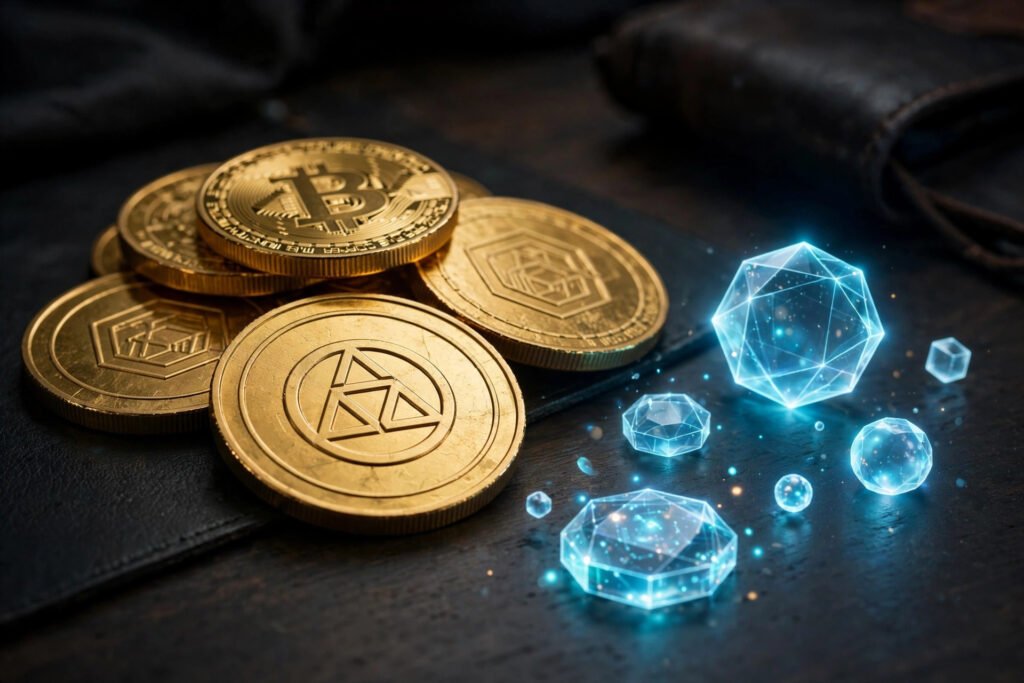
Coin, token, cryptocurrency — people use these words interchangeably, but in crypto they mean different things, and the difference actually matters. It affects how an asset works, what gives it value, and what risks it carries. If you’ve ever wondered why Bitcoin is a “coin” but the thing your friend shilled last week is a “token” — or why it matters — this is the guide that finally makes it click.
The short version
- Coin: the native currency of its own blockchain. Bitcoin runs on the Bitcoin blockchain; Ether runs on Ethereum. Coins typically pay for transactions on their network and often serve as digital money or “gas.”
- Token: a digital asset built on top of someone else’s blockchain, using smart contracts. Most tokens live on Ethereum (as ERC-20 tokens) or Solana. Tokens can represent almost anything: a DeFi protocol’s governance rights, a stablecoin pegged to the dollar, or a memecoin with no purpose at all.
Analogy: if a blockchain is a country, the coin is its official currency — and tokens are like casino chips, gift cards, or company shares issued inside that country. They all have value in context, but they’re fundamentally different instruments.
Coins: the natives
A coin is inseparable from its blockchain. Bitcoin (BTC) is the native coin of the Bitcoin network; Ether (ETH) is native to Ethereum; Solana (SOL) to Solana. Key properties:
- They power their network. Transaction fees (“gas”) are paid in the native coin. No coin, no transactions.
- They’re created by the protocol itself — through mining (Bitcoin) or staking issuance (Ethereum, Solana) — not by a company or developer deploying a contract.
- They tend to be the most decentralized and battle-tested assets in crypto. Bitcoin has run for 15+ years without being hacked or shut down.
When people talk about crypto as “digital gold” or a long-term store of value, they usually mean major coins — BTC and ETH primarily. These have the longest track records, the deepest liquidity, and the most developer activity.
Tokens: the residents
Tokens don’t have their own blockchain. They’re created by deploying a smart contract on an existing chain — something anyone with basic coding skills can do in an afternoon, which is both the beauty and the danger of tokens. Major categories:
Utility tokens
These give access to something: governance votes in a DeFi protocol (like UNI for Uniswap), discounted trading fees, or access to a platform’s features. Their value is tied to the usefulness of the underlying project.
Stablecoins
Tokens pegged to the dollar, like USDT and USDC. They’re among the most-used tokens in all of crypto — the plumbing of trading and transfers. (See our deep dive on how stablecoins like USDT actually work.)
Governance tokens
These represent voting rights in decentralized protocols — DeFi’s version of shareholder votes. Holders vote on fee changes, treasury spending, and upgrades.
Memecoins
Tokens like Dogecoin (technically a coin, but culturally a memecoin) and Shiba Inu, whose value comes from community enthusiasm and speculation rather than utility. Fun, culturally significant — and extraordinarily risky as investments.
Security tokens
Tokens representing regulated assets like company shares or real estate. Still a small market, but potentially significant long-term.
Why the distinction matters for you
Risk profile
Coins — especially the major ones — have survived multiple market cycles and have no single issuer who can abandon them. Tokens, by contrast, depend on the team and project behind them. A token’s developers can stop developing, get hacked, or turn out to be scammers (the infamous “rug pull”). Thousands of tokens have gone to zero. When evaluating any crypto asset, the first question is: coin or token — and if token, who stands behind it?
How value accrues
A coin’s value generally tracks its network’s adoption and security. A token’s value tracks its specific project’s success — a much narrower bet. This is why diversified crypto exposure usually means major coins, while token bets are closer to venture-capital-style speculation on startups.
Technical risk
Tokens live in smart contracts, which can have bugs. Major DeFi hacks — hundreds of millions lost in incidents like the Ronin or Wormhole exploits — were token/contract-level failures, not failures of the underlying coins. Holding tokens means trusting both the blockchain and the contract code. This layered trust is why experienced investors treat unaudited token contracts with deep suspicion, no matter how attractive the promised returns look.
Common confusions, cleared up
- “Is Ethereum a coin or token?” Ether (ETH) is a coin — native to the Ethereum blockchain. But thousands of tokens (USDC, UNI, LINK) run on Ethereum.
- “Is Dogecoin a coin?” Technically yes — it has its own blockchain. Culturally it’s a memecoin. The categories overlap.
- “Are NFTs tokens?” Yes — NFTs are non-fungible tokens, a special token standard for unique items. (See how NFTs work and whether they’re worth buying.)
- “Does it matter for taxes?” No — the IRS treats all crypto as property regardless of coin/token status. Our guide to managing your finances with crypto in the mix covers the planning side.
What this means for a beginner’s strategy
If you’re new, the coin/token distinction gives you a simple risk ladder:
- Major coins (BTC, ETH): the “blue chips” — highest liquidity, longest history, most decentralized.
- Established utility tokens: higher risk, tied to specific projects that at least have working products and real users.
- New/small tokens: venture-capital-level risk. Most fail. Never a large position.
- Memecoins: lottery tickets. Fun with pocket change; financial ruin with serious money.
And regardless of what you buy, secure it properly: two-factor authentication on every account, and self-custody for anything significant. The SEC’s investor education resources are a solid starting point for understanding the regulatory landscape around these assets.
The bottom line
Coins are the native currencies of their own blockchains; tokens are assets built on someone else’s blockchain. That one architectural difference cascades into everything: who controls the asset, how it can fail, and how risky it is. For beginners, the practical rule is simple — major coins for the core of any crypto exposure, tokens only when you understand the specific project, and memecoins only with money you’d happily set on fire. Know what you’re holding, and you’ll already be ahead of most of the market.
For official guidance, see the SEC’s digital asset resources.
Frequently Asked Questions
What’s the main difference between a coin and a token?
A coin is the native currency of its own blockchain (Bitcoin on Bitcoin, Ether on Ethereum). A token is created on top of an existing blockchain via smart contracts and doesn’t have its own network.
Is Bitcoin a coin or a token?
A coin — it’s the native currency of the Bitcoin blockchain, created by the protocol itself through mining.
Are tokens riskier than coins?
Generally yes. Tokens depend on the team, project, and smart contract behind them — any of which can fail. Major coins have no single issuer and the longest survival records in crypto.
Can a token become a coin?
Yes, when a project launches its own blockchain and migrates — this is called a mainnet launch. Several major projects started as Ethereum tokens before becoming independent coins.
Does the coin/token distinction affect taxes?
No. The IRS treats all cryptocurrencies as property, so buying, selling, and trading either type creates the same kinds of taxable events.