How to Get Rid of Dark Circles Naturally: By-Cause Guide
You slept eight hours and still look exhausted. The dark shadows under your eyes have their own zip code, and concealer is doing heavy lifting every morning. Dark circles are one of the most common — and most misunderstood — beauty complaints in America. Here’s the frustrating truth: “dark circles” isn’t one condition, it’s at least four different problems that look similar, and the natural remedies that work brilliantly for one type do nothing for another. Cucumber slices won’t fix genetics. Before reaching for any remedy, you need to know which type you have. Here’s how to diagnose and treat each one.
First: Identify Your Type of Dark Circles
Vascular (bluish/purple): the skin under the eyes is the thinnest on the body, so blood vessels show through — worse when you’re tired, dehydrated, or have allergies (blood pools in the venous network). Gently stretch the skin: if the darkness moves with the stretch or looks better, it’s vascular shadowing.
Pigmented (brownish): actual excess melanin in the under-eye skin — more common in medium to deep skin tones, often hereditary, worsened by sun exposure and eye-rubbing (which triggers post-inflammatory hyperpigmentation).
Structural (shadows): hollows, tear troughs, or under-eye bags cast literal shadows — the “dark circle” is a lighting effect, not discoloration. Look in a mirror with overhead light, then with light directly on your face: if the darkness vanishes in direct light, it’s structural.
Allergic shiners: dark, puffy under-eyes from nasal congestion — the venous congestion of allergies shows through thin skin. If you also have itchy eyes, sneezing, or a stuffy nose, allergies are driving it.
Most people have a combination. The type determines the treatment — which is why generic “dark circle remedies” have such mixed reviews.
Natural Remedies That Actually Help (By Type)
For vascular circles: cold and circulation
Cold constricts blood vessels, reducing the bluish show-through. Chilled spoons, cold compresses, or refrigerated gel masks for 10 minutes constrict the vessels temporarily — the effect is real but temporary (hours, not days). Caffeine-containing products (including cooled green tea bags, which combine cold + caffeine + antioxidants) constrict vessels similarly. Elevating your head at night reduces morning fluid pooling. These manage the symptom; they don’t change the underlying thin skin.
For pigmented circles: brightening and sun protection
This is the slowest type to improve naturally. Daily sunscreen (the under-eye area included — UV darkens existing pigmentation), vitamin C serum (inhibits melanin production with consistent 8–12 week use), and niacinamide all have evidence for gradual brightening. Avoid rubbing your eyes — every rub triggers micro-inflammation that deposits more pigment, especially in melanin-rich skin. Patience is mandatory: pigment changes take months.
For structural shadows: the honest answer
No natural remedy fills a tear trough. Good sleep, hydration, and cold reduce the puffiness that deepens shadows, and proper lighting plus makeup technique (brightening concealer in the hollow, not on the puff) camouflage effectively. But genuine volume loss is a structural issue — topical products can’t replace lost volume. Anyone claiming a cream “fills hollows” is selling hope, not chemistry.
For allergic shiners: treat the allergy
Saline nasal rinses, managing dust-mite exposure (mattress and pillow encasements), and appropriate allergy treatment reduce the venous congestion causing the darkness. Fix the nose, fix the shiners.
The Lifestyle Foundations (All Types)
These help every type to some degree: sleep — not just duration but regularity; chronic sleep debt worsens vascular pooling and overall skin dullness. Hydration and salt — dehydration emphasizes every under-eye issue; excessive evening salt worsens morning puffiness. Iron and B12 — deficiencies can worsen pallor that emphasizes circles; worth checking if fatigue accompanies the darkness. Sun protection — UV worsens pigmentation and thins skin over time.
The sleep piece deserves emphasis — falling asleep faster and addressing unrefreshing sleep do more for vascular dark circles than any cream, because the “tired eyes” look is often accurately named. No topical product compensates for chronic sleep deprivation.
Makeup Techniques That Minimize Dark Circles
While treating the underlying cause, makeup done right makes an enormous difference — and done wrong emphasizes the problem. The key technique: color correction before concealer. Peach or salmon-toned corrector neutralizes blue/purple vascular darkness; for deeper skin tones, a deeper orange corrector prevents the ashy look plain concealer leaves. Apply corrector only where the darkness is, pat to blend edges, then apply a concealer matched to your skin tone (not lighter — lighter concealer highlights rather than hides) in a thin layer over it.
Placement matters more than product: apply in the shadowed hollow (the tear trough), not across the whole under-eye — covering the puffy areas with light concealer makes bags look bigger. Set immediately with a tiny amount of finely-milled translucent powder pressed in with a damp sponge; un-set under-eye makeup migrates into fine lines by noon. And the counterintuitive rule: less is more. Thick layers of concealer crease, cake, and draw attention to the exact area you’re trying to minimize. Thin, targeted, set — that’s the whole technique, and it works for every circle type while the longer-term treatments do their work.
What Doesn’t Work (Stop Wasting Money)
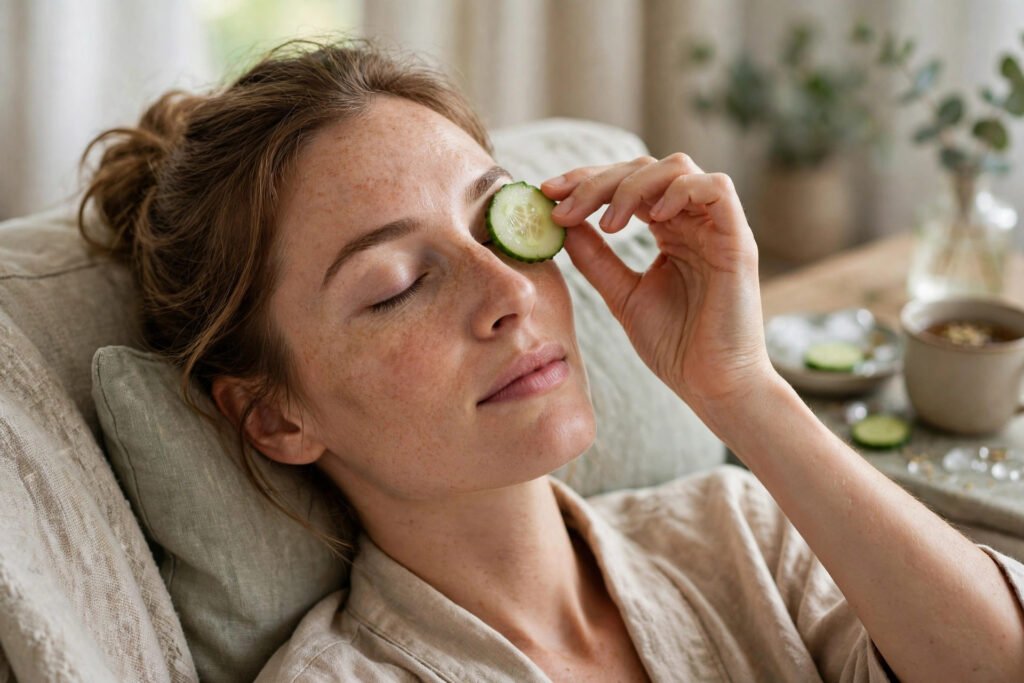
Cucumber slices: mildly cold and hydrating — a pleasant 10 minutes that does nothing beyond what a cold washcloth does. Potato slices, turmeric pastes, and most kitchen remedies: no meaningful evidence, some risk irritation on thin under-eye skin. Eye creams claiming to “erase” dark circles: the good ones moisturize (reducing the crepey texture that emphasizes shadows) and may slightly brighten over months — but no cream changes genetics, bone structure, or vascular anatomy. The American Academy of Dermatology is blunt on this: manage expectations, identify the type, and treat accordingly. Mayo Clinic’s overview of dark circles causes covers the medical side for anyone whose circles appeared suddenly.
When to See a Dermatologist
See one if: circles appeared suddenly (can signal thyroid, liver, or anemia issues — sudden change warrants medical evaluation, not concealer); they’re severely impacting your wellbeing despite proper treatment; you want to discuss prescription options (prescription retinoids modestly thicken under-eye skin over months; hydroquinone for pigmented types under supervision); or you’re considering procedural options for structural hollows (fillers — effective but temporary, with real risks in the tear-trough area that demand an experienced injector).
Conclusion
Dark circles come in four types — vascular, pigmented, structural, and allergic — and natural remedies only work when matched to the type: cold and caffeine for vascular, brightening plus sun protection for pigmented, allergy treatment for shiners, and honest expectations for structural shadows. Layer the universal foundations (sleep, hydration, sun protection) under targeted treatment, give pigment remedies months not days, and see a dermatologist for sudden changes. The goal isn’t perfection — it’s understanding what’s actually under your eyes and treating that.
Frequently Asked Questions
What causes dark circles under eyes?
Four main types: visible blood vessels through thin skin (vascular), excess melanin (pigmented), shadows from hollows/bags (structural), and allergy-related venous congestion. Most people have a combination.
Do cucumbers really help dark circles?
Minimally — they’re cold and hydrating, which temporarily reduces puffiness, but no more effective than a cold washcloth. They don’t address pigmentation or structure.
Can dark circles be removed naturally?
Vascular circles improve with cold, sleep, and hydration; pigmented circles fade slowly with vitamin C, niacinamide, and strict sun protection. Structural hollows can’t be fixed with natural remedies.
Does lack of sleep cause dark circles?
It worsens them — poor sleep increases vascular pooling and fluid retention, emphasizing the bluish/purple type. But well-rested people with genetic or structural circles still have them; sleep isn’t the whole story.
When should I worry about dark circles?
If they appear suddenly, especially with fatigue, paleness, or other symptoms — sudden changes can signal anemia, thyroid issues, or other medical conditions worth evaluating.