How to Calm an Anxious Dog During Thunderstorms: Vet Tips
The sky darkens, the first distant rumble rolls across the neighborhood, and your normally confident dog transforms — panting, pacing, drooling, wedging herself behind the toilet. If this scene plays out in your house every storm season, you’re far from alone: noise phobia, especially thunderstorm fear, affects an estimated one in three dogs in America. The good news is that thunderstorm anxiety is one of the most treatable behavior problems in dogs — but only if you respond the right way. Comforting the wrong way can actually make it worse. Here’s what veterinary behaviorists recommend, from immediate storm-night tactics to long-term fixes.
Why Thunderstorms Terrify Dogs (It’s Not Just the Noise)
Understanding the fear helps you fight it. Dogs hear thunder far more intensely than we do — their hearing is roughly four times more sensitive, and they detect the low-frequency rumbles long before we notice anything. But research suggests noise is only part of it. Dogs may also react to the drop in barometric pressure, the static electricity buildup in their coats (those little shocks are genuinely unpleasant), and even the flashing light. Some dogs start panicking before the storm arrives, keying off pressure changes humans can’t feel — which is why your dog sometimes “knows” an hour before the forecast does.
Certain dogs are more vulnerable: herding breeds and hounds show higher rates of noise phobia, under-socialized rescue dogs are overrepresented, and anxiety tends to worsen with age if untreated. Recognizing that this is a genuine panic response — not disobedience — is step one. A dog in full thunderstorm panic isn’t choosing to misbehave; the thinking part of her brain has essentially gone offline. Learning to distinguish anxiety from ordinary stress applies to dogs as much as people — the intensity and loss of normal coping are the tells.
Storm-Night Tactics That Actually Work
Create a bunker, not a prison
Set up a safe space before storm season: an interior room or basement corner with blankets, a favorite chew, and something that smells like you. A crate works only if the dog already loves the crate — forcing a panicked dog into confinement escalates panic. Let the dog choose where to hide; the “wrong” spot behind the couch is fine if it helps her cope.
Mask the sound
Close windows and curtains, then run white noise, a loud fan, or calming music. Classical music and specially designed “through a dog’s ear” audio have modest evidence behind them. The goal isn’t silence — it’s reducing the contrast between the quiet house and the sudden thunderclap.
Try pressure wraps
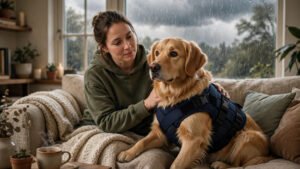
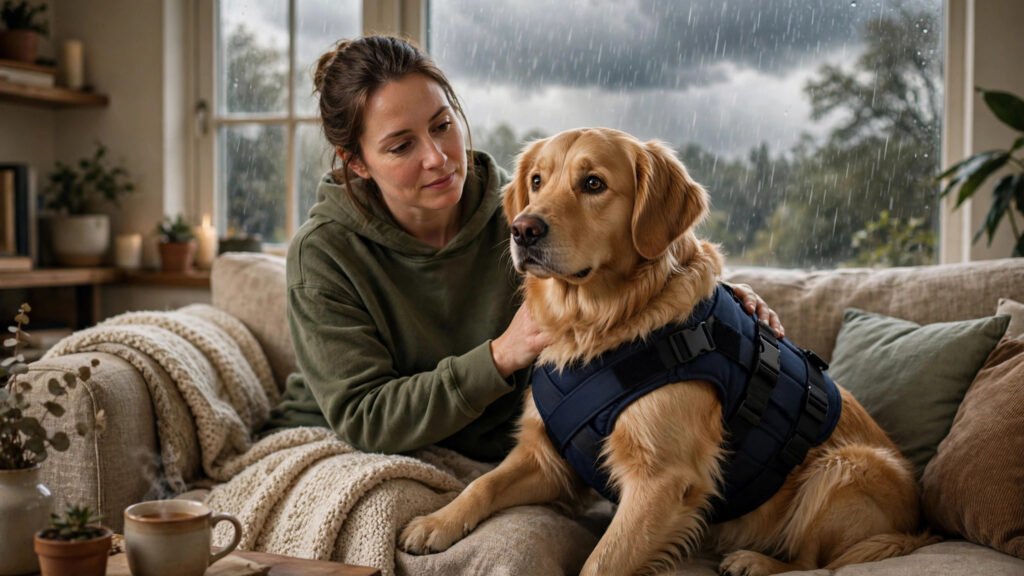
Snug-fitting anxiety vests work on the swaddling principle. Studies show they help a meaningful subset of dogs — not all, but enough that they’re worth trying. Introduce the vest during calm times first, paired with treats, so it doesn’t become a predictor of scary events.
Stay calm and present — but don’t overdo the soothing
The old advice was “ignore the dog or you’ll reward the fear.” Veterinary behaviorists have largely reversed this: you can’t reinforce an emotion, only behaviors, and calm petting doesn’t make fear worse. But frantic, high-pitched soothing (“oh no, it’s okay baby, shhh!”) can signal to the dog that there really is something to worry about. Be a calm, boring presence. Your steadiness is the message.
Preparing Before Storm Season Starts
Don’t wait for the first thunderstorm to think about this — preparation in the calm weeks before storm season pays off enormously. Talk to your vet in spring about situational medication, so you have it on hand (and have tested the dose) before the first big storm; discovering mid-panic that the prescribed dose makes your dog drool excessively is avoidable with a trial run. Set up the safe space now and feed meals there for weeks, so it’s established territory before it’s needed. Test the pressure wrap during calm times with treats. Download a white noise app and test which sounds your dog responds to.
Also prepare for the practical dangers: ensure your dog’s ID tags and microchip registration are current — storm-panicked dogs are among the most common lost-dog cases in America every summer. Secure fences and check for escape routes; a panicked dog can clear obstacles that contain her comfortably on calm days. Know your forecast triggers and plan departures around them when possible. Storm anxiety managed proactively is a minor inconvenience; managed reactively, it’s a crisis. The calendar is your friend — use it.
What NOT to Do During a Storm
Never punish panic behaviors — scolding a dog for pacing or whining during a storm punishes the fear itself and reliably makes it worse. Don’t drag a terrified dog outside “to show her it’s fine.” Don’t leave an anxious dog alone during predicted storms if you can avoid it; panic-driven escape attempts cause real injuries every storm season in America, from broken teeth to dogs running into traffic. And skip the “tough love” approach entirely — flooding a phobic dog with the scary stimulus without a desensitization plan is how mild anxiety becomes severe phobia.
The Long-Term Fix: Desensitization and Counter-Conditioning
Storm-night management copes with symptoms; behavior modification actually reduces the fear. The protocol: play recorded thunder at very low volume while the dog does something wonderful (eating high-value treats, playing), gradually increasing volume over weeks — always staying below the threshold that triggers anxiety. Pair every session with rewards so thunder predicts good things.
This works, but it demands patience and precision — increase volume too fast and you sensitize instead of desensitizing. For moderate to severe cases, work with a veterinary behaviorist or certified applied animal behaviorist. The American Veterinary Medical Association can help you find qualified professionals, and many now offer remote consultations. The American Kennel Club’s storm-anxiety resources offer additional desensitization protocols worth reviewing with your trainer.
When to Talk to Your Vet About Medication
For dogs whose panic is severe — self-injury, escape attempts, or anxiety that starts hours before the storm — behavior modification alone may not be enough, and that’s okay. Modern veterinary medicine has good options: situational medications like trazodone or sileo (an FDA-approved gel for noise aversion) given before the storm take the edge off panic so learning can happen; daily anti-anxiety medications help dogs with generalized anxiety underlying the storm phobia. Medication isn’t failure — it’s giving the dog’s brain the chemical room to learn that storms aren’t dangerous. Never give human anti-anxiety drugs or Benadryl as a sedative strategy without veterinary guidance; dosing and suitability are individual.
Managing your own stress through the process matters too — natural ways to lower stress help you stay the calm presence your dog needs when the sky starts rumbling.
Conclusion
Thunderstorm anxiety in dogs is common, genuine, and treatable. Tonight: build the safe space, mask the sound, try a pressure wrap, and be calmly present without punishment. This season: start a gradual desensitization program. And if your dog’s panic is severe, talk to your vet about medication — it’s a tool, not a defeat. Most dogs improve significantly with the right combination, and storm season stops being something you both dread.
Frequently Asked Questions
Should I comfort my dog during a thunderstorm?
Yes — calm, matter-of-fact companionship helps. You can’t reinforce fear with gentle petting; just avoid frantic, high-pitched soothing that signals something is wrong.
Do thunder jackets actually work?
For many dogs, yes — studies show pressure wraps reduce anxiety symptoms in a significant subset of dogs. They’re not universal, but they’re low-risk and worth trying.
Why does my dog panic before the storm starts?
Dogs can sense barometric pressure drops and static electricity buildup before thunder is audible to humans. Pre-storm panic is normal for noise-phobic dogs.
Can thunderstorm phobia be cured?
Many dogs improve dramatically with desensitization and counter-conditioning, sometimes combined with medication. “Cured” varies — most go from panic to manageable unease, which is a huge quality-of-life win.
Is it safe to leave my dog alone during a storm?
It’s risky for severely anxious dogs — panic escape attempts cause injuries and lost dogs every storm season. If you must leave, secure the safe space, mask sound, and consider vet-prescribed situational medication.