
How to Tell If You Need Glasses: 8 Signs to Watch
You’ve started holding your phone at arm’s length to read texts. Road signs stay blurry until you’re right on top of them. And by 4 p.m., there’s a dull ache behind your eyes that wasn’t there a year ago. If you’re asking how do I know if I need glasses, here’s the honest truth: your eyes are already answering. Vision changes creep up so gradually that most people adapt to bad eyesight for months before admitting something’s off. Let’s decode the signals.
How Do I Know If I Need Glasses? The Telltale Signs
Needing glasses isn’t about vanity or aging — it’s about optics. If any of these sound familiar, an eye exam is overdue:
- Squinting to see clearly. Squinting temporarily changes your eye’s shape to sharpen focus. If you’ve become a habitual squinter — at road signs, the TV, restaurant menus — your eyes are compensating for a refractive error like nearsightedness, farsightedness, or astigmatism.
- Headaches, especially in the afternoon. When your eyes strain all day to focus, the surrounding muscles fatigue and you get tension headaches. If you’re wondering why you get headaches in the afternoon every day, uncorrected vision is one of the first suspects to rule out.
- Holding things closer or farther away. The classic presbyopia move — extending your arm to read small print — typically starts in the early 40s as the lens stiffens. Kids and young adults who hold books inches from their face may be nearsighted.
- Trouble seeing at night. Halos around headlights, difficulty reading street signs after dark, or general night-driving anxiety often signal vision changes. This one matters for safety, so don’t sit on it.
- Eye fatigue and rubbing. Tired, itchy, burning eyes after screen time or reading — beyond normal end-of-day tiredness — suggest your eyes are working too hard.
- Closing one eye or tilting your head. Unconscious habits to see better, especially common in kids who won’t tell you their vision is blurry because they assume everyone sees this way.
What an Eye Exam Actually Involves
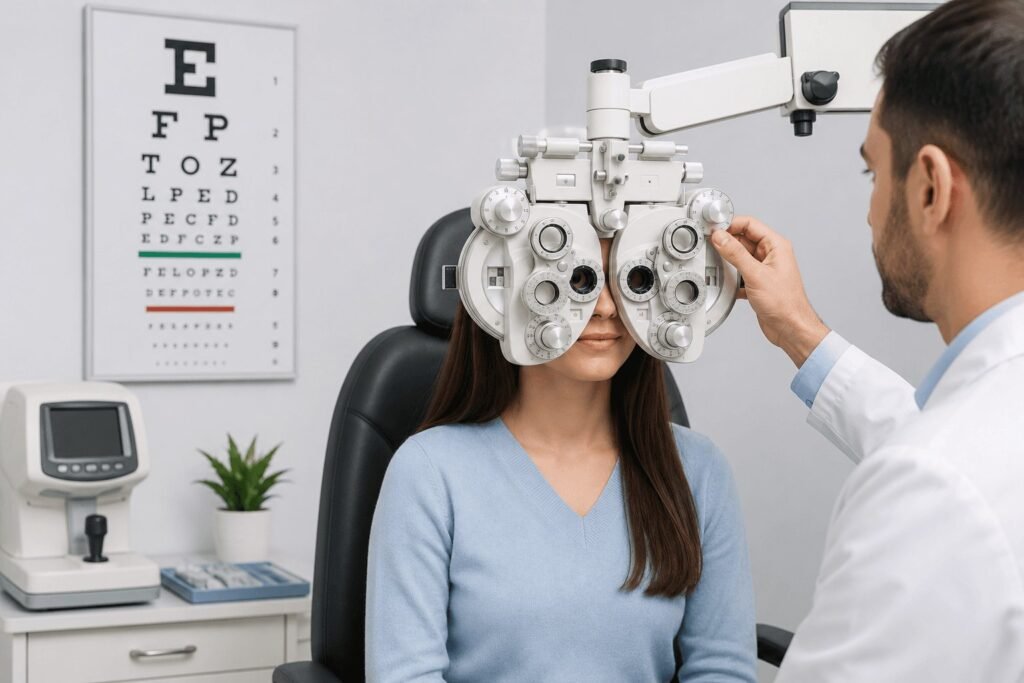
A comprehensive eye exam is quick, painless, and more thorough than the vision screening at the DMV. The optometrist checks your visual acuity (the letter chart), refraction (the “which is better, one or two?” lens test that pinpoints your prescription), eye pressure (screening for glaucoma), and the health of your retina and optic nerve with dilated drops. The whole thing takes 30–45 minutes. The American Academy of Ophthalmology’s eye exam guide walks through exactly what to expect if you’re nervous about your first one in years.
Adults with no symptoms should get a baseline exam around age 40, then follow their doctor’s recommended schedule. If you have diabetes, high blood pressure, or a family history of eye disease, go sooner and more often — these conditions can damage vision silently. Kids should be checked before starting school and any time a teacher flags attention or reading issues, since vision problems masquerade as learning problems surprisingly often.
Glasses, Contacts, or Laser: Your Options
If you do need correction, glasses are the simplest starting point — and modern frames have come a long way from the clunky stereotypes. Contacts offer freedom for sports and active lifestyles but demand strict hygiene; sleeping in lenses not approved for it is asking for a corneal infection. LASIK and similar procedures are genuinely excellent options for the right candidates, but “right candidate” requires a thorough evaluation of corneal thickness and eye health. There’s no universally best choice — just the best choice for your eyes, budget, and lifestyle.
Protecting the Vision You Have
Whether or not you end up with a prescription, your daily habits shape your eye health. The 20-20-20 rule (every 20 minutes, look at something 20 feet away for 20 seconds) genuinely reduces digital eye strain. Sunglasses with 100% UV protection aren’t a fashion accessory — UV damage accumulates and contributes to cataracts. And diet matters: leafy greens, colorful fruits, and omega-3-rich fish supply the nutrients your retinas run on. If screens are the main strain source, cutting back on screen time helps your eyes as much as your attention span. Persistent exhaustion can also blur the picture — feeling tired all the time even after sleeping sometimes has a vision component people never suspect.
Kids, Screens, and Special Cases
Children’s vision deserves special attention because kids rarely complain — they assume everyone sees the world the way they do. Watch for squinting, sitting very close to the TV, holding books inches from the face, frequent eye rubbing, complaints of headaches (especially after school), or a sudden drop in reading performance. Myopia in children is rising sharply worldwide, and researchers link it strongly to reduced outdoor time as much as to screen use. The current guidance: kids should get significant daily outdoor daylight, which appears genuinely protective against myopia progression.
For adults glued to screens, digital eye strain (sometimes called computer vision syndrome) deserves its own mention. Beyond the 20-20-20 rule, check your screen habits: blinking rate drops by half when staring at screens, which dries the eyes — conscious blinking and occasional artificial tears help. Screen position slightly below eye level, adequate room lighting to reduce contrast glare, and larger text sizes all reduce the focusing effort. Blue-light glasses are mostly marketing; the National Eye Institute’s refractive error resources focus on proven measures like regular exams and UV protection instead.
Contact Lens Hygiene: The Non-Negotiables
If you choose contacts, the hygiene rules aren’t suggestions — they’re what stands between you and a corneal infection. Wash and dry your hands before handling lenses. Never sleep in lenses not specifically approved for overnight wear. Replace lenses on schedule (dailies get tossed daily — “stretching” them invites trouble). Use fresh solution every time, never top off old solution, and replace your case every three months. And never rinse lenses in tap water — it can harbor a microorganism called acanthamoeba that causes a rare but devastating eye infection. These rules take two minutes and prevent the vast majority of contact-lens complications.
The Practical Takeaway
If you’re squinting, getting afternoon headaches, struggling at night, or doing the arm’s-length phone read, stop debating and book the exam. It’s 45 minutes and usually covered by vision insurance — or under $100 without it. Clear vision isn’t a luxury; it affects your work, your driving safety, and how wiped out you feel at the end of the day. Your eyes have been compensating long enough. Let a professional take a look.






