
Simple Stretching Routine for People Who Sit All Day
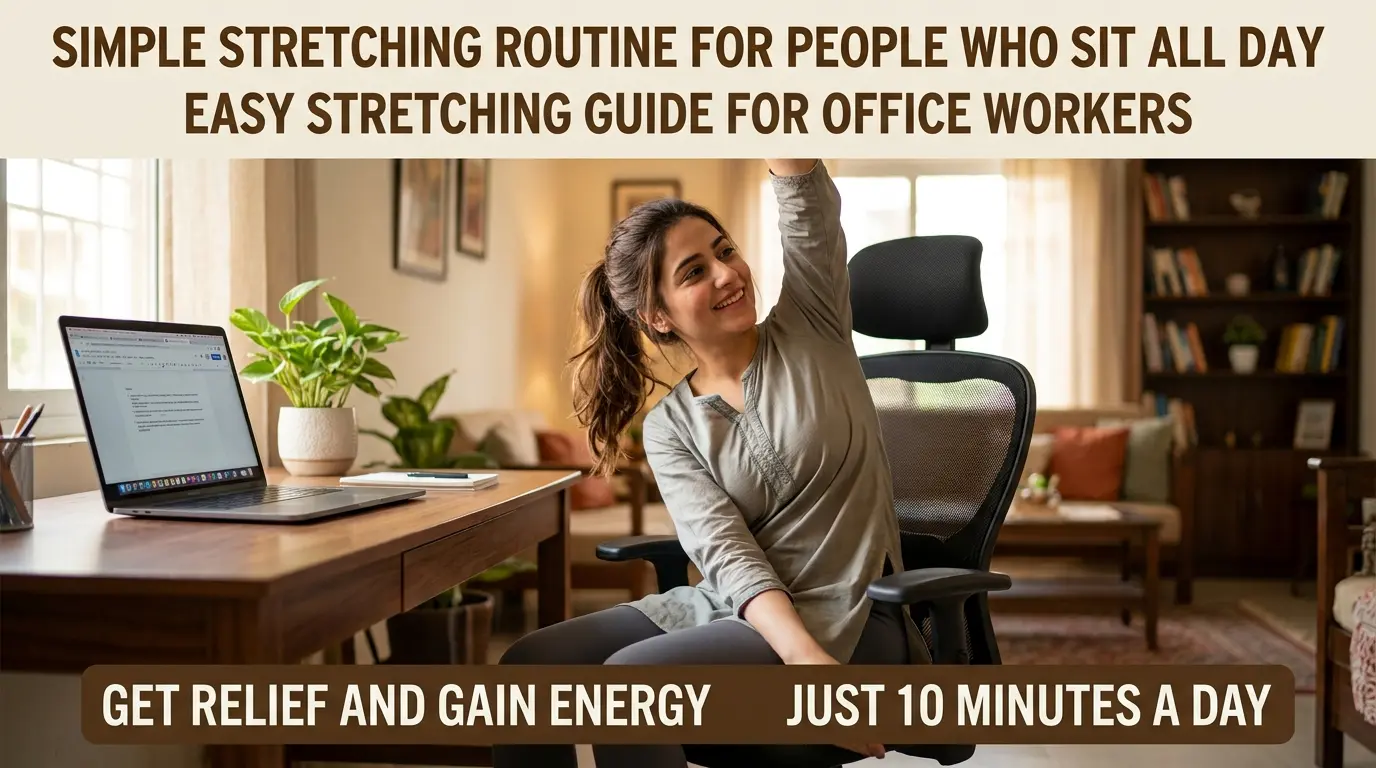
Sitting for long hours has become a normal part of modern life. Whether you work at a desk, study for several hours, drive for a living, or spend a lot of time using a computer, staying in the same position for too long can leave your body feeling stiff and uncomfortable.
The good news is that you do not need a complicated workout to feel better. A simple stretching routine for people who sit all day can take only a few minutes and can easily fit into your workday.
Regular stretching can help loosen tight muscles, improve flexibility, and encourage you to move more throughout the day. The key is to keep the routine simple enough that you can actually do it consistently.
Why Sitting All Day Can Make You Feel Stiff
When you sit for hours without moving much, certain muscles and joints stay in the same position for a long time. This can contribute to stiffness around the hips, back, shoulders, and neck.
You may notice things such as:
- Tight hips after getting up from your chair
- Stiffness in your lower back
- Tight shoulders
- A sore or stiff neck
- Tight hamstrings
- Reduced flexibility
- General discomfort after sitting for several hours
You do not necessarily need an intense workout to address everyday stiffness. Taking short movement breaks and doing gentle stretches throughout the day can be a useful way to break up long periods of sitting.
Simple Stretching Routine for People Who Sit All Day
You can perform this routine at home, in the office, or anywhere you have enough space to move safely. Try to move slowly and avoid forcing any stretch.
1. Neck Side Stretch
Long periods of looking at a computer screen can leave your neck feeling tight.
Sit or stand upright. Slowly tilt your head toward your right shoulder until you feel a gentle stretch along the left side of your neck.
Hold for about 15 to 20 seconds, then return to the starting position. Repeat on the other side.
Do not pull your head down with your hand. The goal is a gentle stretch, not discomfort.
2. Shoulder Rolls
Shoulder rolls are one of the easiest stretches to do while sitting at your desk.
Sit upright and relax your arms. Slowly roll both shoulders upward, backward, and then downward.
Repeat 8 to 10 times. Then reverse the direction.
This simple movement can help you release some of the tension that builds up around your shoulders during desk work.
3. Chest Stretch
Sitting at a desk for a long time can encourage you to round your shoulders forward.
To stretch your chest, stand near a doorway. Place your forearms against the door frame and gently step forward until you feel a comfortable stretch across your chest.
Hold for 15 to 30 seconds while breathing normally.
Keep the stretch gentle and avoid pushing your body too far forward.
4. Seated Upper Back Stretch
This is a useful desk stretch for back and shoulders.
Sit upright and extend both arms in front of you. Interlace your fingers and gently push your hands forward while allowing your upper back to round slightly.
You should feel a stretch between your shoulder blades.
Hold for about 15 to 20 seconds and breathe normally.
5. Seated Spinal Twist
A gentle seated twist can help you move your upper body after spending a long time facing a computer.
Sit toward the front of your chair with both feet on the floor. Place your right hand on the outside of your left thigh or on the chair.
Slowly turn your upper body toward the left.
Hold for 15 to 20 seconds, then return to the center and repeat on the other side.
Keep the movement comfortable and avoid forcing the rotation.
6. Hip Flexor Stretch
The hip flexors can feel tight after sitting for extended periods.
Stand upright and take one foot behind you. Keep both feet facing forward and gently bend the front knee while keeping your back leg comfortable.
You should feel a gentle stretch toward the front of the hip of the leg that is behind you.
Hold for 20 to 30 seconds, then switch sides.
If you have trouble balancing, hold onto a desk or wall for support.
7. Seated Hamstring Stretch
Tight hamstrings are common when you spend much of the day sitting.
Sit near the edge of a sturdy chair. Extend one leg straight in front of you with your heel resting on the floor.
Keep your back relatively straight and gently lean forward from your hips until you feel a stretch along the back of your thigh.
Hold for 15 to 30 seconds and switch legs.
Do not bounce while stretching.
8. Standing Quad Stretch
Stand behind your chair or next to a wall for balance.
Bend one knee and bring your heel toward your buttocks. Hold your ankle if you can comfortably reach it.
Keep your knees relatively close together and gently move your hip forward.
Hold for about 20 seconds and switch sides.
If you cannot comfortably hold your ankle, skip this stretch or use another gentle leg stretch instead.
9. Calf Stretch
Your legs also benefit from regular movement during a long workday.
Place both hands against a wall. Step one foot backward and keep that heel on the floor.
Bend your front knee while keeping the back leg relatively straight. You should feel a stretch in the calf of your back leg.
Hold for 20 to 30 seconds and switch sides.
A Quick 5-Minute Desk Stretching Routine
If you do not have much time, you can make the routine even simpler.
Try this quick sequence:
- Shoulder rolls — 30 seconds
- Neck side stretch — 30 seconds
- Chest stretch — 30 seconds
- Seated upper back stretch — 30 seconds
- Seated spinal twist — 1 minute
- Hip flexor stretch — 1 minute
- Calf stretch — 1 minute
You do not have to complete every stretch perfectly. The biggest goal is to interrupt long periods of sitting with regular movement.
How Often Should You Stretch If You Sit All Day?
There is no need to wait until your body feels extremely stiff before moving.
A practical approach is to take short movement breaks throughout your day. For example, you might stand up, walk around, or perform a few gentle stretches every 30 to 60 minutes.
You can also use natural breaks in your schedule. Stretch after finishing a meeting, while waiting for a file to load, or after completing a work task.
The best stretching routine is one that you can do consistently.
Simple Ways to Move More During the Workday
Stretching is helpful, but it should not be the only movement you get during a long day of sitting.
Try these simple habits:
Stand During Phone Calls
If you are able to, stand up while talking on the phone instead of remaining seated.
Take Short Walking Breaks
Walk around your office, home, or workplace for a few minutes between tasks.
Change Your Sitting Position
Avoid staying in exactly the same position for hours. Adjust your posture and change positions regularly.
Use the Stairs
When practical, choose stairs instead of an elevator to add a little more movement to your day.
Set a Movement Reminder
A simple reminder on your phone or computer can help you remember to stand and move.
Stretching Tips for Beginners
If you are new to stretching, keep things comfortable and simple.
Move slowly: Avoid sudden or jerky movements.
Do not bounce: Gentle, controlled movements are usually better than bouncing into a stretch.
Breathe normally: Try not to hold your breath.
Do not force a stretch: You should feel mild tension, not sharp pain.
Stay consistent: A few minutes of movement every day can be easier to maintain than one long stretching session once in a while.
Should You Stretch at Work or at Home?
You can do both.
Many of these stretches for office workers can be performed beside your desk without special equipment. Others, such as hip flexor or quad stretches, may be easier when you have a little more space.
If you work from home, you can create a small stretching area where you can take quick movement breaks between tasks.
The important thing is not where you stretch. It is making movement a regular part of your day.
When to Be Careful With Stretching
Stretching should generally feel gentle and controlled. Stop if a movement causes sharp pain, significant discomfort, numbness, or unusual symptoms.
If you have an injury, ongoing pain, or a medical condition that affects movement, consider speaking with a qualified healthcare professional before starting a new exercise or stretching routine.
Final Thoughts
Spending long hours sitting does not mean you need an advanced workout plan to move more. A simple stretching routine for people who sit all day can be short, practical, and easy to fit into a busy schedule.
Start with a few gentle stretches for your neck, shoulders, back, hips, and legs. More importantly, try to break up long periods of sitting with short movement breaks.
Even a few minutes of movement at regular intervals can make your workday feel more active and comfortable. The goal is not perfection. The goal is to move more often and make stretching a simple daily habit.
Frequently Asked Questions
How often should I stretch if I sit all day?
If you spend most of your day sitting, try to take regular movement breaks rather than waiting until you feel stiff. A few minutes of gentle stretching every 30 to 60 minutes can be a practical approach.
What are the best stretches for people who sit all day?
Useful options include neck stretches, shoulder rolls, chest stretches, seated spinal twists, hip flexor stretches, hamstring stretches, and calf stretches.
Can stretching help with stiffness from sitting?
Gentle stretching can help move areas that remain in the same position for long periods and may help reduce feelings of everyday stiffness. Regular movement throughout the day is also important.
What is a good 5-minute stretching routine for desk workers?
A simple five-minute routine can include shoulder rolls, neck stretches, a chest stretch, an upper-back stretch, seated twists, and gentle leg stretches.
Can I stretch while sitting at my desk?
Yes. Several stretches, including shoulder rolls, neck stretches, seated twists, and upper-back stretches, can be performed while sitting. Make sure your chair is stable and that you have enough space to move safely.
Should stretching hurt?
Stretching should not cause sharp or severe pain. A gentle pulling or tension sensation can be normal, but stop if you experience pain or unusual symptoms.
How can I avoid stiffness when working at a desk?
Try to combine good work habits with regular movement. Change positions, stand up periodically, take short walks, and perform a few gentle stretches throughout the day.