
The Best Exercises for Bad Knees (Joint-Friendly)
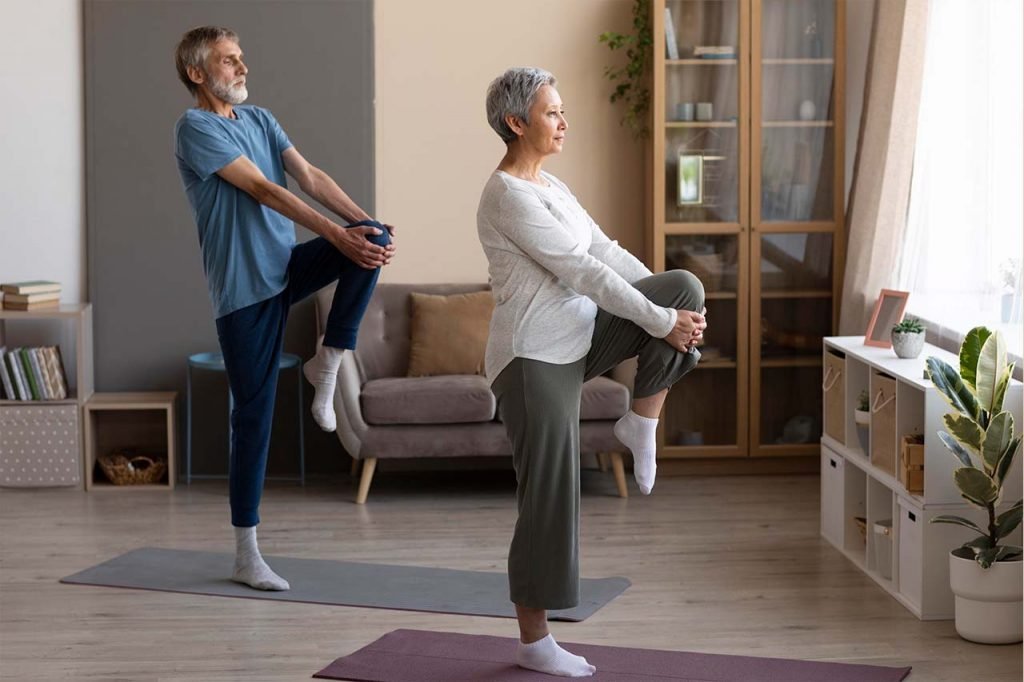
“Just rest it” is the worst advice for bad knees. Rest feels good for a week, then the supporting muscles weaken further, the joint gets stiffer, and the next flare-up hits harder. The counterintuitive truth: the right exercise is medicine for cranky knees. If you’re asking what are the best exercises for people with bad knees, you need movements that build strength without pounding the joint — and there are plenty. Physical therapists prescribe exactly these for arthritis, post-injury rehab, and chronic knee pain every single day.
What Are the Best Exercises for People With Bad Knees?
The golden rule: strengthen the muscles around the knee without loading the knee itself. Your quadriceps, hamstrings, glutes, and calves are the knee’s support team — when they’re strong, the joint takes less beating with every step. These are the safest, most effective options:
- Straight-leg raises. Lie on your back, one knee bent, the other leg straight. Tighten your thigh and lift the straight leg about a foot. This builds the quadriceps with zero knee bending — the perfect starting point for very painful knees.
- Seated knee extensions. Sit in a chair, slowly straighten one leg until it’s parallel to the floor, hold 3 seconds, lower. Add ankle weights as you get stronger. Controlled and joint-friendly.
- Wall sits (modified). Slide down a wall only as far as comfortable — even a shallow bend works. Start with 10-second holds and build up. This is the exercise that fixes knee pain on stairs better than almost anything else.
- Step-ups. Use a low step or sturdy platform. Step up with the weaker leg, bring the other up, step down. Start with 4 inches and progress slowly. Functional strength for real life.
- Clamshells and glute bridges. Lie on your side for clamshells (knees bent, open the top knee like a book); lie on your back for bridges (lift hips). Strong glutes prevent the knee from caving inward — a major pain driver.
- Calf raises. Stand holding a chair, rise onto your toes, lower slowly. Strong calves absorb shock that would otherwise reach the knee.
The AAOS knee exercise program illustrates these with proper form cues.
The Best Low-Impact Cardio for Bad Knees
You still need cardiovascular exercise — your heart doesn’t care about your knees. The joint-friendly options:
- Swimming and water aerobics. The undisputed champion. Water unloads up to 90% of your body weight while providing resistance in every direction. If you have pool access, this is your answer.
- Cycling (stationary or recumbent). Smooth, circular, low-impact — cycling builds quadriceps endurance beautifully. Keep the seat high enough that your knee doesn’t bend past 90 degrees at the bottom of the stroke.
- Elliptical trainer. Mimics running motion without the impact. Many knee-pain sufferers tolerate the elliptical when they can’t tolerate walking for exercise.
- Walking on soft surfaces. Flat, even ground or a track — not hills, not uneven trails. Good shoes matter enormously here.
- Rowing. Excellent full-body cardio with minimal knee stress, provided you don’t over-compress at the catch.
Avoid for now: running on pavement, deep squats and lunges, high-impact aerobics, basketball/volleyball-type jumping, and kneeling on hard surfaces. These aren’t banned forever — they’re shelved until strength improves.
The Pain Rule: Hurt vs. Harm
Learning the difference between acceptable discomfort and warning pain is essential. Mild aching during exercise that eases within a couple of hours and doesn’t worsen the next day is generally fine — that’s your knee adapting. Sharp pain, swelling during or after, pain that alters how you walk, or soreness still present 24 hours later means you overdid it: scale back the range, resistance, or volume. Pain is information, not a stop sign — but it’s information you must respect. Healthline’s knee-pain exercise guide offers good progressions for calibrating intensity.
Flexibility and Balance Complete the Picture
Tight hamstrings, calves, and hip flexors change knee mechanics for the worse — gentle daily stretching of all three pays off. And since knee problems increase fall risk, balance training as you age is the perfect complement: stronger legs plus better balance equals dramatically fewer falls. If back pain accompanies your knee issues (common, since people alter their gait to protect knees), these lower back exercises address the compensation patterns.
Your First Two Weeks: A Starter Schedule
Don’t try everything at once. Week 1: straight-leg raises and seated knee extensions, 2 sets of 10 each leg, three days (Mon/Wed/Fri). Add a 10-minute walk on two other days. That’s it — learn the movements and let your knees adapt. Week 2: add glute bridges and calf raises, bump to 3 sets, and extend walks to 15–20 minutes. If anything flares, drop back to Week 1 volume for another week — there’s no deadline. By week 3, most people add step-ups or wall sits. The pattern is always the same: master the movement, then add volume, then add difficulty. Knees reward patience extravagantly and punish impatience immediately. Two good weeks beats one heroic week followed by a flare-up.
When to See a Physical Therapist
Self-directed exercise handles most knee pain — but know when to get professional help. See a PT if: pain hasn’t improved after 4–6 weeks of consistent exercise, you can’t identify which exercises help, there’s swelling that doesn’t resolve, the knee locks/catches/gives way, or you’ve had a specific injury. What to expect: a movement assessment (they’ll watch you squat, step, and walk), hands-on treatment for stiff joints, a personalized progression, and form correction — the form correction alone is worth the visit; most people do the right exercises wrong. How many sessions: often 4–6 visits with a home program does it; you’re buying expertise, not endless appointments. Insurance: most plans cover PT with a referral — cheaper than the MRI everyone wants but few need. A good PT doesn’t just treat your knee; they teach you to maintain it for life.
The Practical Takeaway
Start with straight-leg raises, seated extensions, and glute bridges — 3 sets of 10–15, three days a week. Add water exercise or cycling for cardio. Respect the pain rule, progress gradually, and give it six consistent weeks. Bad knees aren’t a verdict of inactivity; they’re a specification for smarter exercise. The strongest knees aren’t the ones that were never injured — they’re the ones with the strongest muscles around them.






