
How to Cut an Onion Without Crying
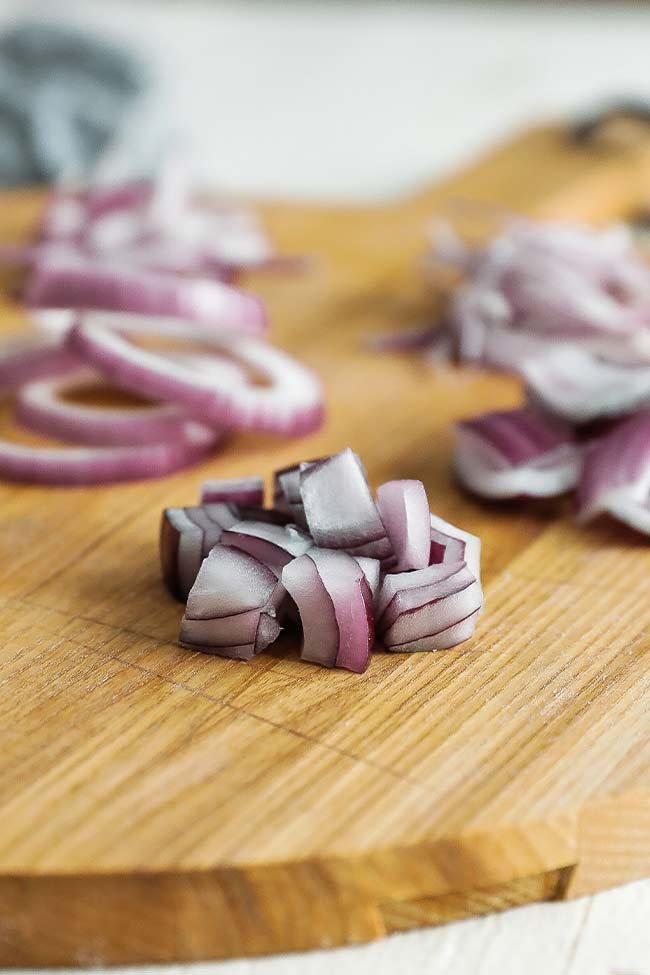
Cutting an onion without crying feels like it should be impossible. The chemistry is working against you: slicing ruptures onion cells, releasing enzymes that create syn-propanethial-S-oxide, a volatile gas that drifts up and irritates your eyes. Your eyes water to flush it out. It is an elegant defense mechanism, and it is incredibly annoying when you are just trying to make dinner.
Over the years I have tried every trick in the book. Some are folklore, some are physics, and a few genuinely work. Here is the honest breakdown.
What Is the Best Way to Cut an Onion Without Crying?
What Actually Works
Chill the onion first. Refrigerating onions for 30 minutes before cutting slows the enzymatic reaction that produces the irritant gas. This is the most effective single trick, backed by actual chemistry. It does not eliminate tears entirely, but it reduces them dramatically. Do not freeze the onion; freezing damages the texture.
Use a very sharp knife. A sharp knife slices cleanly through cells, rupturing fewer of them. A dull knife crushes and tears, releasing far more irritant. If your knife squishes the onion layers instead of gliding through, it needs sharpening regardless of the crying issue.
Cut under running water or near steam. Water dissolves the gas before it reaches your eyes. Cutting under a gentle stream works but is awkward. Easier: cut next to a steaming kettle or a pot of boiling water; the steam captures the gas similarly.
Use a fan. A small fan blowing across your cutting board pushes the gas away from your face. It looks ridiculous and works surprisingly well. Your range hood fan on high, with the cutting board near the stove, does the same job.
Leave the root end intact. The root end contains the highest concentration of the sulfur compounds. Cut the onion in half through the root, peel it, and dice with the root holding the layers together until the last cuts. Then discard the root nub.
Wear glasses or goggles. Any barrier between the gas and your eyes works. Regular glasses help somewhat; swim goggles or onion goggles seal the deal completely. There is no shame in the goggle look when you are processing five pounds of onions.
What Does Not Really Work
Holding bread in your mouth. Folklore. It does nothing measurable.
Lighting a candle nearby. The theory is that the flame burns off the gas, but in practice the effect is negligible.
Chewing gum. Another myth. Chewing does not affect the gas reaching your eyes.
Cutting with your mouth open or tongue out. Entertaining for onlookers, useless for tear prevention.
Microwaving the onion first. It reduces tears slightly but cooks the onion’s exterior and ruins the texture for most uses.
The Technique That Minimizes Exposure
Speed matters. The less time the cut surfaces are exposed, the less gas accumulates. Learn an efficient dice: halve the onion through the root, place flat-side down, make horizontal cuts toward but not through the root, then vertical cuts, then slice across. Keep the pieces together as you work rather than spreading them around the board. And cut onions before you cut anything else, so you can move on to tear-free ingredients while your eyes recover.
Good knife skills here pay dividends everywhere. Fast, confident onion prep is the foundation of takeout-style fried rice, restaurant-quality guacamole, and basically every savory dish built on the essential spices in your rack. If your knife is the problem, by the way, a sharp knife also makes peeling garlic prep faster, since you will reach for it more.
For knife technique videos, Serious Eats has a solid onion-dicing guide, and The Kitchn covers knife sharpening basics.
Know Your Onions: Which to Use When
Not all onions are interchangeable, and using the right one improves dishes noticeably. Yellow onions are the all-purpose workhorse; their sharpness mellows beautifully with cooking, making them ideal for soups, stews, and sautés. White onions are sharper and crisper, the classic choice for Mexican cooking, salsas, and guacamole where they stay raw. Red onions are mild and colorful, best raw in salads and sandwiches or pickled, where their color shines. Sweet onions like Vidalias have high sugar and low sulfur; they are the ones to eat raw in thick slices or caramelize into jammy sweetness. Shallots are refined and delicate, the choice for vinaigrettes and pan sauces. Green onions give you two ingredients in one: sharp white bases for cooking and mild green tops for finishing.
Storing Onions and Leftovers
Whole onions keep for weeks in a cool, dark, dry place with good air circulation; a pantry or countertop basket works, but not the fridge, where moisture makes them mushy. Never store whole onions in plastic bags, which trap moisture. Once cut, the rules change: wrap halves tightly or seal diced onion in an airtight container and refrigerate for up to a week. Cut onions absorb odors and broadcast their own, so seal them well. You can freeze diced onions for cooking; they go limp when thawed, so they are only good for dishes where they will be cooked down. And if your eyes water just thinking about the next onion, the chilling and sharp-knife tricks above will be waiting.
Onion FAQs
Why do onions make us cry but shallots do not as much? It is about sulfur concentration. Yellow onions have more of the precursor compounds; sweet onions and shallots have less, so they produce less irritant gas.
Does the variety matter for tears? Yes. Sweet onions like Vidalias are noticeably gentler. Red onions fall in the middle. Save the yellow onions for cooked dishes where it does not matter.
Will goggles really work? Yes, completely. Any sealed barrier between the gas and your eyes works; swim goggles are the most effective option that exists.
Does cutting under water wash away flavor? Slightly, since some flavor compounds are water-soluble. It is a trade-off; the sharp-knife and chilling methods preserve flavor better.
Why do I cry more some days than others? Onion pungency varies by variety, age, and growing conditions. Older, stronger onions produce more gas. Your sensitivity also varies with allergies and eye dryness.
The takeaway: chill the onion, sharpen your knife, leave the root intact, and work fast. Any one of these helps; all four together make onion prep nearly tear-free.






