
The Safest, Fastest Ways to Defrost Meat
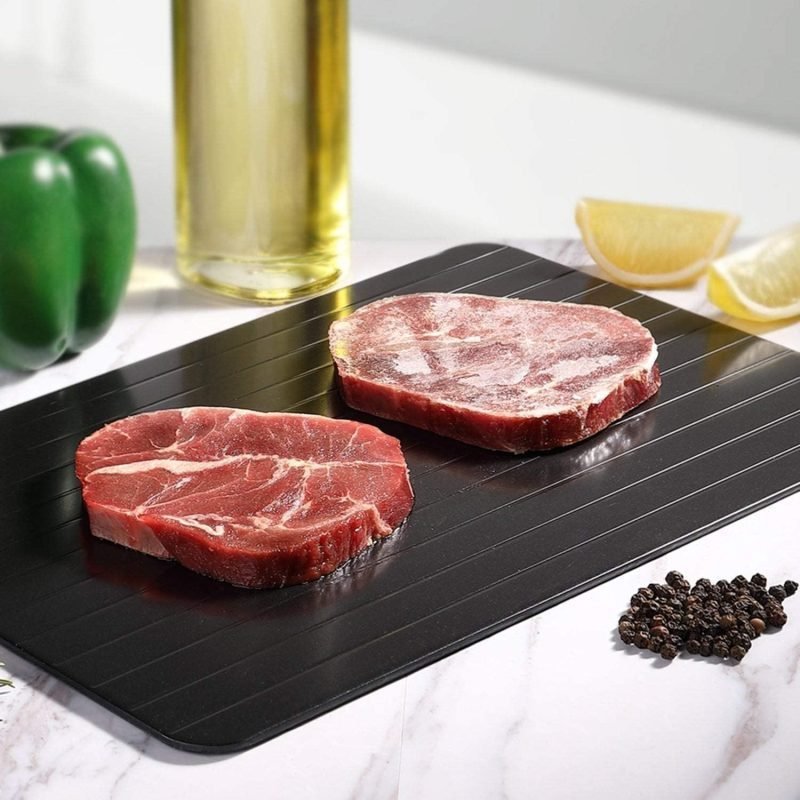
It is 5 p.m., dinner was supposed to be chicken, and the chicken is a frozen brick. We have all been there. The question of how to defrost meat safely and quickly matters because the fast methods people reach for, like leaving it on the counter or running hot water over it, are exactly the ones that can make you sick. Bacteria multiply rapidly between 40°F and 140°F, the danger zone, and the outside of a counter-thawed piece of meat sits in that zone for hours while the center is still frozen.
The good news is that there are genuinely fast safe methods. You just need to know which ones actually work and how long each takes.
What Is the Best Way to Defrost Meat Safely and Quickly?
Ranked from fastest to slowest, here are the three methods food safety experts actually endorse.
1. Cold Water Thawing (Fastest Safe Method)
Submerge the meat in its sealed packaging, or in a leak-proof zip-top bag with the air pressed out, in a bowl of cold tap water. Cold, not warm, not hot. Hot water brings the surface into the danger zone while the inside stays frozen, which is precisely what you are trying to avoid. Change the water every 30 minutes so it stays cold.
A pound of ground meat or chicken breasts thaws in about an hour this way. A three-to-four-pound roast takes two to three hours. Small items like shrimp or thin fish fillets can be ready in 20 to 30 minutes. Cook the meat immediately after thawing, since parts of it have been sitting at temperatures where bacteria grow.
2. The Microwave (Fastest, With Caveats)
The microwave’s defrost setting works in minutes, but it thaws unevenly and often starts cooking the edges. If you use it, plan to cook the meat immediately afterward, no exceptions, and expect to trim any rubbery edges. This method is best for ground meat you are about to brown anyway, where uneven edges disappear into the dish. For a steak you care about, use cold water instead.
3. Refrigerator Thawing (Slowest, Safest, Best Quality)
Moving meat from freezer to fridge the night before, or the morning of, is the gold standard. It keeps the meat at a safe temperature the entire time, thaws it evenly, and gives you a one-to-two-day window to cook it after thawing. A pound of meat needs roughly 24 hours; a large turkey can need several days. This is the method to use when you plan ahead, and it produces the best texture of the three.
Methods You Should Never Use
- The counter. The surface reaches the danger zone within two hours while the center stays frozen. This is the most common cause of thawing-related food poisoning.
- Hot water. It heats the exterior into the danger zone fast. Cold water only, changed regularly.
- Leaving it in a hot car or garage. Same problem as the counter, accelerated.
- Refreezing without cooking. Meat thawed in cold water or the microwave must be cooked before refreezing. Fridge-thawed meat can be refrozen without cooking, though quality suffers.
Cooking From Frozen: The Emergency Option
Here is something most people do not know: you can cook many meats straight from frozen. It takes about 50 percent longer than cooking thawed meat, and you cannot do it for everything, but it is completely safe. Frozen chicken breasts bake beautifully at 375°F; just add 15 to 20 minutes. Ground meat can go straight into a skillet, though you will need to scrape and flip as the outer layers brown. Do not try this with a whole turkey or a thick roast, where the outside would burn before the center cooks through. And never put frozen meat in a slow cooker, which keeps it in the danger zone far too long.
Planning Ahead Beats Rushing
The real fix for the 5 p.m. panic is a small system. When you buy meat in bulk, divide it into meal-sized portions in freezer bags, press them flat so they thaw faster, and label each with the date and contents. Flat bags thaw in half the time of thick lumps. Move tomorrow’s dinner to the fridge tonight. Pair this habit with knowing how to store leftovers safely and how to tell if leftovers are still safe, and your kitchen runs on rails instead of panic.
If you are defrosting fish specifically, the same rules apply, and you will want to know how to cook salmon so it does not dry out once it is thawed, since previously frozen fillets are less forgiving. For official guidance, FoodSafety.gov publishes the USDA thawing guidelines, and Serious Eats has tested the timing of each method.
Thawing Times at a Glance
Knowing roughly how long things take removes the guesswork. In cold water, changed every 30 minutes: shrimp and thin fish fillets take 20 to 30 minutes; one pound of ground meat or two chicken breasts takes about an hour; a three-pound whole chicken takes two to three hours; a four-pound roast takes two to three hours. In the refrigerator: one pound of meat needs about 24 hours; a five-pound whole chicken needs a full day and then some; a twelve-pound turkey needs three days. These are approximations, but they are close enough to plan dinner around.
The “Forgot to Thaw” Playbook
We have all been there, so here is the decision tree. If you have an hour, use the cold water method; it is the fastest safe option and preserves the best texture. If you have twenty minutes, the microwave works for ground meat or thin cuts you will cook immediately. If you have no time at all, cook from frozen and add 50 percent to the cooking time; this works for chicken breasts, fish fillets, and ground meat, though never for whole birds or thick roasts. What never works: hot water, the counter, or wishful thinking. When any of these feel like too much effort, remember that a well-stocked pantry of budget-friendly high-protein meals built on eggs, beans, and canned fish means you always have a no-thaw dinner option.
The takeaway: cold water for speed, fridge for planning, microwave only when you will cook immediately, and never the counter. Dinner is saved.






