What to Do If Your Child Is Being Bullied at School
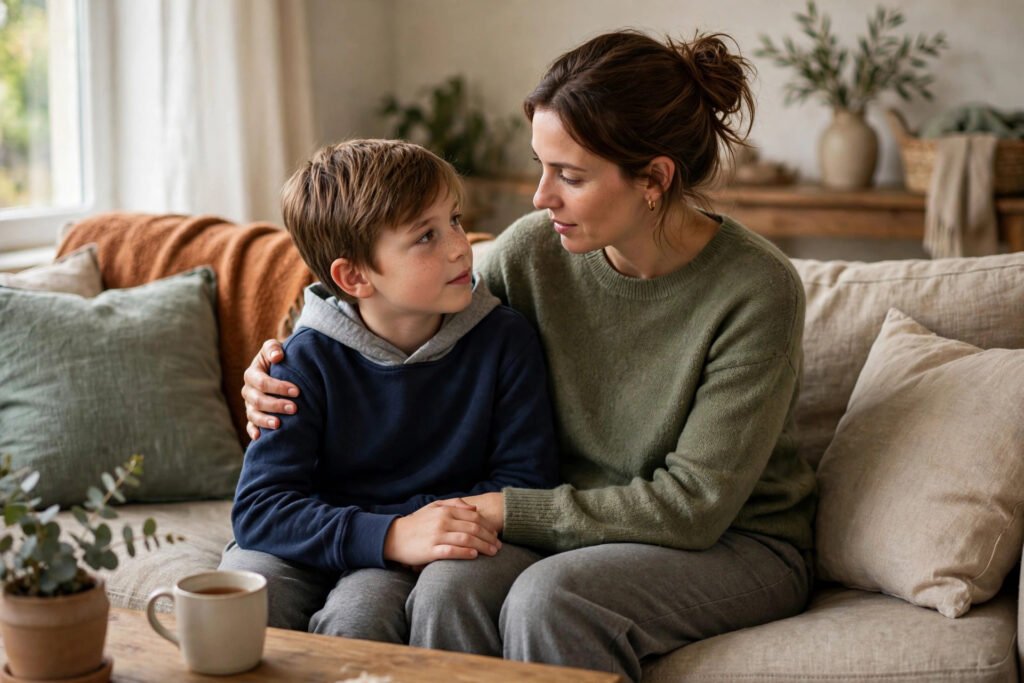
Your child comes home quieter than usual. Then the stomachaches before school start. Then you find the texts — or a teacher mentions “social dynamics.” Discovering your child is being bullied is one of the most gutting experiences of American parenthood, and roughly 1 in 5 students ages 12–18 reports being bullied at school. Your response in the first days matters enormously: handled well, it teaches your child that adults can be trusted and problems can be solved; handled poorly, it teaches them to hide things from you.
This guide walks you through exactly what to do — tonight, this week, and over the coming months — based on guidance from child psychologists, the federal StopBullying.gov initiative, and educators who handle these cases daily.
Tonight: listen, believe, and stabilize
Listen without interrogating. Let them tell the story at their pace. Ask open questions (“What happened next?”) not cross-examination (“Why didn’t you tell the teacher?”). Your first job is making them feel heard, not gathering evidence.
Believe them. Children rarely fabricate bullying reports — and even if details are murky, the distress is real. Say explicitly: “I believe you, this is not your fault, and we’re going to handle this together.” Those three sentences are the foundation everything else builds on.
Don’t promise what you can’t deliver. “I’ll make it stop tomorrow” sets you up to break trust. Instead: “I’m going to take this seriously and work on it starting tomorrow.”
Assess safety immediately. Most bullying doesn’t require emergency action — but ask directly about physical harm, threats, weapons, and self-harm thoughts. If your child expresses suicidal ideation, treat it as urgent: call or text 988 (the US Suicide and Crisis Lifeline) and contact their pediatrician. Take every such statement seriously, every time.
Document tonight. Write down what your child told you — dates, names, locations, witnesses, what was said or done. This contemporaneous record becomes invaluable if the situation escalates to school administration. Save screenshots of any cyberbullying immediately (bullies delete; screenshots don’t).
This week: engage the school strategically
American public schools are legally and procedurally required to address bullying — every state has anti-bullying laws, and schools receiving federal funding must respond to harassment. But how you engage determines how well they respond.
Start with the teacher or counselor, in writing. Email creates a paper trail; phone calls don’t. Describe the facts calmly, reference your documentation, and ask for a specific response: “What steps will the school take, and on what timeline?” Calm, factual, documented parents get faster action than furious ones — unfair but true.
Know the escalation ladder: teacher → school counselor → principal → district superintendent → school board → state department of education. Most cases resolve at the counselor/principal level when documented properly. If the school is unresponsive, a written complaint citing your state’s anti-bullying statute gets attention fast.
Request a safety plan. Ask the school for specific accommodations: adjusted seating, hallway monitoring, check-ins with the counselor, a buddy system. Concrete asks beat vague complaints.
Do NOT confront the bully’s parents directly. This escalates unpredictably and undermines the school’s process. Let the institution handle the other family — that’s literally what the procedures are for.
Support your child: the long game
The bullying episode will end; what your child learns from it lasts. Don’t advise “just ignore it” — research shows this is among the least effective strategies and makes kids feel dismissed. Don’t advise fighting back physically — it escalates danger and gets victims suspended under zero-tolerance policies.
What works: assertiveness skills (firm voice, eye contact, short statements like “Stop — leave me alone,” then walking away — practiced through role-play at home); ally-building (bullies target isolated kids; one solid friend dramatically reduces targeting — facilitate friendships through activities, teams, clubs); and confidence anchors outside school (a sport, art, martial arts, or hobby where your child experiences competence and belonging — the psychological counterweight to school misery).
Watch for lingering effects: sleep problems, declining grades, social withdrawal, and physical complaints that persist after the bullying stops can signal anxiety or depression needing professional support. A few sessions with a child psychologist isn’t overreaction — it’s maintenance. Building your child’s broader resilience toolkit matters too; teaching kids good manners and social skills strengthens the peer relationships that protect against targeting.
Cyberbullying: the special case
When bullying follows your child home through phones, the playbook shifts: don’t confiscate the phone as punishment — it teaches them to hide future problems. Instead: screenshot and save everything, block and report accounts (all major platforms have youth reporting flows), tighten privacy settings together, and if threats are involved, file a police report — cyberbullying involving threats, stalking, or sexual content is a law enforcement matter, not just a school matter. Our guide to protecting kids from inappropriate content online covers the broader digital-safety setup every family needs.
What if your child is the one bullying?
It’s the call no parent wants to receive — but hearing “your child has been bullying others” deserves the same calm, systematic response. Don’t lead with punishment; lead with curiosity: what’s driving the behavior (insecurity, peer pressure, mimicking what they see at home or online)? Make the harm concrete — bullies often genuinely don’t grasp the impact — require a sincere apology and amends, remove privileges tied to the behavior, and address root causes (counseling if there’s an underlying issue). Children who bully and receive only punishment often get sneakier; children whose parents address the why tend to actually change. Either way, take it as seriously as you would victimization — the stakes for your child’s character are just as high.
Conclusion
If your child is being bullied at school in America: tonight, listen, believe, assess safety, and document. This week, engage the school in writing, escalate through proper channels, and request a concrete safety plan — never confronting the other family yourself. Long-term, build assertiveness, friendships, and confidence anchors outside school, and watch for lingering effects. Your child won’t remember every detail of this episode — but they’ll remember whether the adults showed up. Show up. For authoritative guidance, see the StopBullying.gov parent resources and the 988 Suicide and Crisis Lifeline.
Frequently Asked Questions
What should I do first if my child is being bullied?
Listen without interrogating, explicitly believe them (“this is not your fault”), assess immediate safety (physical harm, threats, self-harm thoughts), and document everything with dates and details. Contact the school in writing within a day or two.
Should I confront the bully’s parents?
No. Direct parent-to-parent confrontation escalates unpredictably and undermines the school’s formal process. Work through the school’s channels — teacher, counselor, principal — in writing, escalating to the district if needed.
What are schools legally required to do about bullying?
Every US state has anti-bullying laws requiring schools to have policies and respond to reports. Schools must investigate complaints and take corrective action. If a school is unresponsive, file a written complaint citing your state’s statute and escalate to the district superintendent.
Should my bullied child fight back?
No — physical retaliation escalates danger and typically gets the victim suspended under zero-tolerance policies. Teach assertiveness instead: firm voice, short statements, walking away, and immediately telling a trusted adult. Role-play these responses at home.
When does bullying require professional help?
Seek a child psychologist if you see persistent sleep problems, declining grades, social withdrawal, physical complaints, or any mention of self-harm after the bullying episode. A few sessions is maintenance, not overreaction — and any self-harm statement needs immediate attention via 988 or their pediatrician.