
How to Get Mascara Off Properly (Every Formula)
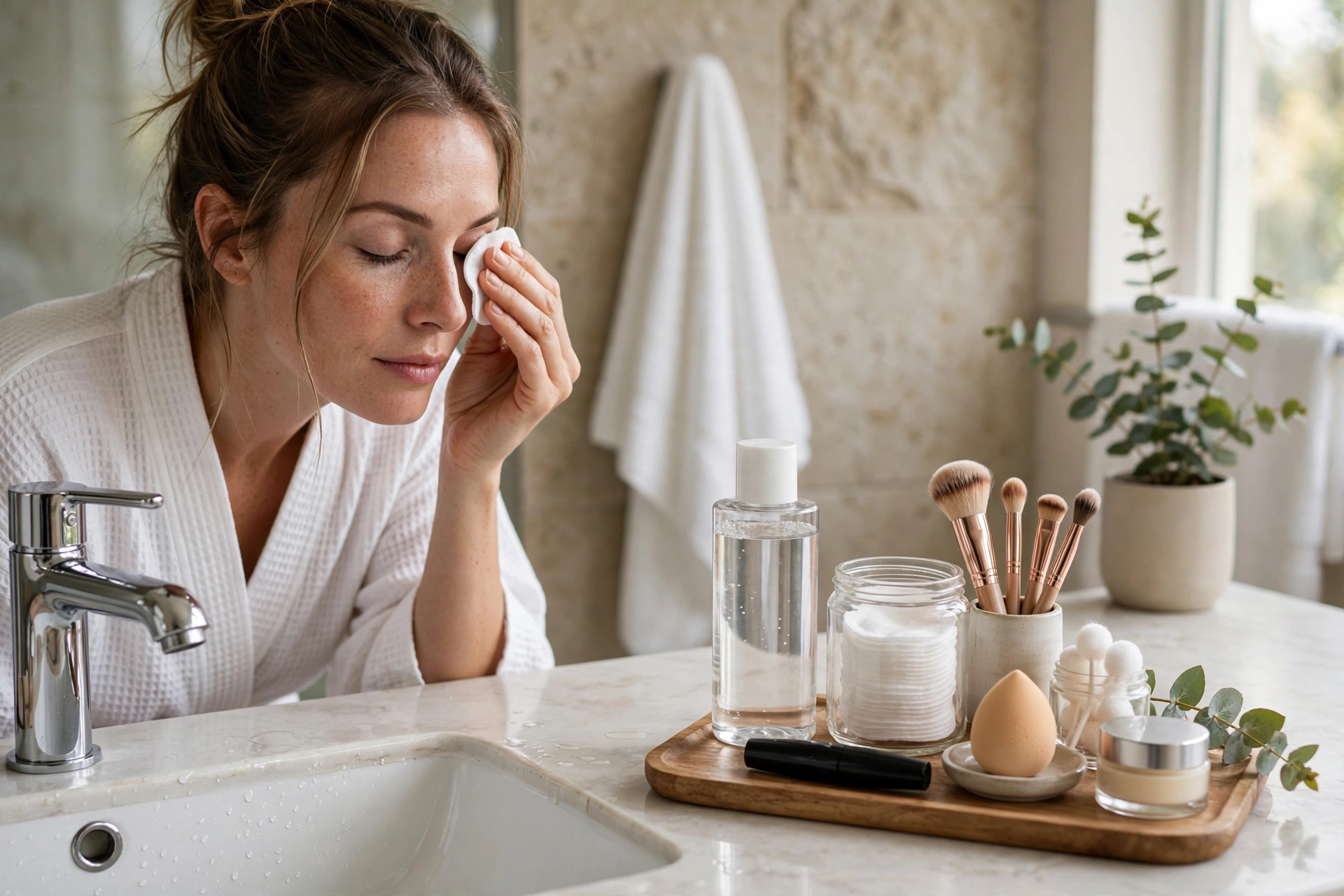
Removing mascara sounds simple — until you are scrubbing at midnight with a cotton pad, watching your lashes come off with the makeup. Waterproof formulas, tubing mascaras, and layered applications all need different approaches, and doing it wrong costs you lashes and irritates the delicate skin around your eyes. Here is how to get mascara off properly, whatever formula you are wearing.
Why Proper Removal Matters
Sleeping in mascara is one of the worst things you can do for your eyes and lashes. Leftover mascara:
- Weakens lashes — dried mascara makes lashes brittle; rubbing then snaps them.
- Clogs oil glands — residue along the lash line can block meibomian glands, causing styes and dry eye.
- Ages the eye area — aggressive rubbing stretches thin under-eye skin, contributing to the wrinkles we all want to avoid (see how to get rid of under-eye wrinkles).
- Risks infection — old mascara harbors bacteria; reapplying over residue increases eye infection risk.
Identify Your Mascara Type First
The removal method depends on the formula:
- Water-based (washable): Dissolves with warm water and gentle cleanser. Easiest to remove.
- Waterproof: Contains water-repelling polymers and waxes. Needs an oil-based remover — water alone will not cut it.
- Tubing mascara: Forms polymer “tubes” around each lash. Comes off with warm water and gentle pressure — no remover needed, but you must use the right technique.
Not sure which you have? If it survives crying, swimming, or a rainy day, it is waterproof or tubing.
The Universal Method: Soak, Don’t Scrub
Regardless of formula, the golden rule is soak first, then wipe gently. Never dry-rub.
- Saturate a cotton pad (or reusable cotton round) with your chosen remover.
- Press it against your closed eye and hold for 20–30 seconds. This dissolves the mascara so it slides off instead of requiring friction.
- Wipe downward gently — from lash root to tip, in the direction of growth. Never rub side to side.
- Repeat with a fresh pad if needed rather than pressing harder.
- Cleanse your full face afterward to remove all residue.
Best Removers by Formula
For waterproof mascara: oil-based removers
Oil dissolves the waxes and polymers in waterproof formulas. Good options:
- Cleansing oils or balms — massage onto dry skin, emulsify with water, rinse. Effective and non-stripping.
- Dual-phase (bi-phase) removers — the classic blue-and-clear liquid you shake. The oil phase dissolves makeup; the water phase rinses clean.
- Micellar water (oil-infused) — gentler option for sensitive eyes, though may need two passes for heavy waterproof.
- Coconut or jojoba oil — works in a pinch, but can leave a film and may irritate contact lens wearers.
For tubing mascara: warm water only
Soak a cotton pad in warm (not hot) water, hold against lashes for 30 seconds, then gently slide downward. The tubes will slip right off — you will see tiny black fibers on the pad. Do not use oil-based removers on tubing mascara; they are unnecessary and can leave residue.
For regular washable mascara: gentle cleanser
Warm water plus your normal gentle face wash is usually enough. The soak-and-wipe method still helps avoid tugging.
The American Academy of Dermatology’s face-washing guidance emphasizes using lukewarm water and gentle, fragrance-free cleansers around the eye area to avoid irritation.
What NOT to Do
- Don’t use baby wipes as your primary remover. They contain preservatives and fragrances not meant for the eye area, and the scrubbing motion damages lashes.
- Don’t use petroleum jelly (Vaseline) regularly. It works at dissolving mascara but can clog oil glands along the lash line with repeated use.
- Don’t rub with a towel. Towel fibers are too rough for the eye area and trap mascara residue.
- Don’t use expired mascara. Replace mascara every 3 months. Old mascara is drier (harder to remove) and harbors more bacteria.
- Don’t pull at lash extensions or lift. If you wear extensions, use only oil-free removers — oil dissolves lash glue.
Special Situations
Contact lens wearers
Remove lenses before removing makeup. Use oil-free, fragrance-free removers to avoid lens contamination and irritation.
Very sensitive eyes
Stick to fragrance-free micellar water or a dedicated sensitive-eye makeup remover. Patch test new products on your jawline first.
Heavy or layered application
For multiple coats or waterproof over regular mascara, do two rounds: first an oil cleanse to break everything down, then your normal face wash. This “double cleanse” method is the standard in Korean skincare for good reason.
After Removal: Lash Care
Once mascara is off, give your lashes some love:
- Apply a lash serum or castor oil a few nights per week to condition.
- Give lashes makeup-free days when you can.
- Replace your lash curler pads regularly — worn pads pinch and break lashes.
- If lashes are sparse, a tint can give definition without daily mascara (and pairs well with well-groomed grown-out eyebrows for a polished no-makeup look).
The FDA’s eye cosmetic safety page has practical guidance on avoiding eye infections from makeup, including not sharing mascara and discarding it after eye infections.
Frequently Asked Questions
Can I just use soap and water?
For non-waterproof mascara, yes — with the soak method. For waterproof, soap alone requires too much rubbing, which damages lashes and skin.
Is micellar water enough for waterproof mascara?
Standard micellar water struggles with heavy waterproof formulas. Use an oil-infused micellar water or a dedicated waterproof remover instead.
Why do my eyes sting after removing mascara?
Usually fragrance, harsh surfactants, or rubbing too hard. Switch to a fragrance-free formula and use the soak method with zero pressure.
Removing Mascara With Lash Extensions or Lifts
If you have lash extensions, your removal routine needs extra care. Oil-based removers dissolve lash adhesive, so stick to oil-free micellar water or a dedicated lash-extension-safe cleanser. Use a soft spoolie brush to gently work the cleanser through lashes rather than a cotton pad, which can snag extensions. Never rub — extensions are attached to your natural lashes, and aggressive removal pulls out both.
For a lash lift (which curls your natural lashes), you have more flexibility since there is no adhesive to protect, but still avoid waterproof mascara on lifted lashes — the removal process is harder on the curl. If you wear mascara over a lift, choose a water-based formula that comes off easily with the standard soak method.
Travel-Friendly Removal Tips
Keeping up your routine on the road prevents the “too tired to remove makeup” trap that damages lashes. Pack individually wrapped eye makeup remover pads (biodegradable options exist) or a small bottle of micellar water with reusable cotton rounds in a wet bag. Solid cleansing balms in tins are excellent for travel — no liquid restrictions, no spills, and a pea-sized amount melts away even waterproof mascara. Whatever you pack, the soak-don’t-scrub principle applies everywhere: press, hold, wipe gently, and your lashes will survive every trip intact.
One final tip: keep a dedicated eye makeup remover by your bedside for nights when you are too exhausted for the full routine. A quick, gentle removal is infinitely better than sleeping in mascara — your lashes will thank you in the morning.
The Bottom Line
Getting mascara off properly comes down to three words: soak, don’t scrub. Match your remover to your formula — oil-based for waterproof, warm water for tubing, gentle cleanser for washable — hold, then wipe gently downward. Your lashes will stay intact, your eyes will stay comfortable, and the delicate skin around them will thank you for years.



