How to Talk to Kids About Climate Change Without Scaring Them
“Is the Earth going to be okay?” It’s a question a lot of American parents are hearing now, sometimes from kids as young as six. Maybe it came after a wildfire smoke day kept everyone inside, or a hurricane on the news, or a school lesson about polar bears. Your instinct might be to reassure quickly — “Don’t worry about it!” — or to change the subject. But child psychologists say there’s a better way: honest, age-appropriate conversations that leave kids feeling empowered rather than frightened.
Climate anxiety in children is real and growing. A large 2021 international survey found that most young people are worried about climate change, and many feel sad, anxious, or powerless about it. American kids are not exempt — between wildfire seasons in the West, hurricanes in the Southeast, and heat waves everywhere, climate disruption is no longer abstract for many families. The goal isn’t to hide the truth. It’s to deliver it in doses a child can handle, paired with agency: things they can actually do.
Start by listening, not lecturing
Before you explain anything, find out what your child already thinks. Kids pick up fragments — a scary headline, a classmate’s comment, a movie scene — and assemble them into a story that is often scarier than reality. Ask open questions: “What have you heard about climate change?” “What part worries you most?” Then listen fully before responding.
This does two things. First, it tells you what misconceptions to correct (no, the world is not ending next Tuesday). Second, it shows your child that their feelings are valid and that you’re a safe person to bring big worries to. Child development experts at the American Psychological Association emphasize that validating emotions — “It makes sense you feel scared; lots of people do” — is more calming than dismissing them.
Match the depth to the age
- Ages 4–7: Keep it concrete and local. “The Earth is getting warmer, so we’re helping by planting trees and saving water.” Focus on caring for nature, not on catastrophe. Avoid timelines and death tolls entirely.
- Ages 8–12: They can handle cause and effect: burning fuels puts a gas in the air that traps heat, like a blanket. They’ll ask sharper questions — answer honestly but briefly, then pivot to solutions.
- Teens: They likely know the basics and may feel angry at adults. Respect that. Discuss real policy, technology, and activism. Teens respond to being treated as capable people, not fragile children.
Be honest without being hopeless
Kids can smell a dodge. If you say “everything is fine” while the news shows floods, you lose credibility — and credibility is what makes your reassurance work later. The framework psychologists recommend is honest + hopeful + actionable:
- Honest: “Yes, the climate is changing, and it’s causing real problems like bigger storms and hotter summers.”
- Hopeful: “But lots of smart people are working on it — scientists, engineers, and leaders in countries all over the world, including ours.”
- Actionable: “And our family can help too. Want to hear how?”
Hope here isn’t fake cheer. It’s accurate: renewable energy is now the cheapest new power source in most of the US, electric vehicle adoption is climbing, and American emissions have bent downward from their peak. The EPA’s climate change resources document real progress alongside real risks — a balanced picture you can share with older kids.
Give them agency: action is the antidote to anxiety
Research on eco-anxiety consistently finds that taking action — even small action — reduces feelings of helplessness. The trick is choosing actions a child can see and feel, not abstract guilt trips:
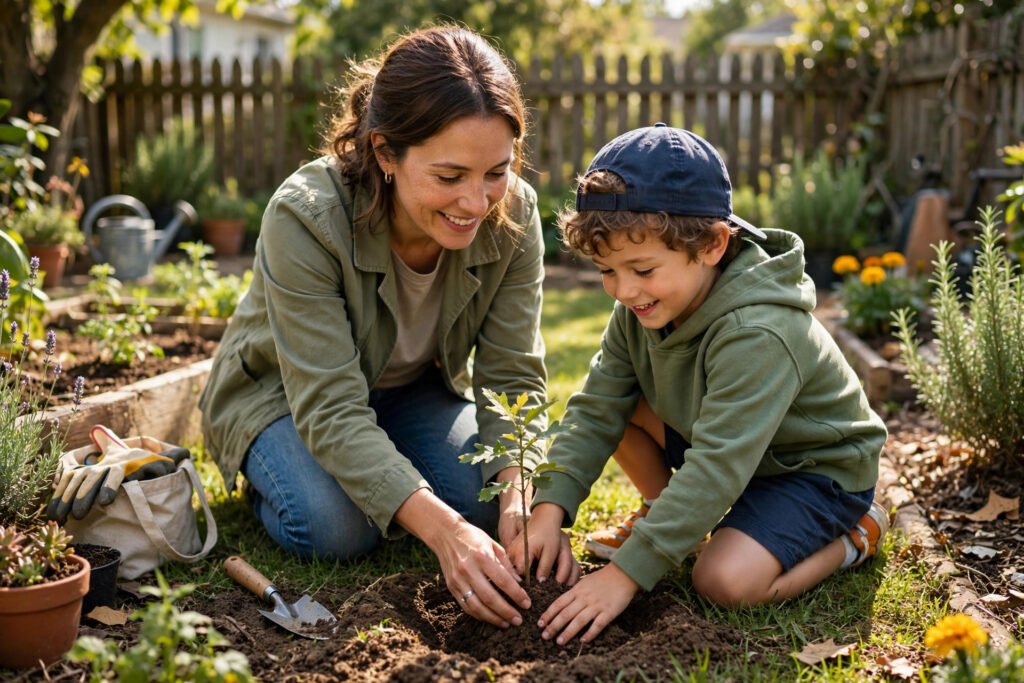
- Grow something. A windowsill herb garden or a backyard tree makes the carbon cycle tangible.
- Join a cleanup. Local park or beach cleanups show kids that people fix problems together.
- Save energy as a team. Let them be the family’s “light monitor” or help with making your home more energy-efficient — kids love a mission.
- Reduce waste visibly. Composting, cutting food waste, and packing waste-free lunches are things they control daily.
- Speak up. Older kids can write to local officials, join school green clubs, or participate in youth climate groups.
Frame these as “we’re part of the team fixing this,” not as chores. And model the behavior yourself — kids learn far more from what you do than what you say about reducing your family’s footprint.
Watch your own climate talk
Kids absorb your tone. If every mention of the weather becomes a doom monologue, they’ll internalize dread. It’s fine — good, even — to show you care. But balance concern with visible hope: mention the new solar farm you drove past, the neighbor’s electric truck, the school’s recycling program. Narrate solutions as often as problems.
Also, limit background news exposure for younger kids. Cable news disaster loops are designed to hold adult attention through alarm; they are terrible for a seven-year-old’s nervous system. You don’t need to hide that bad things happen, but you can choose when and how your child encounters them.
When worry becomes something more
Most climate worry in kids is normal and manageable with the approaches above. But seek help from your pediatrician or a child psychologist if you notice persistent signs: trouble sleeping, stomachaches before school, refusal to plan for the future (“why bother, the world’s ending”), or withdrawal from activities they used to enjoy. These can signal clinical anxiety, which is treatable — and catching it early matters.
The National Institute of Mental Health offers guidance on recognizing anxiety in children, and many therapists now have specific experience with eco-anxiety in young people.
The bottom line
Talking to kids about climate change without scaring them isn’t about softening the truth — it’s about right-sizing it and pairing it with power. Listen first, tell the truth in age-appropriate doses, show them that millions of people are working on solutions, and give them real things to do. A child who has planted a tree, led a recycling drive, or simply knows their family is part of the solution sleeps better than one left alone with scary headlines. You’re not just protecting their peace of mind; you’re raising the problem-solvers the future needs.
Frequently Asked Questions
At what age should I first talk to my child about climate change?
There’s no single right age — follow your child’s questions. Many experts suggest that by ages 7–8, simple honest explanations are appropriate, while younger children benefit more from nature-positive framing (“we take care of the Earth”) than from the term “climate change” itself.
Won’t telling them the truth just make them more anxious?
Studies suggest the opposite: kids who get honest, age-appropriate information from trusted adults cope better than kids who piece together scary fragments alone. The key is pairing honesty with agency and hope.
What if my child says there’s no point in planning for the future?
Take that seriously — it’s a sign of hopelessness that deserves attention. Validate the feeling, share real reasons for hope (clean energy growth, youth movements, policy wins), and consider talking to a counselor if the hopelessness persists.
Should I let my teen join climate protests?
Many parents find this a healthy outlet for teen climate anger. Discuss safety, go together if they’re younger, and treat it as civic engagement — which, developmentally, is exactly what teens need.
How do I handle it if our family disagrees about climate change?
Focus on shared values: caring for nature, not wasting things, leaving things better. You can teach stewardship and resilience without turning every conversation into a political debate.