How to Reduce Plastic Waste in Your Kitchen, Step by Step
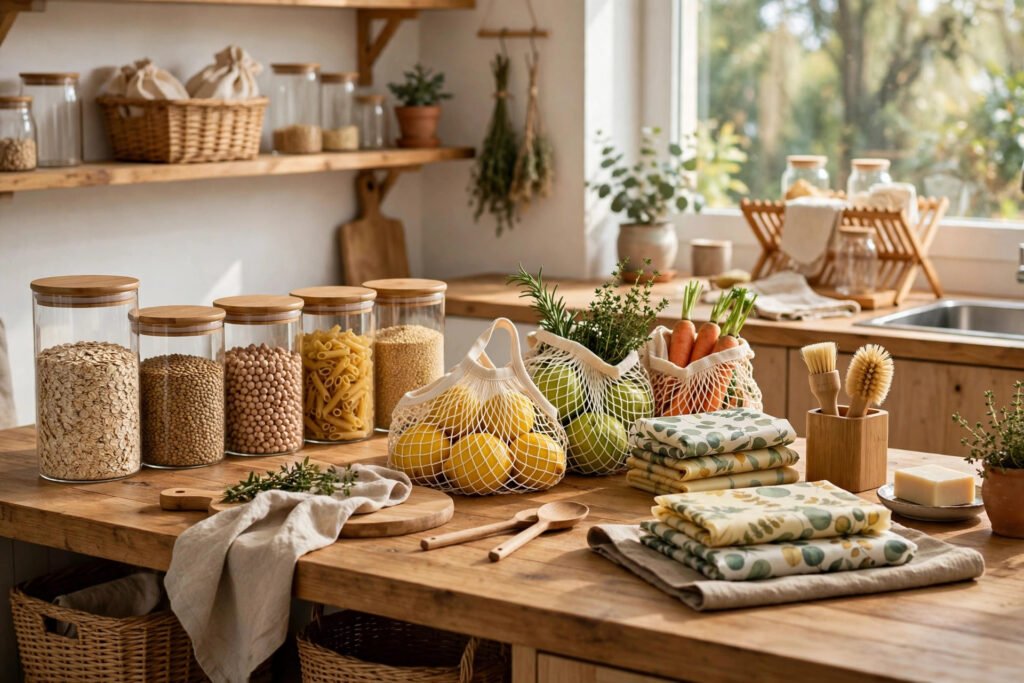
Open any American kitchen cabinet and you’ll find the plastic: produce bags, cling wrap, zip bags, takeout containers, the drawer of mysterious lids. The average American generates over 40 million tons of plastic waste yearly, and the kitchen is ground zero — food packaging, storage, and single-use convenience items flow through it daily. The good news: the kitchen is also where the highest-impact, lowest-effort plastic reductions live. You don’t need a zero-waste overhaul. You need a sequence of swaps, biggest impact first.
This step-by-step guide walks through reducing kitchen plastic waste in order of impact: the audit, the five highest-leverage swaps, the shopping transformation, and the systems that make it stick.
Step 1: Audit Your Plastic (15 Minutes)
Before changing anything, look. For one week, notice what plastic leaves your kitchen: produce bags, plastic wrap, zip-top bags, takeout containers, bottled water, packaged snacks, cleaning product bottles. Don’t judge — just observe. Most people discover that 3–4 categories account for 80% of their kitchen plastic. Those categories are your targets; everything else is noise.
The audit also reveals your personal patterns. The takeout-heavy household’s leverage is different from the meal-prepper’s. Generic “10 eco swaps” lists fail because they optimize for someone else’s kitchen. Your audit tells you where your plastic lives — and that’s where your effort goes. Reducing food waste pairs naturally here: less wasted food means less packaging purchased to replace it.
Step 2: The Five Highest-Impact Swaps
Make these five changes and you’ve eliminated the majority of most kitchens’ plastic:
1. Reusable produce and bulk bags
The flimsy produce bag is used for an average of 12 minutes and persists for centuries. Mesh or cotton produce bags cost a few dollars, last years, and work for bulk bins too. Keep them where you’ll grab them — clipped to your reusable shopping bags, not buried in a drawer.
2. Replace cling wrap with reusables
Beeswax or silicone wraps cover bowls and half-cut produce; silicone stretch lids seal containers. The upfront cost pays back within months for regular users, and they actually work better than cling wrap for many jobs (silicone lids create genuinely airtight seals).
3. Glass and stainless storage
Replace plastic containers as they wear out — no need for a purge. Glass containers last decades, don’t stain or retain odors, go from freezer to oven, and make leftovers visible (which reduces waste). Buy a matching set once instead of accumulating mismatched plastic for years.
4. Refill cleaning supplies
Dish soap, hand soap, and all-purpose cleaner in refillable dispensers eliminate a steady stream of plastic bottles. Concentrated refill tablets — dropped in water in your existing bottle — cut both plastic and shipping weight. The EPA’s waste reduction resources at epa.gov highlight source reduction (buying less packaging in the first place) as more impactful than recycling.
5. Kill bottled water
If your tap water is safe (most American municipal water is, and your local water quality report confirms it), a filter pitcher or faucet filter plus a reusable bottle eliminates the single most absurd plastic stream in many kitchens — paying premium prices for water in disposable packaging.
Step 3: Transform Your Shopping
Most kitchen plastic enters as packaging, so the store is the real battleground. Shop the perimeter: produce, dairy, meat, and bakery sections offer the most unpackaged or minimally packaged options; the center aisles are packaging’s home territory. Buy in bulk where available: grains, beans, nuts, spices, and oils from bulk bins into your own containers eliminate dozens of packages monthly.
Choose packaging deliberately: when options exist, prefer glass, metal, and cardboard over plastic — they’re recycled at far higher rates (plastic recycling in the U.S. remains in the single digits percentage-wise, a fact that should reshape your priorities from “recycle more” to “buy less plastic”). Bring your system: bags, produce bags, and containers in the car always — the best intentions fail without the tools present. The same carry-your-own-gear mindset that shrinks travel footprints works at the grocery store.
Step 4: Handle the Tricky Categories
Takeout: the fastest-growing kitchen plastic stream. Strategies: choose dine-in when possible, request no utensils/bags in delivery apps (use the comment field — it works), keep a “takeout kit” (container, utensils) for pickup orders, and favor restaurants using compostable packaging. Snacks and kids’ lunches: buy large formats and portion into reusable containers instead of single-serve packs — cheaper as well as less wasteful. Trash bags: the irony of buying plastic to throw away plastic — use fewer, smaller bags by reducing waste overall, and don’t stress about this category; it’s the caboose, not the engine.
Step 5: Build Systems That Survive Busy Weeks
Willpower-based eco-living collapses under stress — systems don’t. Set up: a “zero-waste station” near the door (bags, bottles, containers always ready), a compost setup for food scraps (countertop bin → curbside or drop-off — composting also cuts the methane from food in landfills), and a simple rule: when a plastic item runs out, its replacement is the reusable version. No grand purge, no guilt — just a ratchet that only moves one direction.
Track progress quarterly, not daily: photograph your trash output or count bags monthly. Most households see 40–60% plastic reduction within three months of the five swaps — visible progress that sustains motivation far better than perfectionism. Whole-home efficiency thinking applies the same principle: systematic upgrades beat heroic efforts.
NOAA’s marine debris program documents where plastic waste ends up — sobering motivation for every swap above.
Conclusion
Reducing plastic waste in your kitchen step by step means: audit for a week, make the five high-impact swaps (produce bags, wrap alternatives, glass storage, refills, filtered water), transform shopping toward bulk and low-packaging options, tackle takeout and snacks deliberately, and build grab-and-go systems that survive busy weeks. You won’t reach zero — nobody does, and the pursuit of purity burns people out. But halving your kitchen’s plastic in three months through targeted swaps? That’s not just achievable — it’s the beginning of a kitchen that works better in every way.
Frequently Asked Questions
What’s the single biggest source of kitchen plastic waste?
For most households: food packaging from grocery shopping, followed by takeout containers, then storage items (wrap, bags). Your personal audit may differ — that’s why step one is observing your own kitchen rather than following generic lists.
Is recycling plastic enough?
No — U.S. plastic recycling rates remain very low (single digits), and many plastics aren’t practically recyclable at all. The waste hierarchy is reduce first, reuse second, recycle last. Recycling is the backup plan, not the strategy.
Are beeswax wraps sanitary and safe?
Yes for most uses — wash with cool water and mild soap, air dry. Don’t use them for raw meat (use washable silicone or glass with lids instead), and replace when they lose stickiness (typically 6–12 months of regular use).
How much money does reducing kitchen plastic save?
Surprisingly, it usually saves money: bulk buying is cheaper per unit, reusables replace endless disposable purchases, and reduced food waste (from better storage visibility) saves the average family hundreds yearly. The eco choice and the frugal choice align here.
What about plastic I can’t avoid?
Don’t sweat it — medical supplies, safety seals, and some food packaging have no good alternatives yet. Focus effort where you have leverage (the 80% you control) and let the rest go. Guilt is not a sustainability strategy.