How to Dispute a Car Repair Bill That’s Too High: A Guide
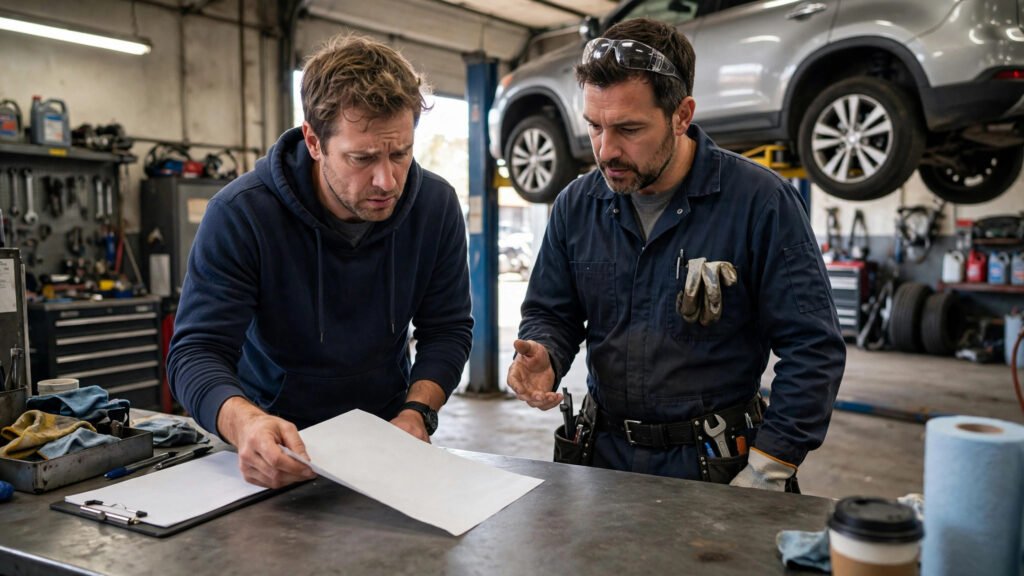
The service advisor slides the invoice across the counter: $1,850 for a brake job and a “recommended” transmission flush you never asked for. Your stomach drops. You approved $400 worth of work, and now the total is four times that. Before you hand over your credit card in a panic, know this: you have more leverage than the shop wants you to believe. Disputing a car repair bill in America is a structured process — document, negotiate, escalate — and drivers who follow it routinely get hundreds knocked off inflated invoices.
Step 1: Don’t Pay Under Pressure (But Don’t Drive Off Either)
The worst moment to dispute a bill is while standing at the counter with your keys held hostage. You generally can’t just drive away — most states give repair shops a mechanic’s lien, meaning they can legally hold your vehicle until the bill is paid. But “paying” and “agreeing” are different things.
Ask for an itemized invoice before paying anything. Federal and state consumer protection norms, enforced by agencies like the Federal Trade Commission, support your right to understand exactly what you’re being charged for. If the shop refuses to itemize, that’s a red flag in itself. Pay with a credit card — not cash, not debit — because credit cards give you chargeback rights if the dispute escalates. Write “paid under protest” on the receipt or invoice if the shop will let you; it preserves your position that you dispute the charges.
Step 2: Audit the Invoice Line by Line
Inflated bills hide in predictable places. Go through each line and check:
Unauthorized work. In most states, shops must get your approval before performing repairs beyond the original estimate (many states set a threshold, commonly 10 percent over the estimate, above which written or verbal authorization is required). Any line item you didn’t approve is your strongest dispute leverage — circle it.
Parts markup. Shops typically mark up parts 30 to 100 percent over wholesale, which is normal. Triple the retail price is not. Look up the part numbers online; a $180 alternator billed at $540 deserves a question.
Labor padding. Shops bill by “book time” — standardized labor guides. A job the book rates at 1.5 hours billed at 4 hours is padding. You can sanity-check book times with free online labor guides or by calling another shop.
Double charges and shop supplies. Watch for the same operation billed twice under different names, and vague “shop supplies” fees that sometimes run $50 or more. Comparing repair pricing norms helps — even knowing what a repair shop charges to replace an iPhone screen illustrates how parts-plus-labor estimates should break down transparently.
Step 3: Negotiate Directly With the Shop
Start calm and specific — “I authorized the brake pads at $400, but I never approved the $600 transmission flush” works far better than “this whole bill is a rip-off.” Reference the estimate you approved, point to the specific unauthorized or inflated lines, and propose a number. Service managers have discretionary authority to discount, especially when they know the authorization paperwork is thin.
Bring competing quotes. Calling two other shops for the same job takes twenty minutes and transforms the negotiation — “Firestone quoted $900 for this exact work” is concrete in a way complaints aren’t. Be polite but firm, and put any agreement in writing before you pay the revised amount.
Step 4: Escalate When Negotiation Fails
If the shop won’t budge, you have a ladder of options:
Credit card chargeback
If you paid by credit card, file a dispute with your card issuer for the unauthorized or misrepresented portion. Provide the original estimate, the final invoice, and notes on what you didn’t authorize. Card networks take “services not as described” claims seriously.
State consumer protection agencies
Nearly every state has a Bureau of Automotive Repair or equivalent — California’s BAR is the most famous, but most states have something similar. These agencies license shops, investigate complaints, and can mediate or discipline. Your state attorney general’s consumer protection division is another avenue, and filing is usually free.
Small claims court
For disputes up to your state’s small claims limit (commonly $5,000 to $10,000), this is the nuclear option that often settles before trial — many shops would rather discount than spend a day in court. Bring the estimate, invoice, photos, competing quotes, and a timeline.
Throughout this process, watch for pressure tactics. High-pressure upselling at the counter shares DNA with the tactics used in common scam warning signs — manufactured urgency, vague technical jargon, and reluctance to put things in writing are red flags in any transaction.
Your Rights by State: What the Law Actually Says
Auto repair consumer protections vary significantly across America, and knowing your state’s specific rules strengthens every dispute. Many states require written estimates before work begins and cap how far the final bill can exceed the estimate without your explicit authorization — commonly 10 percent, though the exact threshold and the authorization requirements differ. Some states require shops to return replaced parts to you on request, which is a powerful verification tool: a shop that can’t produce the “failed” alternator it charged you for has a problem. Others mandate detailed invoice disclosures or give you the right to inspect the vehicle before paying.
A few states go further. California’s Bureau of Automotive Repair, for example, licenses shops and investigates complaints directly, with the power to order refunds. New York requires written estimates for jobs over a threshold and mandates authorization for extras. Look up your state’s attorney general or automotive repair bureau website — most publish a plain-language “your rights” page. Citing the specific statute (“under state law, you needed my authorization before exceeding the estimate by more than 10%”) transforms a complaint into a legal position, and shops respond accordingly.
How to Prevent the Next Dispute
The best dispute is the one that never happens. Always get a written estimate before authorizing work, with a clear statement that the shop must call you before exceeding it. Ask whether parts are OEM, aftermarket, or used — each has a different fair price. For any job over $500, get a second quote; the Consumer Reports auto section regularly publishes data on fair repair pricing by job type. And find an independent mechanic you trust before you need one — AAA-approved shops and ASE-certified technicians are good starting filters.
Conclusion
An inflated car repair bill feels like a trap, but the system actually gives consumers real tools: authorization laws in most states, credit card chargebacks, state automotive repair bureaus, and small claims court. The winning formula is documentation plus calm specificity — itemize what’s wrong with the bill, cite the estimate you approved, bring competing quotes, and escalate methodically. Shops count on customers paying in embarrassed silence; the moment you show you’ve done your homework, the math usually changes in your favor.
Frequently Asked Questions
Can a mechanic charge me for work I didn’t authorize?
In most states, no — shops generally need your approval before exceeding the estimate by more than a set threshold (often around 10%). Unauthorized charges are the easiest part of a bill to dispute.
Can a repair shop keep my car if I refuse to pay?
Yes, in most states mechanics have a lien on your vehicle until the bill is paid. That’s why paying by credit card “under protest” and disputing afterward is usually smarter than refusing to pay at the counter.
How do I know if a repair quote is too high?
Get two or three competing quotes for the same job, look up part prices online, and check standardized labor times. Quotes more than 30-40% above the competition deserve serious scrutiny.
Should I file a chargeback or go to small claims court?
Try the chargeback first if you paid by credit card — it’s faster and free. Small claims court is the stronger option for large disputes or when the shop disputes your version of events.
Does complaining to the state actually help?
Often yes. State automotive repair bureaus can investigate, mediate, and in some cases order refunds or discipline licenses. Shops tend to take these complaints seriously because their license is on the line.