Buying From a Private Seller? The Complete Car Checklist
That listing looks perfect: a three-year-old SUV, low miles, priced $3,000 below dealer retail, and the seller seems nice. Private-party car deals can genuinely be the best values in the American car market — no dealer overhead, no doc fees, room to negotiate. They can also be the most expensive mistake you’ll ever make, because private sales are overwhelmingly “as-is,” with none of the warranties or legal protections a dealership provides. Here’s the complete checklist that separates a great private-party deal from a money pit on wheels.
Start With the Paperwork, Not the Car
Before you even see the vehicle, verify the fundamentals. Ask the seller for the VIN and run a vehicle history report through services like CARFAX or the National Motor Vehicle Title Information System. You’re looking for salvage or rebuilt titles, flood damage records, odometer rollbacks, accident history, and outstanding liens — a lien means the seller doesn’t fully own the car and can’t legally transfer clean title until it’s paid off. The FTC’s used-car buying guidance walks through title checks and your rights if the deal goes sideways.
Confirm the seller’s name matches the name on the title, and that the title is clean and in hand — not “at my cousin’s house” or “I’ll mail it next week.” Title jumping (selling a car without ever registering it in the seller’s name) is illegal in most states and a classic setup for fraud. If anything about the paperwork feels off, treat it like any other transaction and review common scam warning signs — pressure to act fast, stories that don’t add up, and reluctance to provide documentation are universal red flags.
The Pre-Purchase Inspection: Non-Negotiable
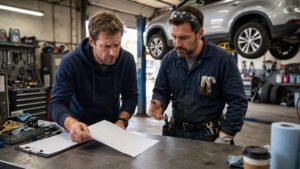
This is the single most important step. For $150 to $250, an independent mechanic puts the car on a lift and inspects what you can’t see in a driveway: frame damage, rust, leaks, suspension wear, brake condition, and evidence of flood damage or shoddy repairs. Sellers with nothing to hide agree readily; sellers who refuse are telling you everything you need to know.
Schedule the inspection at a shop you choose, not the seller’s buddy’s garage. The Consumer Reports car buying guides consistently rank the independent pre-purchase inspection as the highest-value money spent in any used-car transaction. A $200 inspection that reveals a $3,000 transmission problem is the best investment in the entire deal.
Your Own Walk-Around Inspection
Even with a professional inspection booked, do your own thorough check:
Body and frame
Look down each side of the car for rippled panels or mismatched paint, which signal accident repairs. Check panel gaps — uneven gaps around doors, hood, and trunk suggest structural work. Open the trunk and look under the carpet for water stains or a musty smell, both flood indicators.
Under the hood
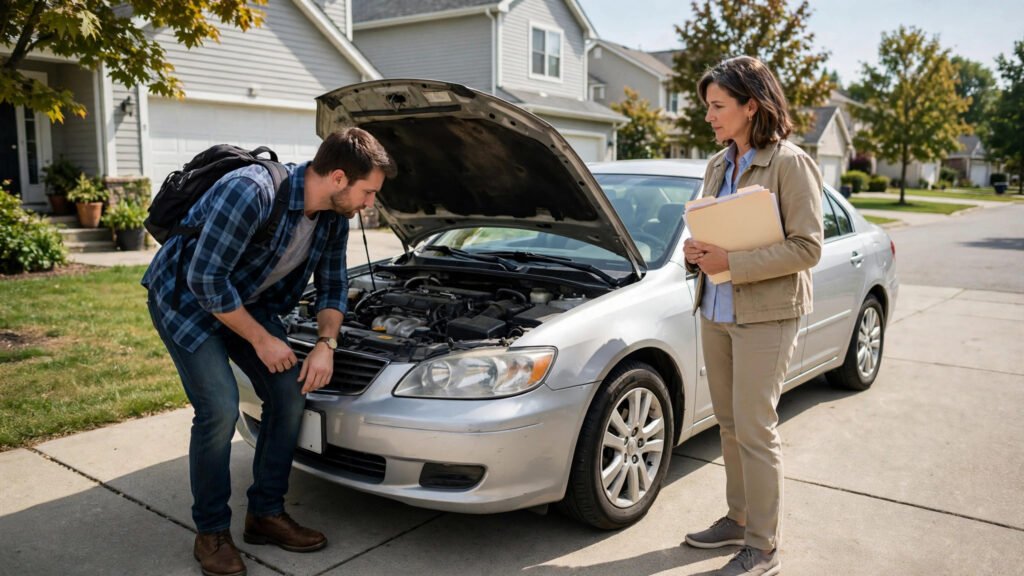
Check oil color (milky or foamy oil suggests coolant leaking into the engine — walk away), transmission fluid (should be pinkish-red, not brown or burnt-smelling), and coolant level and color. Look for fresh steam-cleaning, which can hide leaks.
Tires and brakes
Uneven tire wear points to alignment or suspension problems. Check tread depth and confirm all four tires match — mismatched tires on an all-wheel-drive vehicle can damage the drivetrain. During the test drive, brake firmly from 40 mph; pulling to one side or pulsing indicates brake or rotor issues.
Electronics and interior
Test everything: windows, locks, AC and heat, infotainment, backup camera, all lights, wipers, and the horn. On modern cars, electronic repairs are shockingly expensive — a dead infotainment unit can cost $1,500 to replace.
Red Flags That Mean Walk Away
Some deals aren’t worth any discount. Walk away immediately if: the seller can’t produce a title in their own name, or the title is salvage/rebuilt without upfront disclosure; the VIN on the dashboard doesn’t match the door jamb or the paperwork (possible VIN cloning); the seller refuses a pre-purchase inspection for any reason — no legitimate seller declines this; the price is dramatically below market with a story about military deployment, divorce urgency, or “leaving the country tomorrow” (classic scam narratives); or the seller insists on wire transfers, gift cards, or cash-only with no receipt.
Softer warning signs deserve investigation rather than instant rejection: fresh undercoating hiding the underbody (can conceal rust or frame damage), mismatched tires, a “lost” owner’s manual and service records combined with very low miles (possible odometer rollback), or a seller who only meets at night or in odd locations. Trust the pattern: one quirk is a quirk, three quirks are a story. There are thousands of used cars for sale in America at any moment — the right one won’t require you to ignore your instincts.
The Test Drive That Actually Tests Something
Around-the-block drives prove nothing. Take at least 20 minutes covering highway speeds, stop-and-go traffic, hills, and tight turns. Listen for grinding, whining, or clunking. The transmission should shift smoothly with no slipping or harsh jerks. The car should track straight with hands briefly off the wheel. Test a cold start if possible — many problems only appear before the engine warms up, which is why sellers sometimes “warm it up for you” before you arrive.
Negotiating and Closing Safely
Price the car using Kelley Blue Book or Edmunds private-party values for your zip code, adjusting for condition and the inspection findings — every flaw the mechanic found is negotiating ammunition. In most private sales, offering 10 to 15 percent below asking is normal, not insulting.
For payment, never bring large amounts of cash. A cashier’s check from your bank, verified by the seller calling the bank, is the standard safe method; for extra protection, complete the deal at the buyer’s or seller’s bank, where the title transfer and lien check can happen on the spot. Both parties should sign a bill of sale listing the VIN, sale price, date, odometer reading, and “as-is” condition, and the seller must sign over the title. Check your state’s DMV requirements — some states require emissions or safety inspections, notarized titles, or specific transfer forms within a set number of days.
Once the car is yours, the real adventure begins — many buyers celebrate with a trip, and planning a budget road trip across the US is the perfect way to bond with a new-to-you vehicle while verifying everything works on the open road.
Conclusion
Buying from a private seller in America rewards diligence and punishes haste. The formula is simple: verify the title and history before you fall in love, get an independent pre-purchase inspection no matter how good the car looks, test-drive like you mean it, and close the deal with secure payment and proper paperwork. Skip any of these steps and you’re gambling; follow all of them and private-party deals become what they should be — the smartest way to buy a used car.
Frequently Asked Questions
Is buying a car from a private seller safe?
Yes, if you verify the title, run a history report, and get an independent pre-purchase inspection. The risk comes from skipping these steps, not from private sales themselves.
What does “as-is” mean in a private car sale?
It means you accept the car in its current condition with no warranty — once you buy it, repair costs are yours. This is why the pre-purchase inspection is essential.
How should I pay a private seller for a car?
A cashier’s check completed at a bank is safest. Avoid cash for large amounts and never wire money to someone you haven’t met with the car and title in front of you.
Can I return a car bought from a private seller?
Generally no. Private sales are final in almost every state — there’s no cooling-off period like some dealer sales have. Inspect thoroughly before you buy.
What paperwork do I need from a private seller?
The signed-over title, a bill of sale with VIN/price/odometer/date, and any lien release documents. Then register the car at your DMV within your state’s deadline.