How to Find Your Perfect Red Lipstick Shade: The Method
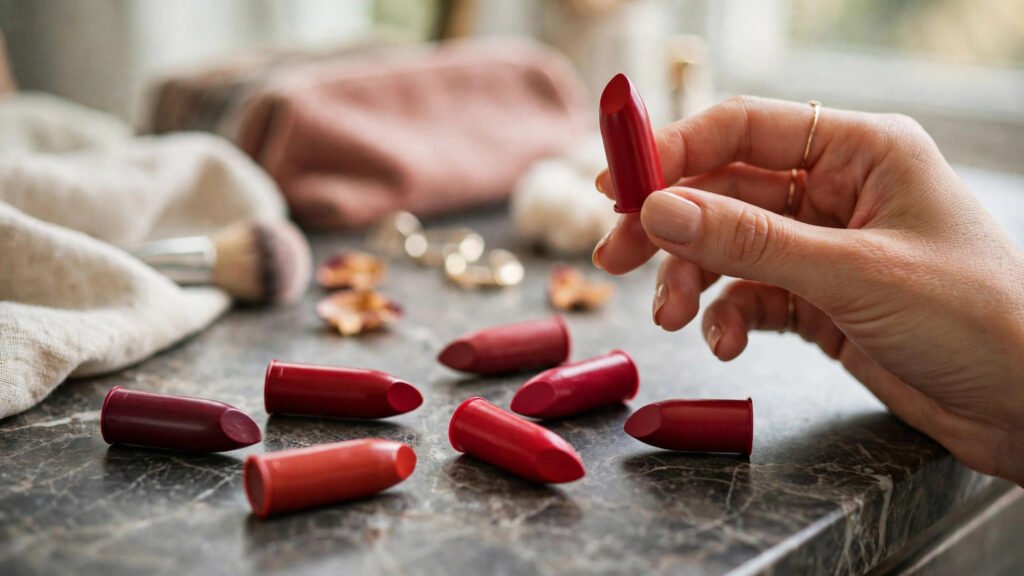
Red lipstick is the one makeup product with actual cultural history — from ancient Egypt to wartime America to every red carpet since. It’s also the product women buy and never wear: the wrong red sits in the drawer because it makes teeth look yellow, washes out the face, or just feels “not me.” The secret the beauty industry obscures with a thousand shade names: finding your red is a color-science problem with a reliable solution. It’s about undertone matching, not luck. Here’s the method.
Step 1: Match the Red to Your Undertone
This is 80% of the entire task. The wrong undertone in a red is what makes it look “off” — the right one makes it look inevitable:
Warm undertones (golden/peach skin, greenish veins) → warm reds: tomato, brick, coral-red, orange-red, poppy. These harmonize with the skin’s golden base instead of fighting it.
Cool undertones (pink/red skin, blue/purple veins) → cool reds: blue-red, cherry, berry-red, crimson, wine. The blue base counteracts pinkness and — bonus — makes teeth look whiter.
Neutral undertones → true neutral reds: classic “true red” shades that aren’t obviously warm or cool. The most versatile category — and the reason “the perfect universal red” lists exist (they’re all neutral reds).
Olive undertones (greenish-yellow cast, common in Mediterranean, Latin, Middle Eastern, and South Asian skin) → brick, terracotta-red, deep warm reds; avoid blue-reds that can look harsh against olive skin.
If you don’t know your undertone, the white-paper test (hold white paper to your bare face in daylight) reveals it — the same foundational skill as finding your most flattering clothing colors, applied to the lip.
Step 2: Consider Depth and Contrast
Undertone picks the red family; depth picks the specific shade. General principle: the red should have enough contrast with your skin to read as intentional. Very fair skin can be overwhelmed by the deepest oxblood reds (though rules are made to be broken — it’s about the look you want); deep skin tones can carry the most saturated, vivid reds beautifully, while very sheer reds may disappear.
Brightness matters too: bright, vivid reds (poppy, cherry) read bold and modern; deeper reds (brick, wine, oxblood) read sophisticated and evening. Neither is “better” — they’re different tools. Most red-lipstick lovers eventually own one of each.
Step 3: Test Properly (The Store Protocol)
Drugstore testers and department store counters require method: test on the lips, not the hand — lip pigmentation changes how reds read (use a disposable applicator or wipe the tester with alcohol; never apply a used tester directly). Check in daylight — store lighting warms everything; the red that looks perfect under spots may be orange outside. Wear it for 20 minutes — formulas oxidize and settle; the initial swipe isn’t the final color. Check your teeth — smile: warm/orange reds emphasize yellow in teeth, blue-based reds whiten optically. If whiter-looking teeth matter to you, lean cool.
Buying online: order from retailers with free returns, order two adjacent shades (one warmer, one cooler than your best guess), and test both in daylight. The FDA’s lipstick safety information covers what’s actually regulated in lip products. Keep the winner, return the loser — this is what return policies are for.
Step 4: The Application That Makes It Wearable
The perfect shade applied badly still disappoints:
Prep: exfoliate lips gently (damp washcloth or lip scrub), apply balm, blot — red shows every flake.
Line (optional but transformative): a lip liner in a matching or slightly deeper shade defines the edge, prevents feathering, and extends wear dramatically. For mature lips or long wear, this step is non-negotiable.
Apply in thin layers: one layer, blot with tissue, light dust of translucent powder through the tissue (the old makeup-artist trick), second layer. This builds wear time from 2 hours to 6+.
Balance the rest of the face: the classic rule — bold lip, quiet eye — exists because two strong features compete. A red lip with clean skin, groomed brows, and minimal eye makeup looks intentional; red lip plus smoky eye plus contour reads costume (unless costume is the goal).
Red Lipstick for Different Occasions
One red doesn’t serve every context — but you don’t need ten tubes. Everyday/work: a sheer red tint or satin bullet blotted down to a stain reads polished without demanding attention; pair with minimal eye makeup and groomed brows. The blotted-down technique (apply, blot hard with tissue, apply a second light layer) converts any bold red into a wearable daily version. Evening/events: the full opaque application with liner — this is where matte liquids and classic bullets earn their place. Photos: slightly deeper than you think you need; cameras wash out lip color, and the red that looks perfect in the mirror photographs pale.
The confidence factor: the biggest barrier to red lipstick isn’t shade — it’s the first hour of wearing it, when you feel like everyone is staring. They’re not (or if they are, it’s admiration). Wear it around the house first; run errands in it; let it become normal to you before the big event. Red lipstick is a skill of self-perception as much as application — the women who wear it best aren’t the ones with the perfect shade, they’re the ones who stopped apologizing for it. Find your undertone match, practice the application, and then wear it like you mean it. That’s the entire secret.
Finishes: Matte, Satin, Gloss
Matte liquid lipsticks: longest wear, most unforgiving of dry lips — prep is everything. Satin/cream bullets: the most versatile, comfortable daily red. Sheer reds and tinted balms: the gateway red for the red-curious — all the polish, none of the commitment. Glossy reds: youthful and modern, but highest maintenance (transfer, feathering). Your lifestyle picks the finish; your undertone picks the shade. The AAD’s cosmetic tips include guidance on keeping lip products hygienic and safe to use.
And the complete look benefits from coordination — the right neutral nail polish keeps the focus on the lip instead of competing with it. Restraint elsewhere is what makes the red sing.
Conclusion
Your perfect red lipstick is found, not stumbled upon: match undertone first (warm→tomato/brick, cool→cherry/wine, neutral→true red, olive→terracotta), calibrate depth to your skin, test on the lips in daylight, and apply with prep, liner, and thin layers. The drawer full of wrong reds wasn’t bad luck — it was undertone mismatch. Get the undertone right and the red stops being a gamble and starts being a signature.
Frequently Asked Questions
What red lipstick suits warm skin tones?
Warm reds with orange/tomato bases: tomato, brick, poppy, coral-red. They harmonize with golden undertones instead of clashing.
What red lipstick makes teeth look whiter?
Blue-based reds (cherry, crimson, blue-red) — the cool undertone optically counteracts yellow in teeth. Orange-based reds do the opposite.
How do I stop red lipstick from feathering?
Lip liner is the primary fix — it creates a barrier. Also: blot and layer thin coats, avoid overly creamy formulas on mature lips, and keep the lip area moisturized but not greasy.
Can I wear red lipstick every day?
Absolutely — sheer or satin formulas in your undertone read polished, not dramatic, for daytime. Save the full matte opaque application for evenings if you prefer, but there’s no rule against daily red.
Why does red lipstick look bad on me?
Almost always undertone mismatch — the wrong red family for your skin. Reassess your undertone and test the opposite temperature family; most “I can’t wear red” cases resolve immediately.