Gel vs. Acrylic Nails: How to Choose the Right One for You
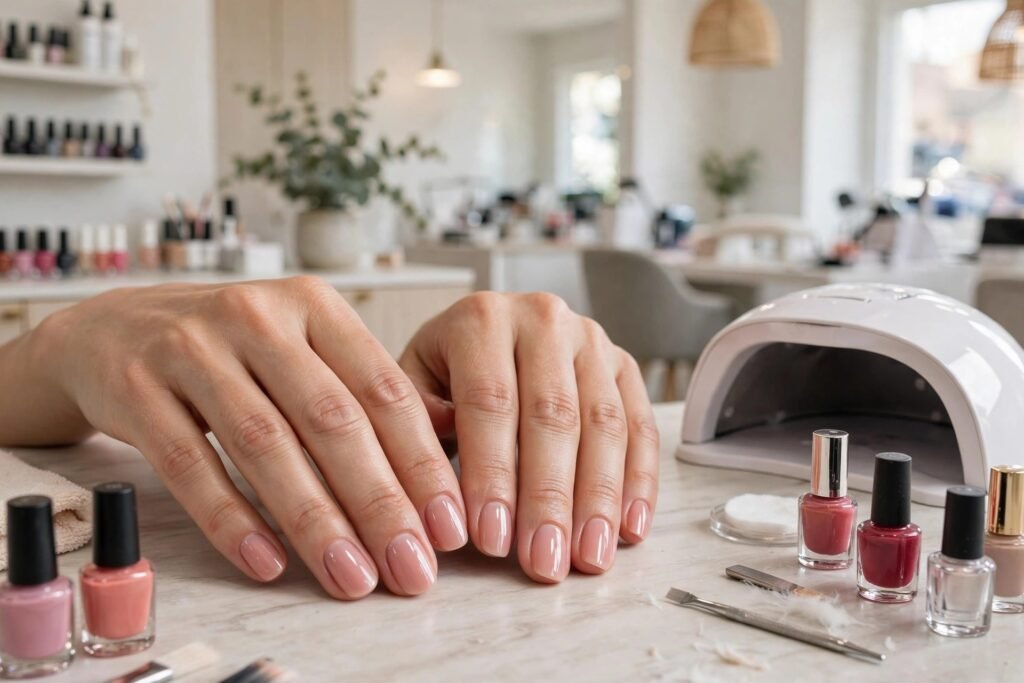
Standing at the nail salon counter, staring at a wall of options, one question stops almost every client cold: gel or acrylic? Both promise strong, glossy, long-lasting nails. Both have passionate fans. And both can look incredible — or go badly wrong — depending on your natural nails, your lifestyle, and the skill of the technician. Choosing blind is how you end up with lifting, breakage, or a set you resent for three weeks.
This guide breaks down how gel and acrylic nails actually differ — in chemistry, application, durability, cost, removal, and nail health — so you can walk into your next appointment in America knowing exactly what to ask for and why.
What Gel Nails Actually Are
“Gel” in the salon usually means hard gel or builder gel (distinct from gel polish, which is just long-wear color cured under a lamp). Hard gel is a thick, honey-like oligomer that the technician brushes onto the nail or a form, then cures under a UV or LED lamp. Each layer hardens in 30 to 60 seconds, and the tech builds the nail’s shape and strength layer by layer.
The finished result is flexible with a natural, glossy look, feeling lighter and more like your real nails than acrylics. Because the product is self-leveling, the surface tends to be smoother, which is why gel manicures photograph so beautifully. They typically last two to three weeks before needing a fill.
What Acrylic Nails Actually Are
Acrylics are the veteran of the nail world, around since the 1970s. The technician mixes a liquid monomer with a powder polymer to form a bead, places it on the nail, and sculpts it before it air-dries and hardens — no lamp needed. The chemistry is essentially the same family as dental acrylics.
Acrylics cure harder and more rigidly than gel. That rigidity is their superpower: they are the strongest enhancement for very long lengths, dramatic stiletto or coffin shapes, and intricate 3D nail art that needs a rock-solid base. They are also generally cheaper than gel. The tradeoff is a thicker, less natural feel, a stronger chemical odor during application (from the monomer), and a harder removal process.
Durability: Which One Lasts Longer in Real Life?
For pure toughness, acrylics win. Their rigidity resists chips and breaks better than gel, which is why they remain the go-to for long extensions, dramatic shapes, and people who are hard on their hands. A well-applied acrylic set can go three to four weeks.
But durability is not just about hardness. Gel’s slight flexibility means it absorbs impact rather than cracking — think of it like a running shoe versus a wooden clog. On shorter to medium lengths, gel often survives daily life just as well, and it is less likely to cause a painful break of the natural nail underneath because it gives a little. If your nails are naturally flexible or you type constantly, gel’s give can actually protect your nail beds better.
Cost Comparison Across the US
Prices vary by city, but the pattern is consistent nationwide. A full set of acrylics typically runs $35 to $60 at a standard salon, with fills $25 to $40. Gel full sets usually start around $50 and climb to $80 or more, with fills in the $35 to $55 range. Gel polish-only manicures (no extensions) sit between $35 and $55.
Over a year of regular fills every three weeks, the difference adds up to a few hundred dollars. That said, price should not be the only factor: a cheap set from an under-skilled tech costs more in repairs and nail damage than a pricier set from an expert. And whichever you choose, maintaining them well — including neutral nail polish colors for everyday wear that grow out gracefully — stretches the time between appointments.
Nail Health: Which Is Kinder to Your Natural Nails?
Neither enhancement is harmless, but the damage usually comes from application and removal, not the product itself. Both require the natural nail surface to be lightly buffed for adhesion, which thins it slightly. The real harm happens when enhancements are pried, picked, or peeled off — that rips layers of the natural nail plate away.
Gel has a modest edge here: it soaks off more easily in acetone than acrylic, so removal tends to be gentler when done properly. Acrylics need a longer soak and more filing, which means more opportunity for over-filing by an impatient tech. If you have thin, weak, or damaged natural nails, most reputable nail techs will steer you toward gel or toward strengthening your nails first. The American Academy of Dermatology’s nail care guidance emphasizes that proper removal technique matters more than the product choice for long-term nail health.
A Word on Allergies
Both products contain acrylates, and allergies to them are real and growing — especially from at-home gel polish kits with under-cured product. Symptoms include itching, redness, and swelling around the nails that can become permanent, meaning you may never be able to wear enhancements again. If you develop any reaction, see a dermatologist and stop use immediately. A licensed tech who cures each layer fully is your best protection in a salon.
Application Time and Salon Experience
Acrylic application is usually faster — a skilled tech can do a full set in 45 to 75 minutes since there is no curing between layers. Gel takes longer, often 60 to 90 minutes or more, because each layer must be cured and the shaping is more meticulous. Gel sessions are quieter and odor-free, which matters if you are sensitive to chemical smells. Many clients find the gel experience more relaxing; many techs find acrylic more forgiving to sculpt.
Removal: What You Are Signing Up For
Plan on salon removal for both — this is non-negotiable if you value your nails. Gel soaks off in acetone in roughly 10 to 20 minutes after the top seal is filed. Acrylics take 20 to 40 minutes of soaking, sometimes with the tech gently pushing off softened product between soaks. Never peel either off at home; the temptation to “just pull this lifted corner” is the single biggest cause of nail damage in America, and the repair takes months of regrowth.
So Which Should You Choose?
Choose gel if you want a natural look and feel, have shorter to medium length goals, have weaker natural nails, dislike strong chemical odors, or prioritize gentler removal. Choose acrylic if you want maximum length or dramatic shapes, need the toughest possible enhancement for a hands-on job, or want the most budget-friendly option and do not mind a thicker feel.
And remember the factor that outweighs the product: the technician. A great tech’s acrylics will outperform a mediocre tech’s gels every time. Check reviews, look at healed (not just fresh) work in their portfolio, and ask how they handle removal. Pair your choice with an overall polished look — dressing stylishly on a budget and well-kept nails together read far more expensive than either alone. The FDA’s overview of nail product safety is also worth a skim so you know which ingredients to ask about.
Conclusion
Gel and acrylic nails are not good-versus-bad — they are different tools for different jobs. Gel offers flexibility, a natural finish, and gentler removal; acrylic offers unmatched strength, dramatic length, and lower cost. Match the product to your nail goals and lifestyle, invest in a skilled licensed technician, commit to professional removal, and either choice can give you beautiful, healthy-looking nails for years. The worst choice is not gel or acrylic — it is picking one at random without knowing the difference.
Frequently Asked Questions
Do gel nails damage your natural nails?
When applied and removed properly by a licensed technician, gel causes minimal damage. Most damage comes from improper removal — peeling or prying the product off tears layers of the natural nail. Always soak off at the salon.
Which lasts longer, gel or acrylic?
Acrylics generally last longer (3–4 weeks vs. 2–3 for gel) and resist breakage better at long lengths. On short to medium nails, both perform similarly in real-world wear.
Can you fill gel nails, or do you need a new set each time?
You can fill both. Gel fills involve filing down the grown-out area and applying fresh product near the cuticle, then curing. Like acrylics, gel sets can be maintained with fills for months.
Why do my acrylic nails lift at the cuticle?
Lifting is usually caused by product touching the skin during application, oily nail plates that were not dehydrated properly, or trauma to the nail. A skilled tech prevents most lifting with careful prep — and you should return for repair rather than gluing it yourself.
Is the UV lamp for gel nails dangerous?
LED lamps (now standard in most US salons) emit very low UV doses — studies suggest the exposure from regular manicures is minimal. If you are concerned, apply sunscreen to your hands before the appointment or wear UV-protective fingerless gloves.