
Why Your Knees Hurt Going Up Stairs (and How to Fix It)
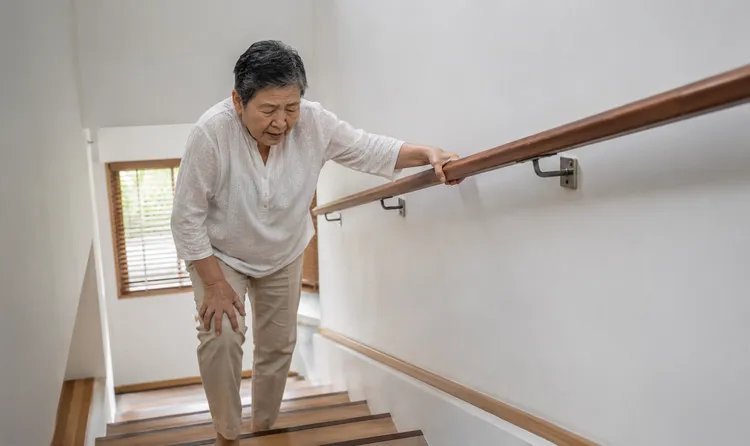
Walking on flat ground? Totally fine. But the moment you face a staircase, your knees file a formal complaint. If you’re wondering why do my knees hurt when I go up stairs, you’re dealing with one of the most common joint complaints out there — and the good news is that stair-specific knee pain usually has an identifiable cause and a real fix. It’s rarely “just aging,” and it’s almost never something you have to accept.
Why Do My Knees Hurt When I Go Up Stairs?
Stairs are uniquely brutal on knees. Climbing them loads the joint with three to four times your body weight, concentrated right behind the kneecap. That’s why pain often shows up on stairs long before it bothers you on level ground — the staircase is a stress test your knees are failing.
The most common culprit is patellofemoral pain syndrome, better known as runner’s knee. It causes a dull ache around or behind the kneecap, especially when climbing stairs, squatting, or sitting with bent knees for a while (the dreaded “movie theater sign”). It happens when the kneecap doesn’t track smoothly in its groove — often due to weak quadriceps, tight hamstrings, or flat feet changing your alignment. The AAOS guide to patellofemoral pain syndrome explains the mechanics clearly.
Other likely suspects include:
- Knee osteoarthritis. The cartilage cushioning the joint wears thin, and the high load of stair climbing exposes it. Typically worse in the morning or after rest, easing once you get moving — then aching again after overuse.
- Chondromalacia patella. Softening of the cartilage under the kneecap, common in younger active people. Causes grinding or crackling sensations along with the ache.
- IT band irritation. A tight iliotibial band pulls the kneecap slightly off track, creating pain on the outer knee that flares on stairs and downhill walking.
- Quadriceps weakness. Sometimes there’s no dramatic diagnosis — your thigh muscles just aren’t strong enough to stabilize the joint under stair-climbing loads, and the knee takes the beating instead.
What You Can Do Right Now for Relief
For a fresh flare-up, the basics work: rest the knee from aggravating activity for a few days (skip the stairs guilt-free), ice for 15 minutes a couple of times a day, and consider an over-the-counter anti-inflammatory if your doctor is fine with it. A simple elastic knee sleeve can provide enough compression and warmth to make stairs bearable while you work on the underlying issue.
But here’s the thing most people miss: rest alone doesn’t fix stair knee pain. It just pauses it. The long-term fix is almost always strengthening the muscles around the knee — particularly the quadriceps and glutes — so the joint is properly supported under load. If your knees are generally cranky, these exercises designed for people with bad knees are a safe starting point that won’t make things worse.
Stair Technique That Spares Your Knees
How you climb matters. Lead with your stronger leg going up (“up with the good”), and lead with the weaker leg going down. Use the handrail — that’s what it’s for, not a sign of weakness. Take stairs one at a time instead of two, keep your knee tracking over your toes rather than caving inward, and slow down. Rushing stairs with bad knees is asking for trouble. Small form tweaks like these can cut your pain noticeably while the strengthening work kicks in.
Exercises That Fix the Root Cause
The gold-standard rehab for stair-related knee pain targets the quads, hips, and glutes. Straight-leg raises, wall sits (start with 10 seconds and build up), step-ups on a low step, and clamshells for the hip abductors form the core of most physical therapy programs for this exact complaint. Two to three sessions a week, and most people notice improvement within a month. Consistency beats intensity here — gentle and regular wins over heroic and occasional.
Don’t neglect the rest of the chain, either. Tight calves and hamstrings change how forces travel through the knee, and weak core muscles let your pelvis drop, which torques the knee inward. Knee pain is often the victim of problems happening above and below it. That’s also why posture matters more than people think — improving your posture while working at a desk reduces the all-day misalignment that leaves knees vulnerable. And if back pain rides along with your knee issues, these lower back pain exercises address the other end of the kinetic chain.
When to See a Doctor
Most stair knee pain responds to the approach above, but get evaluated promptly if you notice swelling that doesn’t resolve in a few days, the knee locking or giving way, an inability to bear weight, a visible deformity after an injury, or pain that steadily worsens over weeks despite rest and strengthening. Those patterns can signal meniscus tears, ligament damage, or advanced arthritis that needs professional treatment. The Cleveland Clinic’s knee pain overview is a solid reference for sorting “manage at home” from “call the doctor.”
Footwear and Weight: The Overlooked Factors
Two things people rarely connect to knee pain: what’s on their feet and how much they’re carrying. Worn-out shoes with collapsed support change your gait in ways that load the knee unevenly — if your daily shoes are visibly tilted or the tread is gone on one side, they’re actively hurting you. You don’t need expensive orthotics; you need shoes with intact cushioning and support, replaced before they’re destroyed. For overpronators, a stability shoe or a simple over-the-counter insole can realign the whole chain from foot to knee.
Weight matters through brutal math: every extra pound of body weight adds roughly four pounds of pressure on the knee joint with each step — and stair climbing multiplies that further. That means losing just 10 pounds unloads 40+ pounds of force per step. For stair knee pain specifically, modest weight loss is one of the highest-impact interventions available, and it compounds with the strengthening work. If that’s part of your picture, a sustainable weight loss pace protects your knees without crash-diet misery.
The Practical Takeaway
Knee pain on stairs is your joint asking for better support, not announcing its retirement. Start with the immediate relief basics, fix your stair technique this week, and begin a simple quad-and-glute strengthening routine — that’s the trio that resolves most cases. Give it four to six consistent weeks. If you’re improving, keep going; if you’re not, or if any red-flag symptoms show up, get it checked. Stairs are unavoidable, but dreading them doesn’t have to be.






