
How Can I Make My Kitchen Look Bigger on a Budget
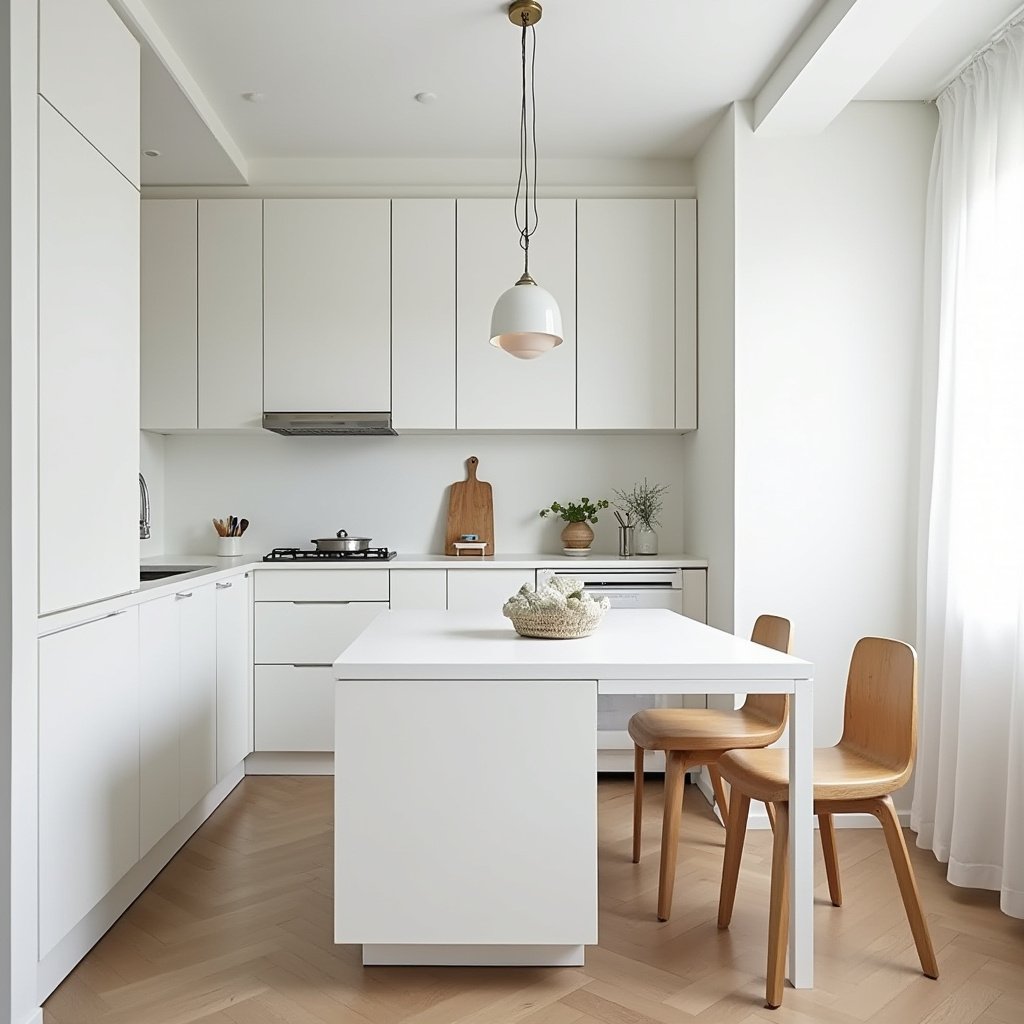
My first apartment had a kitchen so small I could touch both walls at once. I called it “cozy” to be polite, but cooking in it felt like working inside a shoebox. When I finally moved to a slightly bigger place, I was determined to make the kitchen feel bigger without knocking down walls or spending a fortune. It turns out that perceived space is mostly about light, color, and visual clutter — all things you can change cheaply.
Here’s how to make your kitchen look bigger on a budget, with tricks that actually work.
How Can I Make My Kitchen Look Bigger on a Budget?
The core principle: your brain judges room size by light levels, sight lines, and visual simplicity. Bright, uncluttered spaces with long uninterrupted sight lines feel larger. Dark, busy, chopped-up spaces feel smaller. Every trick below works on one of those three levers.
Maximize Light — It’s the Biggest Lever
Nothing shrinks a kitchen faster than dim lighting. And nothing expands it more cheaply than better light:
- Under-cabinet lighting. LED strip lights ($20–$40 for a kit) eliminate the shadows that make countertops feel cave-like. This single upgrade changes a kitchen’s feel more than almost anything else.
- Brighter bulbs. Swap dim bulbs for daylight-temperature LEDs (4000–5000K). It costs a few dollars and instantly opens the space.
- Uncover the windows. Remove heavy curtains or dark blinds. If privacy is a concern, use sheer shades or frosted window film that lets light through.
- Add a mirror or glossy backsplash. Reflective surfaces bounce light around and create the illusion of depth. A mirrored backsplash or even a large mirror on one wall works wonders.
Go Light and Bright With Color
Light colors recede; dark colors advance. Painting cabinets white or a soft light gray is the highest-impact budget move for a small kitchen — a gallon or two of cabinet paint ($30–$60) transforms the room. If painting cabinets feels like too much, at least paint the walls a light, warm white.
Keep the palette simple and cohesive. When walls, cabinets, and trim are all in the same light family, the eye flows across the room without stopping — and uninterrupted visual flow reads as spaciousness. High contrast (dark cabinets, busy patterns) chops the room into pieces. For color guidance, our article on choosing paint colors for dark rooms applies the same principles.
Declutter Ruthlessly and Rethink Storage
Clutter is the enemy of spaciousness. Every appliance on the counter, every magnet-covered fridge, every crowded open shelf makes the kitchen feel smaller. Be brutal:
- Clear the counters. Store small appliances you don’t use daily in cabinets. Aim for mostly clear counters — it instantly doubles the perceived space.
- Minimize open shelving or style it sparsely. Open shelves packed with mismatched items look chaotic. Either pare them down to a few pretty pieces or replace with closed storage.
- Use vertical space. A magnetic knife strip, hanging pot rail, or tall narrow shelving unit moves storage up instead of out.
- Choose a small round table or drop-leaf table instead of a bulky rectangular one. Round shapes improve traffic flow in tight spaces.
Flooring and Sight Lines
Continuous flooring that runs from the kitchen into adjacent rooms without a visual break makes both spaces feel larger — the eye keeps traveling instead of stopping at a threshold. If you’re replacing flooring anyway, run the same material through. Light-colored flooring also helps; dark floors absorb light and visually shrink the room.
Similarly, glass-front cabinet doors on a few uppers create depth (the eye sees into the cabinet instead of stopping at the door). Even removing a couple of cabinet doors entirely for open display — styled minimally — can open up a wall.
Hardware, Fixtures, and Small Swaps
Small details contribute to the overall feeling of airiness:
- Slim-profile hardware instead of chunky knobs and pulls.
- A single-basin sink reads cleaner than a divided one, and an undermount sink shows more counter.
- A compact faucet with a clean silhouette rather than a bulky commercial style.
- Remove the kitchen table if you can — a small island or peninsula with stools often fits better and feels more open.
For more ideas in this vein, our guide to the cheapest ways to update an old kitchen and updating old kitchen cabinets without replacing them are full of budget-friendly transformations.
What NOT to Do
Avoid dark, busy backsplashes with small patterns — they create visual noise that shrinks the room. Skip bulky window treatments, oversized light fixtures that hang low, and too many small decorative items. And resist the urge to fill every inch of wall with storage; breathing room on the walls translates to breathing room in your perception of the space.
Layout Tweaks That Cost Almost Nothing
Sometimes the biggest spaciousness gains come from rearranging, not buying. Pull the trash can out of the traffic path — a surprising amount of kitchen congestion comes from one poorly placed item. If your refrigerator door swings into the main walkway, see whether the door swing can be reversed (most fridges allow this with basic tools).
Consider removing a non-load-bearing upper cabinet or two on one wall. It sounds counterintuitive — less storage? — but a single open wall with a piece of art or a floating shelf breathes in a way that wall-to-wall cabinets don’t. You can compensate with an over-the-sink dish rack, a rolling cart, or better-organized lower cabinets. The visual relief is worth more than the lost cubic feet.
Finally, keep the floor visible. The more floor you can see, the bigger the room feels. That means no clutter on the floor, a small rug rather than wall-to-wall coverage if you use one, and furniture with legs rather than pieces that sit flush to the ground. Visible floor equals visible space.
Practical Takeaway
Brighten everything (under-cabinet LEDs, daylight bulbs, uncovered windows), go light and cohesive with color, clear the counters ruthlessly, maintain continuous sight lines with flooring and glass-front cabinets, and swap bulky details for slim ones. None of these cost much, and together they can make a shoebox kitchen feel genuinely spacious. Perceived space is designed, not built. For more small-kitchen inspiration, Houzz’s small kitchen photo collections show these principles in real homes.




1 thought on “How Can I Make My Kitchen Look Bigger on a Budget”