
How to Prepare for a Spray Tan: The Complete Checklist
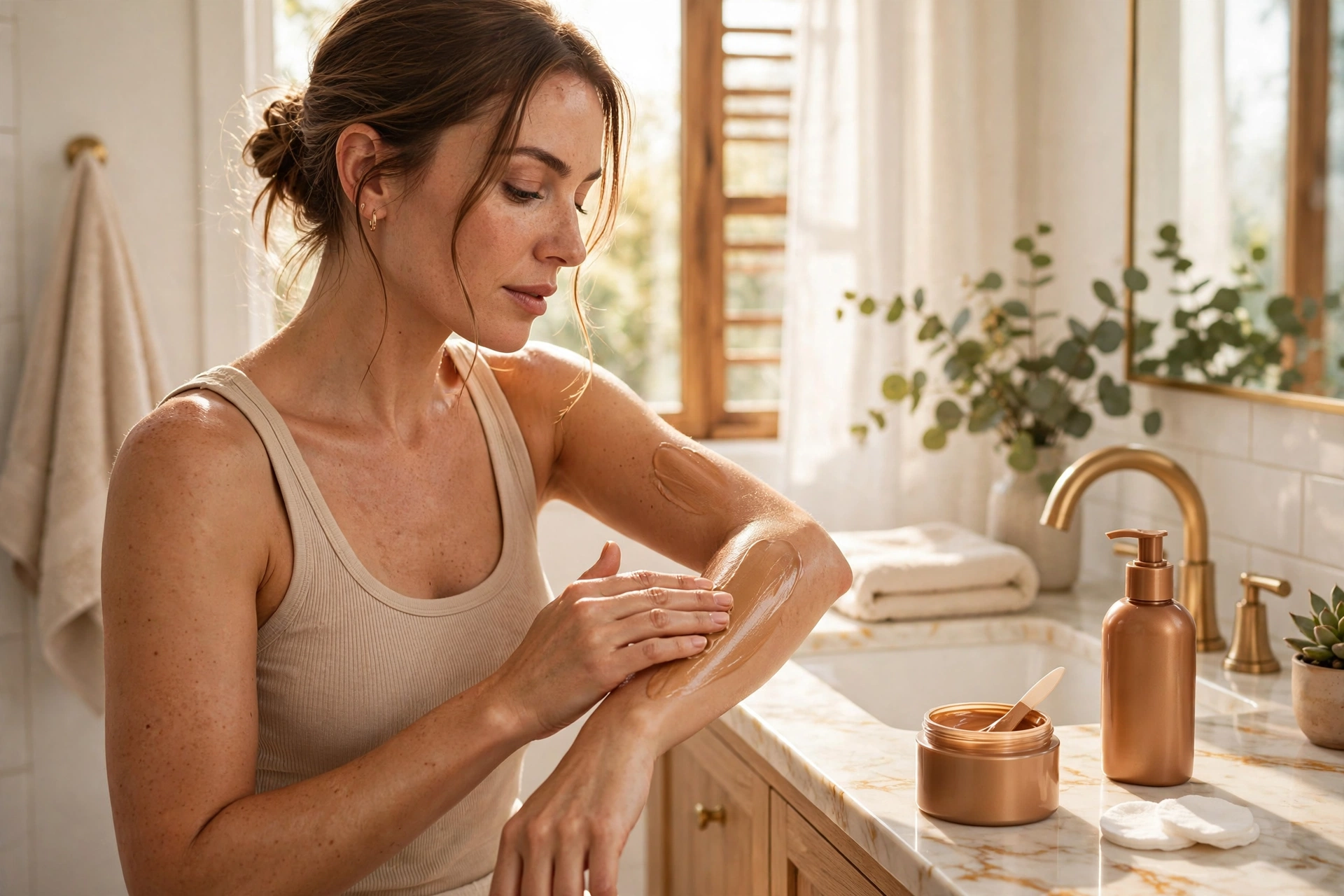
Knowing how to prepare for a spray tan is the difference between a flawless, natural-looking glow and a streaky, orange disaster. Roughly 80 percent of spray tan problems trace back to poor prep, not the technician or solution. The golden rule: exfoliate thoroughly, arrive with clean bare skin, and wear loose dark clothing. This guide covers the full timeline — what to do days before, the night before, the day of, and the critical aftercare that makes your tan last.
3-4 Days Before: The Foundation
- Stop using retinoids and strong AHAs/BHAs on areas to be tanned — they increase cell turnover, which makes tan fade unevenly
- Moisturize daily — hydrated skin takes color more evenly than dry, flaky skin
- Plan hair removal now: waxing should be done 3 to 4 days before (waxing after strips the tan); shaving should be done 24 hours before, not day-of
The Night Before: Exfoliation Is Everything
This is the single most important prep step. DHA (the active tanning ingredient) develops on the outermost skin cells — if those cells are rough, dry, or flaky, the tan clings unevenly and fades in patches.
- Full-body exfoliation: use a scrub, exfoliating mitt, or dry brush on every area to be tanned — legs, arms, torso, neck
- Pay extra attention to rough zones: elbows, knees, ankles, heels, and knuckles absorb more solution and go darker if not properly smoothed
- Choose the right exfoliant: avoid oil-based scrubs the night before — residue creates a barrier. Use a plain scrub or mitt, then rinse thoroughly
- Shave (if you shave): tonight, not tomorrow morning — freshly shaved skin is slightly irritated and takes color unevenly
How often you should exfoliate generally depends on your skin — for routine guidance see how often you should scrub your body.
Day Of: Arrive as a Blank Canvas
- Shower, but use no products after: no lotion, no deodorant, no perfume, no makeup, no sunscreen — every one of these creates a barrier that blocks DHA
- Skip deodorant entirely: it reacts with tanning solution and turns greenish on the skin — a classic rookie mistake
- Remove all makeup and arrive with a clean face
- Tie hair up and bring a headband — solution in the hairline looks unnatural
- Wear loose, dark clothing: tight clothes rub wet solution off; white clothes stain. Flip-flops, a loose dress or sweats are ideal
- Remove jewelry and contact lenses if you wear them
At the Appointment: What to Expect
- Consultation: a good technician asks about your natural skin tone, the occasion, and how dark you want to go. First-timers should go one shade lighter than they think — you can always go darker next time.
- Barrier cream: the tech applies cream to palms, nails, elbows, knees, and feet to prevent over-absorption in dry areas
- The spray: you will stand in various poses while the technician airbrushes the solution. It takes 10 to 15 minutes. Disposable undergarments or going nude (your comfort level) — most salons provide options.
- Drying: stand under fans for a few minutes until touch-dry before dressing
Cost: $25 to $60 for a single session at most salons; $15 to $30 for automated booth tans. Monthly unlimited packages run $60 to $120.
Aftercare: Making It Last 7-10 Days
Your tan develops over 8 to 12 hours. What you do in that window determines everything:
- Do not shower for 8-12 hours (follow your technician’s specific timing — rapid solutions may need only 2-4 hours)
- Avoid sweating, swimming, and rain during development — water is the enemy of developing DHA
- First shower: lukewarm, quick, no soap on tanned areas — just rinse. The brown “guide color” washing off is normal; your developed tan is underneath
- Pat dry, never rub
- Moisturize twice daily after the first shower — hydrated skin holds tan dramatically longer
- Avoid long hot baths, chlorinated pools, and salt water — all accelerate fading
- Skip exfoliating until you are ready for the tan to fade
With proper aftercare, expect 7 to 10 days of good color, fading gradually and evenly. For context on natural tanning timelines, see how long it takes for a tan to fade.
Spray Tan vs. Other Tanning Methods
- Spray tan: instant color, no UV damage, lasts 7-10 days — the safest option by far
- Self-tanner at home: cheaper ($10-$30), but harder to apply evenly — our guide on how to get tanner covers DIY technique
- Tanning beds: classified as carcinogenic by the WHO; dramatically increase melanoma risk. No cosmetic benefit justifies the risk.
- Natural sun tanning: free but UV-damaging — if you tan outdoors, understand how long sunscreen lasts on skin first
Common Mistakes to Avoid
- Exercising right after: sweat creates drip marks during development
- Wearing tight jeans home: pressure marks where fabric pressed the solution
- Shaving after tanning: each shave exfoliates away tan — shave before, then minimize during the tan’s life
- Using Dove or oil-based body wash: can strip tan faster; use gentle, sulfate-free washes
- Going too dark for your skin tone: the number-one cause of the “orange” look — match the solution to your undertones
Spray Tans for Special Occasions: Timing Guide
For weddings, photoshoots, or vacations, schedule strategically. Get your tan 1-2 days before the event — day one can look slightly too fresh, while day two-three shows the most natural settled color. Do a trial run 3-4 weeks earlier if the event matters: this reveals how the solution interacts with your skin tone and how long it lasts on you personally. Brides should coordinate with their makeup artist, since foundation shades need to match the tanned skin. The American Academy of Dermatology recommends sunless tanning over UV exposure for pre-event color — a spray tan gives the glow without the skin damage that shows up in close-up photos.
Understanding DHA and Sensitive Skin
Dihydroxyacetone (DHA), the active ingredient, reacts with amino acids in dead skin cells to create temporary browning — it does not penetrate to living tissue, which is why the FDA considers it safe for external cosmetic use (while advising against inhalation or application to mucous membranes, hence nose plugs and protective eyewear in booths). If you have eczema, psoriasis, or very sensitive skin, do a patch test 48 hours before full application. Fragrance-free solutions exist for reactive skin — ask your salon. Those with nut allergies should check ingredients, as some solutions contain nut-derived oils.
Frequently Asked Questions
How long does a spray tan last?
7 to 10 days with good aftercare. Face fades fastest (daily washing + skincare actives); legs last longest.
Will it turn me orange?
Not with modern solutions matched to your skin tone by a trained technician. Orange results come from drugstore self-tanners of the past or going far too dark.
Can I get a spray tan while pregnant?
DHA is not absorbed into the bloodstream in significant amounts, and most providers consider it low-risk — but check with your doctor first, as official guidance is limited.
Does it protect from sunburn?
No. A spray tan provides zero UV protection. You still need sunscreen outdoors.
The Bottom Line
To prepare for a spray tan: exfoliate thoroughly the night before (no oil-based scrubs), shave 24 hours ahead, arrive with completely bare skin (no lotion, deodorant, or makeup), wear loose dark clothes, and protect the developing tan from water for 8-12 hours after. Follow this protocol and you will get an even, natural-looking glow that lasts over a week — skip it and you are gambling with streaks.



