
How Often Should You Scrub Your Body? The Right Frequency
Body exfoliation — “scrubbing” — is one of those skincare steps everyone has heard of but few do correctly. Too little and you get dull, bumpy, ingrown-prone skin. Too much and you strip your barrier, causing irritation, sensitivity, and even breakouts. So how often should you actually scrub your body? The answer depends on your method, your skin type, and what you are trying to fix.
The General Rule: 1–3 Times Per Week
For most people with normal skin using a standard body scrub or exfoliating mitt, 2–3 times per week is the sweet spot. This is frequent enough to prevent dead cell buildup but gentle enough to let your skin barrier recover between sessions.
But “most people” covers a lot of variation. Here is how to dial it in:
By Exfoliation Method
Physical scrubs (sugar, salt, coffee)
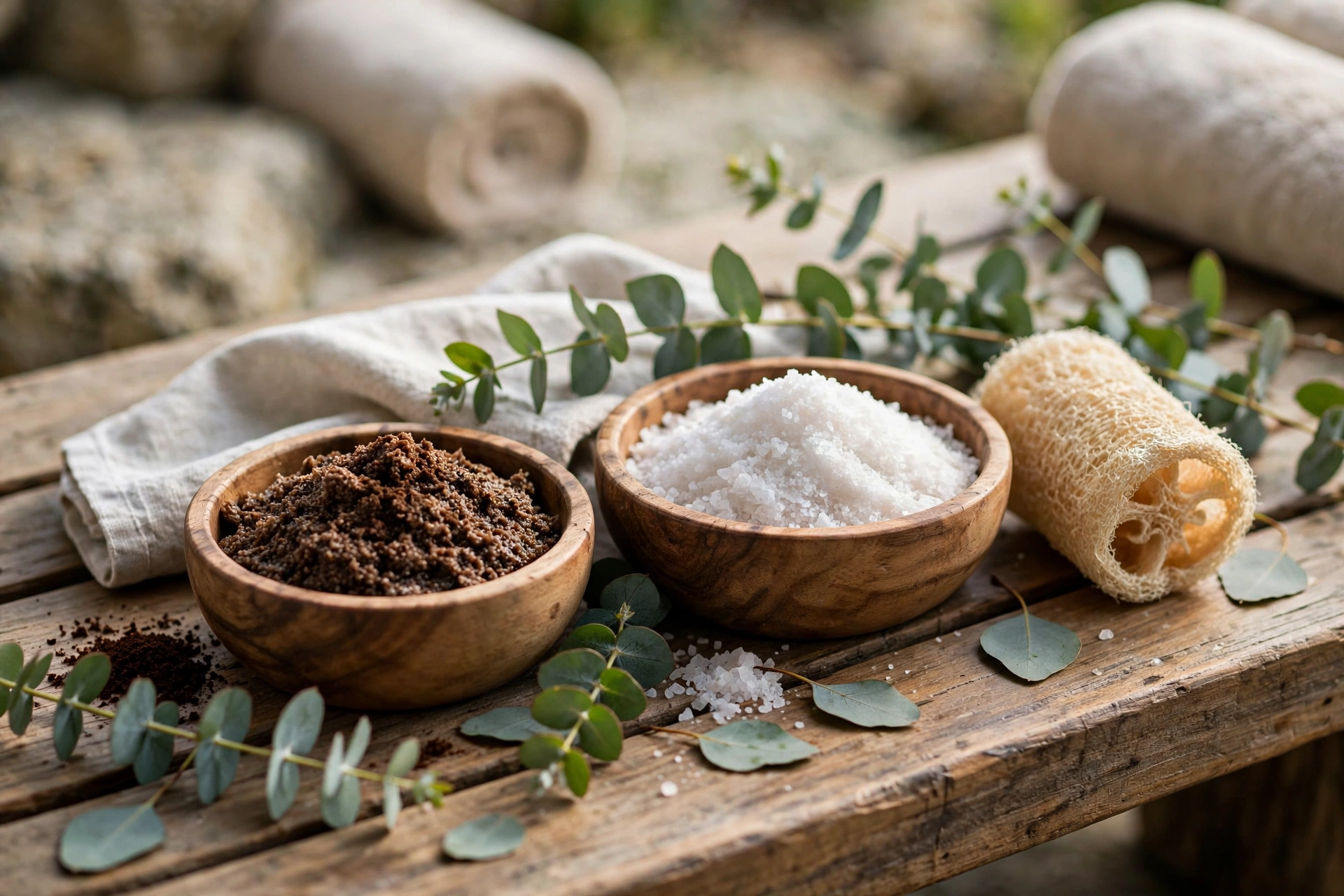
Frequency: 2–3x per week. The coarseness matters enormously — fine sugar is gentle enough for twice weekly; coarse sea salt should be once weekly at most. Always scrub on damp (not dry) skin using light pressure and circular motions. Let the product do the work; pressing harder just causes micro-tears.
Exfoliating mitts and brushes (Korean Italy towels, dry brushing)
Frequency: 1–2x per week. These are more aggressive than they feel. A Korean Italy towel in a hot shower can remove an astonishing amount of dead skin — which is satisfying but also easy to overdo. Limit sessions to 5–10 minutes and skip if skin is sunburned or irritated.
Chemical exfoliants (AHA/BHA body lotions)
Frequency: 2–4x per week, or even daily for mild formulas. Products with glycolic, lactic, or salicylic acid dissolve dead cells chemically rather than scrubbing them off. They are generally gentler for consistent use — a 10% AHA body lotion used 3x weekly is excellent for keratosis pilaris (“chicken skin”) and rough texture. Start 2x weekly and increase as tolerated.
Exfoliating body washes
Frequency: daily is fine. These contain low concentrations of acids or very fine particles and are designed for everyday use. They will not replace a dedicated scrub session but maintain smoothness between them.
By Skin Type
- Oily/resilient skin: 3x per week, can tolerate stronger methods.
- Normal skin: 2x per week with moderate methods.
- Dry skin: 1–2x per week, favor chemical over physical exfoliants (scrubbing dry skin often makes flakiness worse).
- Sensitive skin or eczema: 1x per week maximum, chemical only (lactic acid is gentlest), and skip entirely during flare-ups.
- Very fair/thin skin: Lean toward 1–2x weekly; your barrier is naturally more delicate.
By Goal
Preventing ingrown hairs
Exfoliate 2–3x per week, especially in the 48 hours before hair removal. This lifts trapped hairs and clears follicles. If you shave regularly, exfoliating before each shave dramatically reduces ingrowns. For longer-term reduction, consider laser hair treatment, which eliminates the ingrown problem at the source.
Treating keratosis pilaris (bumpy arms)
Consistent chemical exfoliation 3–4x weekly with AHA/BHA lotion, plus daily moisturizing. This condition needs ongoing management — it improves with routine and returns without it. The AAD’s keratosis pilaris guide confirms that regular exfoliation plus moisturizer is the first-line approach.
Prepping for self-tanner
Exfoliate thoroughly 24 hours before applying self-tanner (not the same day — freshly exfoliated skin can grab color unevenly). This is the single biggest factor in avoiding a patchy fake tan. For more on getting color right, see how to tan faster without streaks.
Fading dark spots and uneven tone
Chemical exfoliants with glycolic acid or niacinamide, 3x weekly, gradually fade hyperpigmentation from old ingrowns, razor burn, or sun damage. Patience required — visible fading takes 8–12 weeks.
Just maintaining smooth skin
1–2x weekly with whatever method you enjoy. Consistency matters more than intensity for maintenance.
Signs You’re Over-Exfoliating
Pull back immediately if you notice:
- Persistent redness or stinging (beyond the few minutes after scrubbing)
- Skin feels tight, “squeaky,” or papery
- Increased sensitivity to products that never bothered you before
- New breakouts on the body (a damaged barrier lets bacteria in)
- Shiny, almost waxy-looking skin (the barrier is stripped thin)
Recovery: stop all exfoliation for 1–2 weeks, moisturize heavily with ceramides and plain oils, and reintroduce at half your previous frequency.
The Right Technique
- Start with warm (not hot) water to soften skin for 5 minutes.
- Apply scrub to damp skin — never dry.
- Use light pressure in circles, working from extremities toward the heart (this also supports lymphatic flow).
- Spend extra time on elbows, knees, heels, and anywhere prone to ingrowns — but go lighter on the chest, neck, and inner arms.
- Rinse thoroughly — leftover scrub particles + moisturizer = clogged pores.
- Moisturize within 3 minutes while skin is still slightly damp. This is non-negotiable — exfoliation without moisturizing just creates dry, vulnerable skin.
Areas to Treat Differently
- Face: Use facial exfoliants only — body scrubs are too harsh. 2–3x weekly max.
- Bikini area: Gentle chemical exfoliant 1–2x weekly; avoid coarse physical scrubs here.
- Feet/heels: Can handle more aggressive scrubbing (pumice, foot files) 2–3x weekly — the skin is much thicker.
- Fresh tattoos: Do not exfoliate until fully healed (4–6 weeks).
- Sunburned skin: Zero exfoliation until completely healed.
The AAD’s safe exfoliation guide stresses matching method intensity to body area — what works on heels will damage your chest.
Frequently Asked Questions
Should I exfoliate before or after shaving?
Before. Exfoliating first lifts hairs and clears dead skin so the razor cuts cleanly. Exfoliating right after shaving irritates freshly-shaved skin.
Can I exfoliate every day?
With a very gentle method (mild exfoliating body wash), yes. With scrubs, mitts, or strong acids — no, you will damage your barrier over time.
Is dry brushing the same as scrubbing?
Similar goal, different method. Dry brushing (before showering, on dry skin) is stimulating but can be harsh — limit to 1–2x weekly and use very light pressure.
DIY vs. Store-Bought Scrubs
Homemade scrubs are simple and effective: mix fine sugar or salt with a carrier oil (coconut, olive, or sweet almond) at roughly a 2:1 ratio, adding a few drops of essential oil for scent if desired. Use brown sugar for a gentler scrub, white sugar for medium exfoliation. Use DIY scrubs within 2-3 weeks — without preservatives, they can harbor bacteria, especially if water gets into the jar (always use dry hands or a spoon to scoop).
Store-bought scrubs offer more sophisticated formulations: stabilized vitamin C, niacinamide for brightening, salicylic acid for ingrown-prone areas, and proper preservation systems. They cost more but last longer and often perform better for specific concerns like keratosis pilaris or body acne. For sensitive skin, dermatologist-formulated chemical exfoliant lotions are generally safer than any physical scrub, DIY or commercial.
Finally, remember that exfoliation works best as part of a complete body care routine. Pair it with daily moisturizing, weekly deep conditioning treatments for very dry areas like heels and elbows, and sun protection on exposed skin. The goal is consistently smooth, healthy skin — not aggressively scrubbed skin. When in doubt, exfoliate less, not more.
The Bottom Line
For most people: scrub your body 2–3 times per week with a method suited to your skin type, always followed by moisturizer. Adjust based on your goals — more frequent chemical exfoliation for keratosis pilaris or ingrowns, less for sensitive skin. And remember that exfoliation is preparation, not the finish line: what you put on afterward (moisturizer, sunscreen, or self-tanner) determines whether the effort pays off.



