How to Check If a Neighborhood Is Safe Before Buying a Home
You can renovate a kitchen, replace a roof, even fix a foundation — but you can’t renovate a neighborhood. Where you buy determines your daily safety, your kids’ schools, your commute, and your home’s future value more than any feature inside the house. Yet most buyers spend 90% of their effort evaluating the property and 10% evaluating the area around it, which is exactly backwards. Checking neighborhood safety before buying isn’t about paranoia; it’s about due diligence on the one part of your purchase you can never change. Here’s how to investigate like a professional.
Start With the Data: Crime Statistics Done Right
Begin with actual crime data, but read it intelligently. The FBI’s Crime Data Explorer at cde.ucr.cjis.gov provides official reported crime statistics down to the agency level — the most authoritative source available. Supplement with local police department dashboards (many cities now publish interactive crime maps), and cross-reference with sites that aggregate crime data at the neighborhood level. Look at trends over 3–5 years, not just snapshots: a neighborhood with declining crime is a very different bet than one with rising crime, even if current numbers look similar.
But interpret the data with nuance. Distinguish violent crime from property crime — they tell different stories about daily life. Check whether statistics cover the specific neighborhood or a larger police district that blends very different areas. Be aware of reporting quirks: college towns, commercial districts, and areas near highways can show inflated numbers from non-resident incidents. And compare against citywide and national benchmarks rather than judging raw numbers in isolation — context turns data into insight. The Census Bureau’s American Community Survey data adds demographic and economic context (income trends, vacancy rates, owner-occupancy) that helps you read whether an area is stabilizing or struggling.
Visit Like a Detective: The Multi-Trip Method
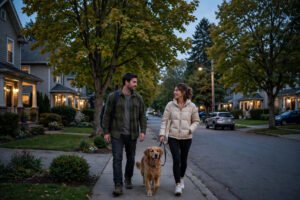
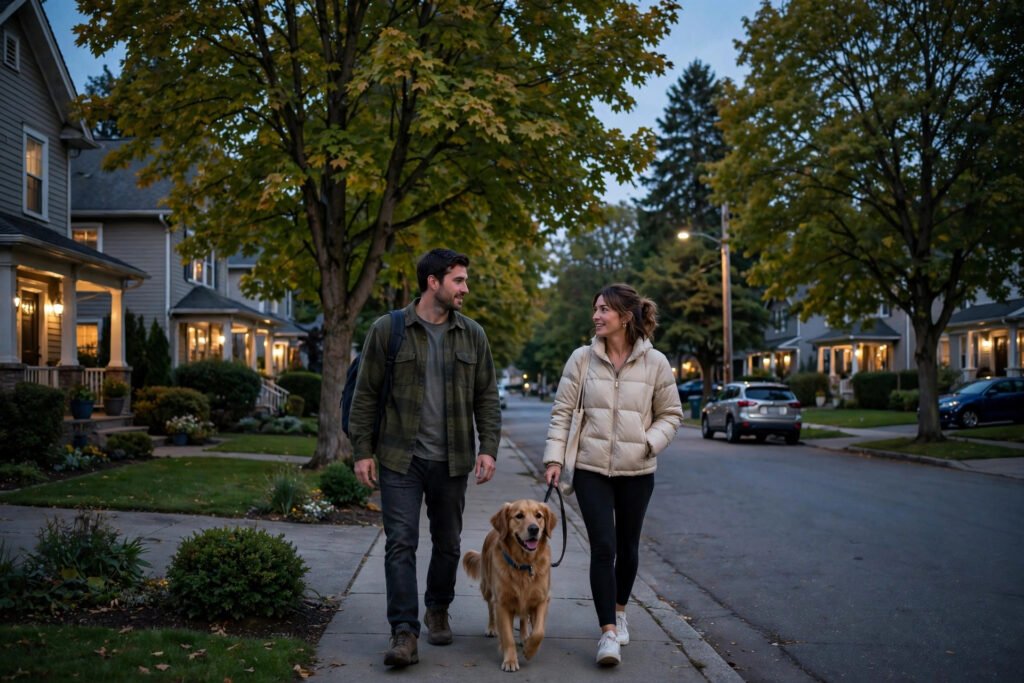
No dataset replaces boots on the ground — multiple times, at multiple hours. Visit on a weekday morning (commute reality), a weekday evening (after-dark feel), and a weekend afternoon (how residents actually use the area). Walk the streets, don’t just drive: you’ll notice lighting, sidewalk condition, litter, the state of front yards, and whether people are out — eyes on the street are the oldest safety technology in existence. A neighborhood where families walk dogs at dusk and kids play outside is telling you something no statistic can.
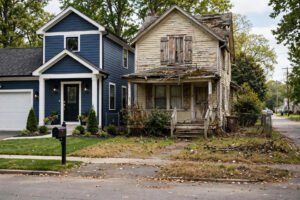
Look for the physical cues professionals read. Well-maintained homes with pride-of-ownership details (gardens, fresh paint, cared-for porches) signal stability; clusters of neglected properties, boarded windows, or overgrown lots signal the opposite. Check the commercial corridors: thriving local businesses suggest economic health, while blocks of vacant storefronts suggest decline. Notice the cars — not their luxury level, but whether they’re cared for and whether streets feel orderly. Visit the nearest park, grocery store, and coffee shop; these are the community’s living rooms, and their condition reflects its civic health. Talk to people: neighbors walking dogs, shop owners, and mail carriers will tell you more in five minutes than an hour of online research. Ask directly: “Do you feel safe here? What’s changed in the last few years?”
Evaluate the Systems: Schools, Services, and Stability
Safety correlates strongly with institutional health. Research the assigned schools — not just test scores (which track income more than quality) but trends, parent reviews, and investment. Strong or improving schools stabilize neighborhoods because families put down roots. Check city investment patterns: are streets being repaved, parks renovated, infrastructure upgraded? Municipal investment signals confidence in an area’s future; disinvestment signals the opposite.
Assess practical safety infrastructure: street lighting quality (drive the area at night — dark stretches are a red flag), sidewalk completeness, traffic calming near homes, and emergency response times (your local fire department can often share average response data). Look up registered sex offender density through your state’s registry — not to panic, but as one data point among many. Check flood maps, wildfire risk, and environmental hazards too; “safety” includes natural and environmental threats, not just crime. And explore the area’s amenities the way you’d actually live: our guide to finding free museum days in your city is a good excuse to spend real time in the neighborhood’s cultural spaces, which tells you volumes about community vitality.
Read the Future: Trajectory Matters More Than Today
The most sophisticated neighborhood analysis isn’t about current safety — it’s about direction. A working-class neighborhood with new coffee shops, young families moving in, and home prices ticking up is often a better long-term bet than a “nice” area with aging owners, deferred maintenance creeping in, and prices stagnating. Look for leading indicators: building permits (renovation activity signals confidence), new businesses opening (especially owner-operated ones betting their livelihoods), school enrollment trends, and days-on-market for listings (falling DOM means demand is rising).
Conversely, watch for decline signals: increasing vacancy rates, “for rent” signs multiplying, established businesses closing without replacement, and deferred maintenance spreading. Talk to a local real estate agent about the area’s 5-year trajectory — good agents track this obsessively. Check city planning documents for upcoming developments: a planned transit stop or park renovation can transform an area, while a planned highway expansion or industrial rezoning can damage it. You’re not just buying today’s neighborhood; you’re buying its next decade. Price your offer accordingly — emerging areas deserve a discount for risk, and declining areas deserve a steep one.
Handle Neighbor and Nuisance Risks
Beyond crime statistics, investigate the daily-life frictions that make or break happiness. Noise: visit during the noisiest likely hours — near highways, flight paths (check FAA flight track tools), train lines, or nightlife districts. A beautiful home under a flight path is a special kind of regret. Neighbor dynamics: look for signs of conflict or neglect next door, check for HOA or code enforcement activity, and understand what you can and can’t control. Our guide to dealing with a noisy neighbor politely exists because this issue blindsides so many buyers — better to assess it before buying than manage it after.
Check short-term rental density too: streets dominated by Airbnbs have transient populations, less community cohesion, and more party-house risk — some cities publish rental permit maps. Review the sex offender registry, flood plains, and any nearby industrial or environmental concerns through EPA databases. None of these individually decides anything; together, they form the complete safety picture that separates diligent buyers from hopeful ones.
The Bottom Line
Checking neighborhood safety before buying means layering data (FBI crime stats, trends, demographics), shoe-leather investigation (multiple visits at multiple hours, walking the streets, talking to residents), institutional analysis (schools, city investment, infrastructure), trajectory reading (permits, businesses, price trends), and nuisance checks (noise, rentals, environmental risks). No single source tells the story; the pattern across all of them does. You can fix almost anything about a house. The neighborhood is forever — investigate it like it is.
Frequently Asked Questions
What’s the most reliable source for neighborhood crime data?
The FBI’s Crime Data Explorer (cde.ucr.cjis.gov) for official statistics, supplemented by local police dashboards and neighborhood-level aggregators. Always look at multi-year trends rather than single snapshots.
How many times should I visit a neighborhood before buying?
At least three: a weekday morning, a weekday evening after dark, and a weekend afternoon. Each visit reveals different realities about noise, activity, lighting, and how residents use the area.
Is a neighborhood with rising prices always getting safer?
Not necessarily — prices and safety correlate but aren’t identical. Rising prices with falling crime is the ideal combination; rising prices alone could reflect speculation. Verify safety trends independently.
Should I trust online neighborhood grades?
Use them as starting points, not verdicts. Grading sites use different methodologies and can lag reality by years. Combine them with official data and in-person visits for a complete picture.