
How Do I Cook the Perfect Steak on a Stovetop
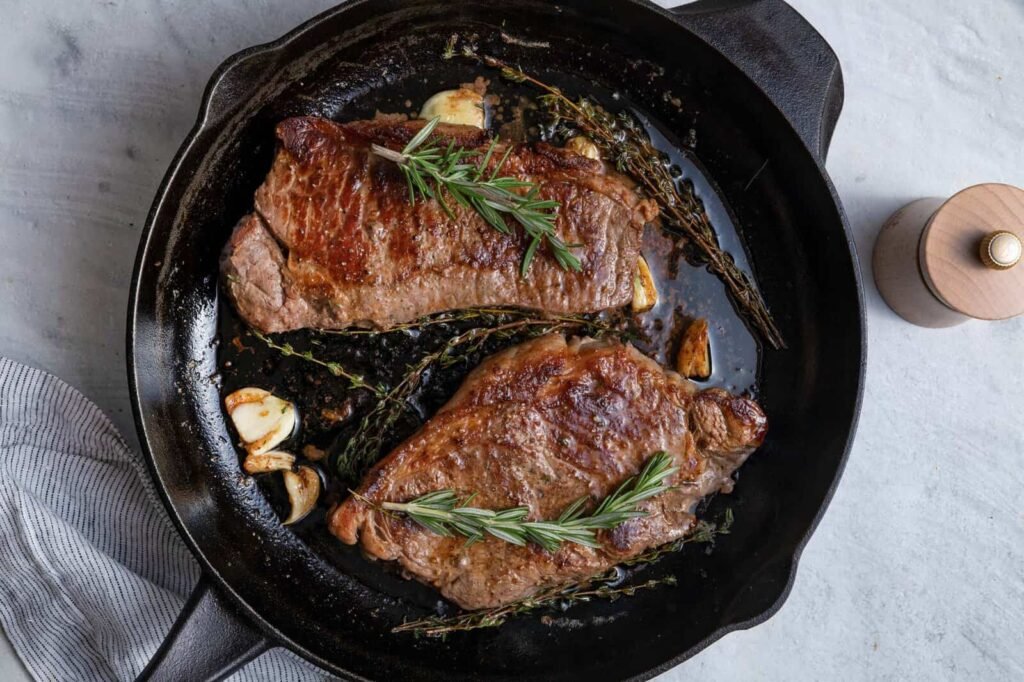
A perfect steak — deeply browned crust, juicy pink interior, seasoned exactly right — feels like restaurant magic. It’s not. It’s thermodynamics plus technique, and it’s entirely achievable on a stovetop with a cast iron skillet. I’ve cooked hundreds of steaks this way, refining the method over years, and the stovetop approach actually beats grilling for one critical reason: the pan gives you a better sear than grill grates, because more surface area contacts the meat.
Here’s how to cook the perfect steak on a stovetop, step by step.
How Do I Cook the Perfect Steak on a Stovetop?
The method: bring to room temp, season aggressively, sear hard in a ripping-hot cast iron skillet, butter-baste to finish, rest properly. Each step matters, and the order matters. Total active time: about 15 minutes.
Step 1: Choose the Right Steak
Not all cuts are equal for stovetop cooking. The best choices:
- Ribeye: the king — marbled, flavorful, forgiving. The fat bastes the meat as it cooks. My top pick for stovetop.
- New York strip: leaner than ribeye but still well-marbled, with a satisfying chew. Excellent sear candidate.
- Filet mignon: the most tender, the least flavorful — it needs aggressive seasoning and benefits most from butter-basting.
- Sirloin: the budget option — good flavor, less tender. Don’t overcook it past medium.
Look for 1 to 1.5 inches thick — thinner steaks overcook before they sear properly. Marbling (the white fat flecks within the meat) matters more than the grade label; well-marbled Choice beats lean Prime. And dry-brine if you can: salt the steak generously 24 hours ahead and refrigerate uncovered. The salt penetrates deeply, seasons throughout (not just the surface), and the dry surface sears dramatically better.
Step 2: Prep (40 Minutes Before Cooking)
Take the steak out of the fridge 30–45 minutes before cooking — a room-temp steak cooks more evenly (the center isn’t ice-cold when the exterior is done). Pat it completely dry with paper towels — surface moisture is the enemy of searing; it steams instead of browning. Then season aggressively with kosher salt and coarsely ground black pepper on all sides, including the edges. More salt than you think — a thick steak needs it. (If you dry-brined overnight, skip additional salt.)
Step 3: The Sear
Heat a cast iron skillet (or carbon steel — not nonstick, which can’t handle the heat and won’t sear as well) over high heat for 5 minutes until it’s smoking slightly. Add 1 tablespoon of high-smoke-point oil (avocado, grapeseed, or refined — not extra-virgin olive oil, which burns) and swirl to coat.
Lay the steak away from you (prevents oil splashing toward you) and don’t touch it for 2–3 minutes. The crust is forming — moving it interrupts the Maillard reaction that creates browning and flavor. Flip once and sear the second side 2–3 minutes. For thick steaks (1.5+ inches), also sear the edges — hold the steak with tongs and brown the fat cap and sides for 30–60 seconds each.
Ventilate aggressively — open windows, turn on the range hood to max. Proper searing generates smoke. It’s normal, not a mistake. If your smoke alarm is sensitive, temporarily cover it (and remember to uncover it after).
Step 4: Butter-Baste to Finish
Reduce heat to medium. Add 2–3 tablespoons of butter, 2–3 crushed garlic cloves, and a few sprigs of thyme or rosemary (our herb storage guide keeps these fresh for exactly this purpose). When the butter foams, tilt the pan and spoon the foaming butter over the steak repeatedly for 1–2 minutes. This bastes the steak in flavorful fat, finishes the cooking gently, and adds the richness that defines restaurant steaks.
Step 5: Temperature (The Only Objective Measure)
Use an instant-read thermometer ($15–$30 — the single best investment for any meat cook). Insert into the thickest part, avoiding bone. Pull the steak 5°F below your target — carryover cooking finishes the job during resting:
- Rare: pull at 120°F (final 125°F) — cool red center
- Medium-rare: pull at 130°F (final 135°F) — warm red center. The sweet spot for most cuts.
- Medium: pull at 140°F (final 145°F) — warm pink center
- Medium-well: pull at 150°F (final 155°F) — slightly pink center
- Well-done: 160°F+ — but honestly, at this point order the chicken. (Kidding. Mostly.)
Time guidelines (1-inch steak, high heat): roughly 3–4 minutes per side for medium-rare, but trust the thermometer, not the clock — thickness, starting temp, and pan heat all vary.
Step 6: Rest (Non-Negotiable)
Rest the steak 5–10 minutes on a warm plate, tented loosely with foil. Cutting immediately lets the juices — which are driven toward the center by the heat — pour out onto the plate instead of redistributing through the meat. A rested steak is noticeably juicier. Use the time to make a pan sauce: deglaze the skillet with a splash of wine or broth, scrape up the browned bits, reduce, and finish with a knob of butter.
Common Mistakes
- Cold steak, wet surface: the two biggest sear-killers. Room temp + pat dry, always.
- Pan not hot enough: if it doesn’t sizzle aggressively on contact, it’s not ready. Wait.
- Moving the steak too much: let the crust form undisturbed.
- No thermometer: the “poke test” is unreliable. A $20 thermometer eliminates guesswork forever.
- Skipping the rest: patience is an ingredient.
- Cutting with the grain: always slice against the grain — it shortens the muscle fibers and makes every bite more tender.
The Reverse Sear (For Thick Steaks)
For steaks 1.5+ inches thick, consider the reverse sear: bake at 250°F until 10–15°F below target (45–60 minutes), then sear 60–90 seconds per side in the screaming-hot skillet. It produces the most even edge-to-edge doneness of any method — a wall-to-wall pink interior with a perfect crust. It’s slower but foolproof, and for thick ribeyes it’s genuinely the best technique that exists. Serious Eats’ food science coverage explains the thermodynamics beautifully if you’re curious.
Practical Takeaway
Choose a thick, well-marbled cut; dry-brine with salt when you can; bring to room temp and pat dry; sear undisturbed in a smoking-hot cast iron skillet; butter-baste with garlic and herbs; pull 5°F below target per your thermometer; rest 5–10 minutes; slice against the grain. It’s fifteen minutes of active cooking and a lifetime of never overpaying for a mediocre restaurant steak again. And when you want to take the flavor further, our guide to marinating chicken for grilling applies the same seasoning principles to poultry.







1 thought on “How Do I Cook the Perfect Steak on a Stovetop”