How to Pick the Right Tennis Racket as a Beginner in America
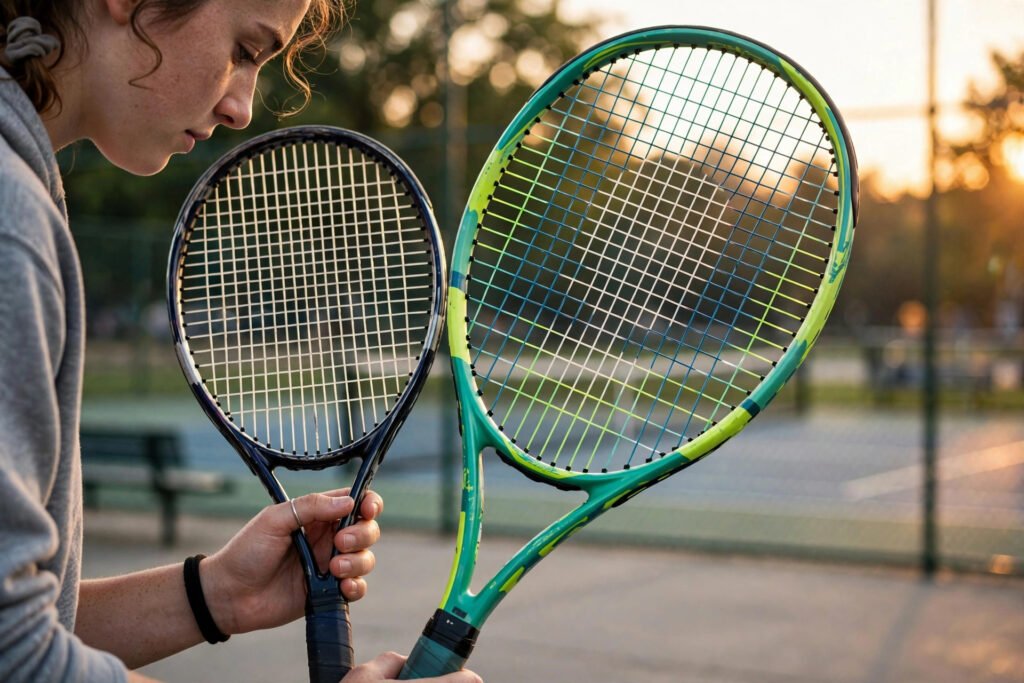
Walk into any sporting goods store in America — a Dick’s, a Tennis Warehouse, or even a well-stocked Walmart — and you’ll face a wall of tennis rackets that all look vaguely alike but cost anywhere from $25 to $300. For a beginner, that’s paralyzing. Pick wrong and you’ll fight arm pain, shanks, and a game that feels way harder than it should. Pick right, and your first six months on court feel like progress instead of punishment.
This guide is written for the true American beginner: someone who has maybe hit a few balls at the local park, signed up for a community league or a USTA beginner clinic, and wants one racket that will carry them through their first year without needing an upgrade. No brand sponsorships, no jargon without explanation — just the four specs that actually matter and a buying process that works.
The four specs that decide everything for a beginner
Racket marketing loves buzzwords like “spin potential” and “aero beam.” Ignore all of it. Four numbers determine how a racket feels in a beginner’s hand: head size, weight, balance, and grip size. Get these right and everything else is decoration.
Head size: go big, and don’t feel bad about it
Head size is measured in square inches. Most beginner-friendly rackets sit between 100 and 110 square inches — sometimes marketed as “oversize” or “game improvement.” A bigger head means a bigger sweet spot, which is the forgiving zone around the center of the strings. For a beginner whose contact point wanders, those extra square inches are the difference between a rally and a frame shot.
Pros play with 95–100 square inch heads because they prize control, but pros also hit the sweet spot nearly every time. You don’t yet. There’s zero shame in a 105 or 108 square inch frame — it’s the single most common recommendation from USPTA-certified teaching pros for adults picking up the game. Power-focused beginners sometimes push toward 115+, but frames that big start sacrificing so much control that your developing technique has nothing reliable to build on.
Weight: light is right — with one caveat
Unstrung beginner rackets typically weigh 9.3 to 10.6 ounces (265–300 grams). Lighter rackets are easier to swing fast, which is how beginners generate power.
The caveat: ultra-light rackets under about 9 ounces transmit more shock to the arm, a real contributor to tennis elbow. Stay in the 9.5–10.5 ounce unstrung range for maneuverability without harsh vibration. For strength work that supports your strokes, a home-based strength program built for beginners pairs nicely with early tennis training.
Balance: head-light or even
Balance describes where the racket’s weight sits. “Head-light” means the weight is toward the handle, making the racket feel quick and whippy at the net and on serves. “Head-heavy” puts weight in the head for raw power. Beginners should look for head-light to even balance — it’s easier to maneuver, easier on the arm, and it teaches you to generate your own racket-head speed instead of relying on a sledgehammer frame.
Grip size: the most-skipped step
Grip sizes in the US run from 4 inches (L0) to 4 5/8 inches (L5). Most adult men land at 4 3/8 (L3) or 4 1/2 (L4); most adult women at 4 1/4 (L2) or 4 3/8 (L3). The classic test: hold the racket with your normal forehand grip and slide the index finger of your other hand between your fingertips and your palm. If it fits snugly, the grip is right. Too small and the racket twists on off-center hits (hello, tennis elbow); too big and you lose wrist snap on serves. You can always add an overgrip to go slightly larger — you can never make a grip smaller — so when in doubt, size down one.
Pre-strung versus custom stringing
Most beginner rackets under $120 come pre-strung, and that’s fine for your first year. Factory strings won’t be optimal, but they’ll be consistent enough while you learn. What matters more is tension: lower tension (50–55 pounds) gives more power and comfort; higher tension gives more control. If the shop offers a tension choice, ask for the low end of the racket’s recommended range.
One upgrade worth making early: when the factory strings die (usually 3–6 months of regular play), restring with a soft synthetic gut or a multifilament string rather than polyester. Poly strings are stiff and unforgiving — they’re built for advanced players who take huge cuts. Beginners who string with poly because the pros do are buying arm pain at a premium. A guide to what to eat before and after a workout is also worth a read, since a two-hour clinic burns far more than most beginners expect.
The demo-and-buy process that actually works
Don’t buy blind. Most American tennis specialty shops — and many public facilities — run demo programs where you pay $15–25 to take two or three rackets for a week, with the fee credited toward your purchase. Tennis Warehouse, based in California, runs the most famous mail-order demo program in the country. Here’s the process:
- Narrow to three candidates using the specs above: 100–110 sq in, 9.5–10.5 oz, head-light or even balance, your measured grip size.
- Hit with all three in one session, ideally with a hitting partner or ball machine, not just bouncing balls in the store.
- Judge on comfort and consistency, not winners. The right beginner racket is the one that feels like nothing — no vibration, no fighting the frame, rallies that last.
- Buy last year’s model. Racket lines refresh every 18–24 months with cosmetic updates; the previous generation is often 30–40 percent cheaper with identical specs.
Budget reality check: a genuinely good beginner racket costs $80–140 in the US. Below $60 you’re in toy territory — inconsistent frames that warp and strings that feel like wire. Above $150 you’re paying for features your game can’t use yet. The sweet spot of the market, so to speak, is right in the middle.
Beginner mistakes that cost real money
Buying the racket your favorite pro uses. A 97-square-inch player’s frame in the hands of a beginner is a recipe for frustration. Your idol’s racket was designed for their swing, not yours.
Choosing by color or brand loyalty. Every major brand — Wilson, Babolat, Head, Yonex, Prince — makes excellent beginner frames. Pick by specs and feel, not by logo.
Skipping the overgrip. A $6 overgrip, replaced every few weeks, keeps the handle tacky and lets you use a slightly smaller grip size comfortably. It’s the cheapest performance upgrade in the sport.
Ignoring length. Standard adult rackets are 27 inches. “Extended” 27.25–27.5 inch frames add serve power but change your swing timing. Stick to 27 inches until your technique is settled.
Conclusion
Picking your first tennis racket in America comes down to a short checklist: a 100–110 square inch head, 9.5–10.5 ounces, head-light or even balance, a correctly measured grip, and soft strings at modest tension. Demo three frames that match, choose the one that disappears in your hand, and buy last year’s version to save real money. Do that, and your racket stops being a variable — leaving you free to work on the part of tennis that actually matters, which is the six inches between your ears and the footwork under them. For authoritative guidance, see the USTA beginner tennis resources and the USPTA-certified teaching professionals.
Frequently Asked Questions
How much should a beginner spend on a tennis racket in the US?
Plan on $80–140 for the racket itself. Below $60 the frames and strings are usually poor quality; above $150 you’re paying for advanced features a beginner can’t use. Add about $10 for overgrips and a basic vibration dampener.
What is the best tennis racket head size for a beginner?
100–110 square inches is the standard recommendation from teaching pros. The larger sweet spot forgives off-center hits while you develop consistent contact. Avoid going above 115, where control suffers too much to build technique.
Should a beginner buy a pre-strung racket?
Yes — pre-strung is fine for the first year. When the factory strings wear out, restring with synthetic gut or multifilament at the low end of the tension range, and avoid stiff polyester strings until your technique is advanced.
Does grip size really matter for beginners?
Yes. A grip that’s too small lets the racket twist and contributes to tennis elbow; too big costs you wrist action on serves. Measure with the index-finger test, and when between sizes, choose the smaller one since overgrips can add size.
Where can beginners demo rackets in America?
Most tennis specialty shops and many public clubs offer demo programs for $15–25 per week, usually credited toward purchase. Tennis Warehouse runs a popular mail-order demo program, and USTA-affiliated facilities often have loaner frames for clinic players.