Kitten Refuses the Litter Box? How to Litter Train Fast
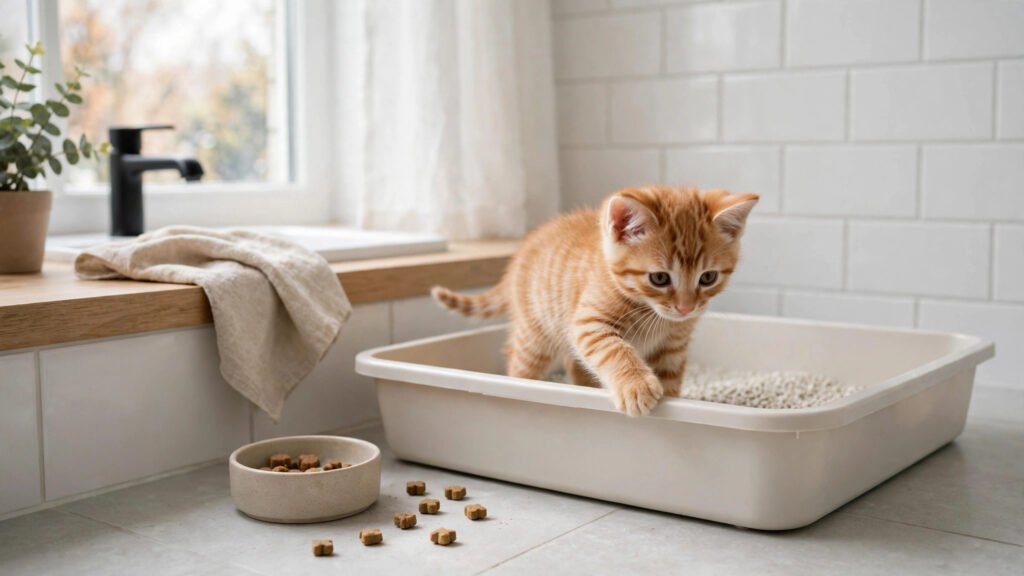
Most kittens learn the litter box from their mothers almost automatically — which makes the kitten that refuses it especially frustrating. She’s peeing on the rug, pooping behind the couch, and you’re wondering what’s wrong with her. Usually, nothing is wrong with the kitten; something is wrong with the setup. Litter box refusal is one of the most solvable cat behavior problems, but only if you diagnose the actual cause instead of just buying a new box and hoping. Here’s the systematic approach that works, from medical rule-outs to the setup details that make or break litter habits.
Step Zero: Rule Out Medical Problems First
Before changing anything, consider the vet — especially if the refusal is sudden in a kitten that was previously trained. Urinary tract infections, bladder inflammation, constipation, and diarrhea all make the litter box a place of pain, and the kitten associates the box with that pain. Signs pointing to medical: straining, crying while eliminating, blood in urine or stool, frequent tiny urinations, or lethargy. A kitten that was fine last week and now avoids the box deserves a vet check before a behavior plan. This is the same principle as any health triage — rule out the medical before assuming the behavioral.
The Setup Audit: What Kittens Actually Want
Most refusal cases trace to one of these setup failures:
Wrong litter
Kittens have strong texture preferences, and most prefer fine-grained, unscented, clumping litter — it most closely resembles the soft soil their instincts expect. Scented litters, heavily perfumed brands, and rough crystal or pellet textures are common refusal triggers. If you recently switched litter, switch back. When transitioning, mix old and new gradually over a week.
Dirty box
Cats are fastidious to a degree humans underestimate. The rule: scoop daily (twice daily for kittens learning), full litter change and box wash weekly. A box that smells like a gas station bathroom to you smells ten times worse to a kitten’s sensitive nose. Multiple cats need multiple boxes — the standard formula is one box per cat plus one extra.
Wrong box
Covered boxes trap odors and ambush risk — many kittens hate them. High-sided boxes are hard for tiny kittens to climb into; start with a low-sided tray. The box should be 1.5 times the kitten’s body length. Self-cleaning boxes can frighten kittens with noise and movement — introduce them only after habits are solid, if at all.
Wrong location
Next to the washing machine (loud, scary), in a dark basement corner (isolated, frightening), or right beside the food bowls (no one eats in the bathroom) — location kills more litter habits than any other factor. Boxes belong in quiet, accessible, low-traffic spots with escape routes — never in a dead-end corner where the kitten feels trapped. And keep at least one box on each floor of the house.
The Retraining Protocol
Once the setup is right, rebuild the habit deliberately:
Confine and expand. Set the kitten up in a small room (a bathroom works perfectly) with the box, food, water, and bedding at opposite ends. A small space with a correct setup makes the right choice easy and the wrong choice unlikely. As she uses the box reliably for several days, gradually expand her territory.
Reward, don’t punish. When you see her use the box, offer calm praise and a treat afterward. Never punish accidents — rubbing her nose in it or scolding creates fear of you, not love of the box, and anxious kittens avoid more, not less. Clean accidents with enzymatic cleaner (regular cleaners leave proteins the kitten can still smell, inviting repeat offenses).
Make the wrong spots unappealing. Cover accident spots with aluminum foil or double-sided tape temporarily, and place a food bowl near the spot after cleaning — cats avoid eliminating where they eat.
The ASPCA litter box guidance aligns with this approach: correct setup plus positive reinforcement resolves the large majority of refusal cases without any aversive methods. PetMD’s litter box troubleshooting guide covers the rarer medical edge cases worth ruling out.
Litter Types Compared: Finding Your Kitten’s Preference
Not all litters are equal in a kitten’s eyes — texture is the deciding factor. Fine-grained clumping clay: the crowd favorite, closest to natural soil texture, easy scooping. The default choice for training. Non-clumping clay: cheaper, but requires full changes more often and tracks more. Crystal/silica: excellent odor control, but the rough texture puts off many kittens — a common refusal trigger. Pine/wood pellets: natural and low-dust, but the large pellet texture and pine scent deter some kittens; better introduced after habits are solid. Paper-based: soft and low-dust, good for post-surgery kittens, but less instinctively appealing texture. Walnut/corn-based: natural clumping alternatives with decent texture acceptance.
The training rule: start with fine-grained unscented clumping litter — the highest-acceptance option — and only experiment after the habit is rock-solid (4+ weeks of reliability). When switching, transition over 7–10 days with gradual mixing; abrupt changes are a top-three refusal trigger. And whatever you choose, depth matters: 2–3 inches lets the kitten dig and cover naturally, satisfying the burying instinct that makes the box feel “right.” The wrong litter in the right box still fails — texture is the language kittens read.
Special Situations
The kitten that only goes on soft surfaces
Rugs, beds, laundry piles — this kitten has a substrate preference for soft textures. Temporarily remove access to the preferred surfaces, ensure the litter is fine-grained and soft, and place a box exactly where she’s been going, then inch it toward the desired location over days.
The kitten that goes right next to the box
Usually a box problem: too small, too dirty, disliked litter, or the kitten was startled in the box. Fix the setup issue and the near-misses typically stop.
Spraying vs. urinating
Spraying (small amounts on vertical surfaces, tail quivering) is territorial marking, not litter refusal — and it’s dramatically reduced by spaying/neutering, which is also why knowing how to remove old carpet stains is useful backup while you solve the underlying issue. Unspayed/unneutered kittens reaching maturity (as early as 4–5 months) often start marking; timely altering prevents the habit from forming.
Multi-cat tension
In multi-cat homes, box avoidance is often social — one cat guarding or ambushing near the box. More boxes in more locations (spread out, not side by side), uncovered boxes with escape routes, and addressing the inter-cat conflict solve it. A peaceful multi-cat home also means keeping a clean house with pets through diligent scooping — the workload scales with the cat count.
Conclusion
A kitten refusing the litter box is telling you something specific — about pain, about the litter texture, about the box location, or about stress. Work through the checklist methodically: vet check first, then litter type, cleanliness, box design, location, and household stress. Retrain with confinement, rewards, and enzymatic cleaners — never punishment. The vast majority of kittens come around within one to two weeks once the real cause is fixed. The box isn’t the problem; it’s the messenger.
Frequently Asked Questions
Why won’t my kitten use the litter box all of a sudden?
Sudden refusal usually means a medical issue (UTI, constipation), a recent change (new litter, moved box, new pet), or a frightening experience at the box. Vet check first, then audit the setup.
What litter do kittens prefer?
Most kittens prefer fine-grained, unscented clumping litter in an uncovered, low-sided box. Avoid scented litters and rough textures during training.
Should I punish my kitten for going outside the box?
Never — punishment creates fear and anxiety that worsen avoidance. Clean with enzymatic cleaner, fix the setup cause, and reward correct box use.
How many litter boxes do I need?
One per cat plus one extra, spread across locations and floors. Kittens learning the habit do best starting confined to a small area with their box.
When should I worry about litter box refusal?
See a vet promptly if refusal is sudden, or comes with straining, crying, blood, lethargy, or appetite loss — these suggest urinary or medical problems needing treatment.