How Often Should You Really Change Your Oil in 2026?
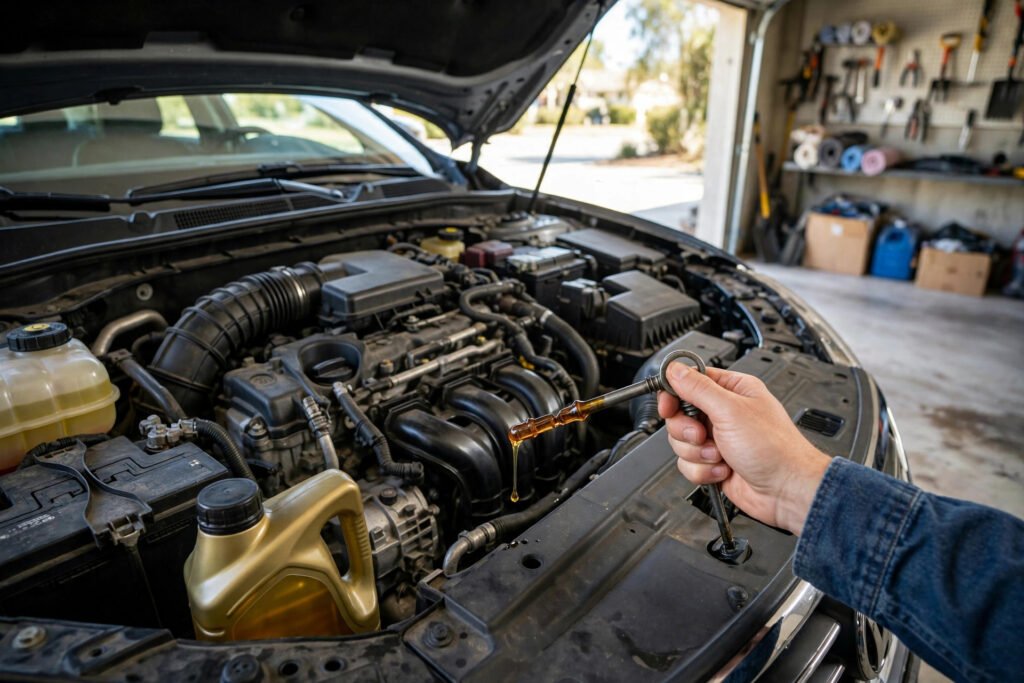
Pop the hood of any American car and you’ll find a sticker, a manual, and about four different opinions on when to change the oil. Your dad says every 3,000 miles. The dashboard says 10,000. The quick-lube shop — which profits from your visits — suggests you come back suspiciously soon. In 2026, with modern engines and synthetic oils, the old rules are genuinely outdated. Here’s what actually determines your oil change interval.
You’ll learn why the 3,000-mile rule died, what your owner’s manual really means, how driving conditions change everything, how to read your oil life monitor without blindly trusting it, and the simple checks that tell you when your specific car actually needs fresh oil.
The 3,000-Mile Rule Is Dead (and Why It Won’t Die)
The 3,000-mile oil change was sensible advice — in the 1970s, when engines ran on conventional oil with loose tolerances and no computer management. Modern engines are precision machines running full-synthetic oil engineered to last far longer. Yet the myth persists, largely because quick-lube chains built entire business models on high-frequency visits, and old habits outlive their reasons.
Today, most automakers recommend intervals of 7,500 to 10,000 miles (or once a year, whichever comes first) for normal driving with synthetic oil. Some European models stretch to 12,000–15,000. If you’re still changing at 3,000, you’re spending roughly triple the necessary money and generating triple the waste oil — the U.S. Department of Energy’s fuel economy site notes that proper maintenance, not over-maintenance, is what keeps engines efficient.
Your Owner’s Manual Is the Real Authority
Here’s the unglamorous truth: the correct interval for your car was determined by engineers who designed your specific engine, and it’s printed in the manual most owners never open. Not the dealership’s service department (which sells service), not the quick-lube shop (which sells oil changes), not internet forums — the manual.
Pay special attention to the manual’s distinction between “normal” and “severe” service schedules. Most Americans are surprised to learn they qualify for severe service: frequent short trips under 5–10 miles, extended idling, stop-and-go traffic, driving in extreme heat or cold, towing, or dusty conditions. If your commute is five miles of traffic lights, your engine rarely reaches full operating temperature long enough to burn off fuel and moisture contamination — and you should follow the shorter severe-service interval, often around 5,000 miles.
Planning a long road trip? That’s actually gentle on oil — sustained highway miles are the easiest duty an engine sees. Check the level before you leave, but don’t change early just because of the trip.
Oil Life Monitors: Trust, but Verify
Most cars built in the last decade have an oil life monitoring system that counts down based on engine revolutions, temperature cycles, idle time, and other operating data — not just miles. These systems are genuinely sophisticated, and studies have shown they’re conservative: they typically call for a change with meaningful oil life remaining.
That said, the monitor doesn’t analyze your oil; it models it. It can’t detect coolant leaks, fuel dilution from a failing injector, or the wrong oil being installed. Treat the monitor as a smart reminder, not a laboratory. And never reset it without actually changing the oil — that just lies to your future self.
How to Check Your Oil Like a Professional
The dipstick check takes ninety seconds and tells you more than any sticker:
Check the level monthly
Park on level ground, wait a few minutes after shutting off the engine, pull the dipstick, wipe it, reinsert fully, and pull again. The level should sit between the min and max marks. Many modern engines consume some oil between changes — running low is far more damaging than changing late.
Check the condition
Fresh oil is amber and translucent. As it ages it darkens — that’s normal; oil darkens as it does its job suspending contaminants. Worry about texture and smell instead: gritty particles, a milky appearance (possible coolant contamination), or a strong gasoline smell all warrant a mechanic’s look regardless of mileage.
Know your oil type
Use exactly the viscosity and specification in your manual (like 0W-20 full synthetic). Thicker isn’t “more protective” in modern engines — tight tolerances are designed around specific oil flow characteristics, and the wrong viscosity can actually increase wear.
The Real-World 2026 Recommendation
For most American drivers in 2026, the practical answer is: follow your manual’s severe-service schedule if you do mostly short trips or city driving (typically ~5,000 miles), follow the normal schedule for mixed/highway driving (typically 7,500–10,000 miles), change at least once a year regardless of miles, and check the level monthly. That’s it. No magic number, no shop’s upsell schedule.
The National Highway Traffic Safety Administration reminds owners that neglected maintenance — including low oil — contributes to breakdowns and safety issues. The goal was never the maximum possible interval; it’s the interval that protects your engine without wasting your money.
Don’t Forget the Filter (and the High-Mileage Question)
An oil change without a fresh filter is like showering and putting dirty clothes back on. The filter traps the contaminants your oil has been carrying, and a clogged filter can bypass entirely — sending unfiltered oil through your engine. Always replace the filter with every oil change, and use one that meets your manufacturer’s specification. The cheapest filter on the shelf is a false economy on a $8,000 engine.
If your car has crossed 100,000 miles, you’ve probably seen “high-mileage” oil marketed at a premium. These blends include seal conditioners and extra detergents aimed at older engines. They’re not magic, but for cars with minor seepage or light oil consumption, high-mileage formulations are a reasonable choice — just keep them in the same viscosity your manual specifies. What high-mileage oil can’t do is reverse neglect; no additive compensates for intervals stretched years too long.
Conclusion
The oil change debate persists because everyone selling you oil has an incentive to see you more often. Your engine’s actual needs are quieter and simpler: the right synthetic oil, changed on your manufacturer’s schedule for your real driving conditions, with the level checked in between. Do that, and your engine will outlast your payments — which makes saving for your next car easier too — whether that’s at 5,000 miles or 10,000. The 3,000-mile rule belongs in a museum, next to leaded gasoline and crank starters.
Frequently Asked Questions
Is it bad to go over the recommended oil change interval?
Occasionally going a few hundred miles over won’t destroy your engine, but making a habit of it accelerates wear, especially sludge formation. The bigger risk is low oil level — check the dipstick monthly regardless of interval.
Does synthetic oil really last longer than conventional?
Yes, significantly. Full synthetics resist thermal breakdown and maintain viscosity far longer, which is why modern recommended intervals assume synthetic oil. Using conventional oil in an engine spec’d for synthetic means shorter intervals and potentially voided warranty coverage.
Should I change oil before a long road trip?
Only if you’re due soon anyway. Highway miles are easy on oil. Check the level and condition before leaving; if you’re within 1,000 miles of your interval, doing it early for peace of mind is reasonable but not required.
What happens if I never change my oil?
Oil breaks down into sludge that clogs passages and starves components of lubrication, eventually causing catastrophic engine failure — often a repair costing more than the car’s value. It’s one of the most expensive maintenance items to skip.
Can I switch from conventional to synthetic oil?
Yes, in virtually all modern engines, and it’s usually an upgrade. Just make sure the synthetic meets your manufacturer’s specification, and don’t extend your interval until you’ve confirmed the manual allows it.