
How to Get Rid of Tan Lines: Fast Fixes That Actually Work
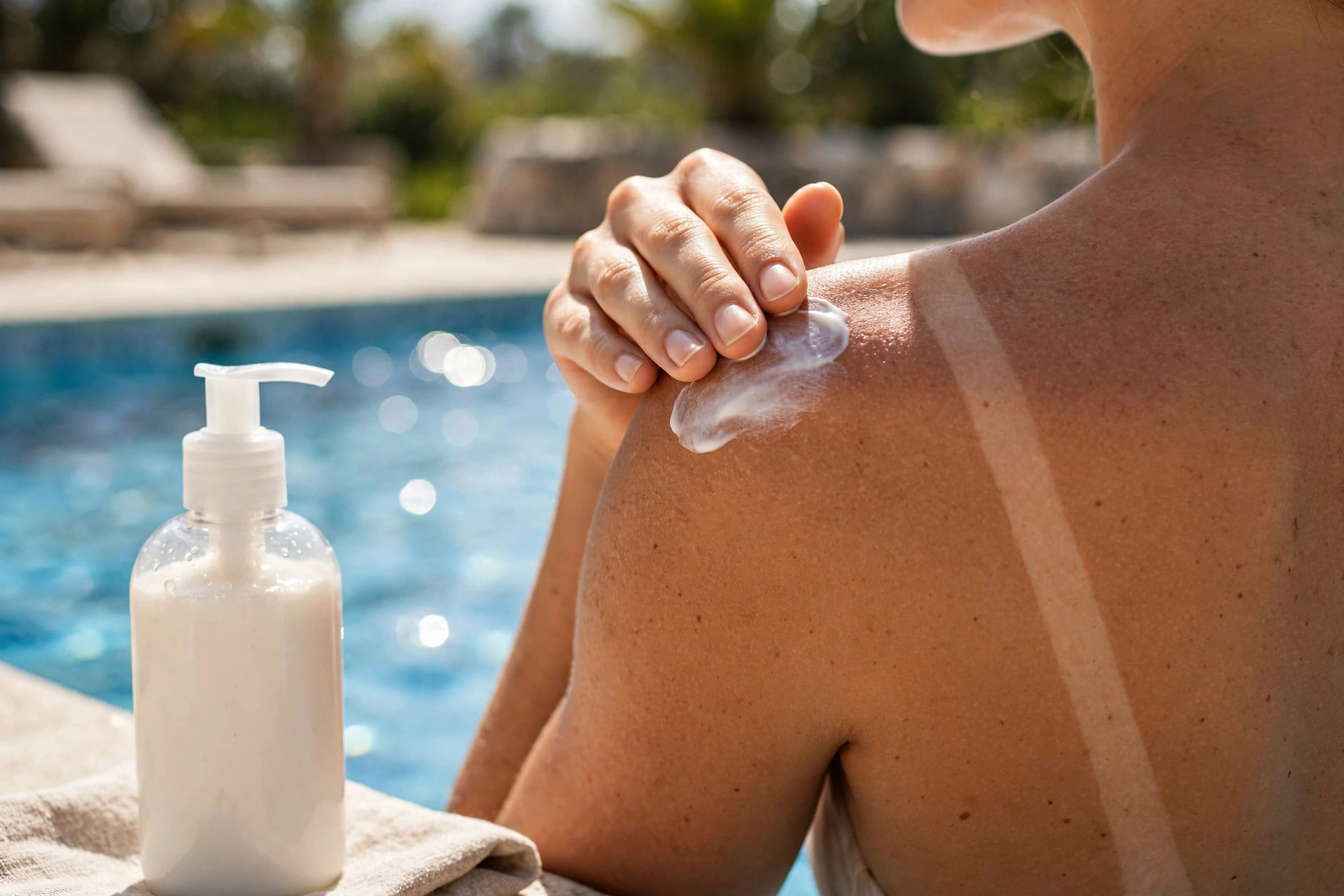
You spent a perfect day outside and came home with a souvenir you did not ask for: sharp white lines where your swimsuit, watch, or sunglasses sat. If you are wondering how to get rid of tan lines, the good news is that they always fade — the question is just how fast you can speed things up. With the right combination of exfoliation, evening-out tricks, and a little patience, you can soften harsh tan lines in days rather than weeks.
This guide covers everything: why tan lines happen, the fastest ways to fade them, how to blend them with self-tanner, and how to prevent them next time.
Why Tan Lines Happen
Tan lines are simply areas where something blocked UV rays while the surrounding skin tanned. Swimsuit straps, watch bands, sunglasses, sandals, even a phone held against your leg — anything that shades the skin creates a line. The paler the blocked area relative to the tanned skin, the more dramatic the line looks.
The line itself is not damage — it is just your natural skin tone showing through next to tanned skin. Getting rid of tan lines really means one of two things: fading the tan around the lines, or adding color to the pale areas so everything matches.
How Long Do Tan Lines Last Naturally?
Left alone, tan lines fade along with your tan — typically 2 to 4 weeks, as your skin cells naturally turn over. But nobody wants to wait a month, especially with an event coming up. The methods below can cut that time dramatically, softening lines noticeably within a few days.
One important note: the fastest way to erase tan lines is to avoid creating the underlying tan through UV in the first place. If you are still building your tan, check our guide on how long it takes to be tan — sunless methods give you even color with zero lines to fix later.
Method 1: Exfoliate to Fade the Tan Faster
Exfoliation is the single most effective way to fade tan lines. A tan lives in the outermost layer of dead skin cells — remove those cells faster, and the tan (and the lines) fade faster.
Use a gentle body scrub 2 to 3 times per week. Focus on the tanned areas around the lines, using circular motions. Sugar scrubs, exfoliating mitts, or a Korean Italy towel all work well. Do not scrub raw — you want to speed up cell turnover, not irritate your skin.
Try a chemical exfoliant. Body lotions with glycolic acid, lactic acid, or urea dissolve the bonds between dead skin cells more evenly than scrubbing. Apply to the tanned areas daily and you will see the tan — and the contrast of the lines — soften within a week.
Soak first. A 15-minute warm bath before exfoliating loosens dead skin and makes your scrub or mitt dramatically more effective. This is the same principle behind why tans fade faster after swimming — prolonged water exposure accelerates exfoliation.
Method 2: Blend Lines With Self-Tanner
Instead of fading the tan down to match the pale lines, you can bring the pale areas up to match the tan. This is the fastest cosmetic fix — it works in hours, not days.
Use a gradual tanning lotion on the pale areas only. Apply a small amount precisely along the tan lines with clean hands or a makeup sponge, feathering the edges so there is no harsh border. Gradual formulas are forgiving — if you miss a spot, the next day’s application fixes it.
For sharp lines, try a tanning mousse with a mitt. Dab (do not swipe) the mousse along the line, then blend outward with the mitt. Let it develop for the recommended time and rinse. One application usually softens the line dramatically; a second coat the next day can erase it almost completely.
Match carefully. The goal is to match the surrounding tan, not overshoot it. Start with less product than you think you need — you can always add another layer tomorrow, but over-darkened lines just create a new problem in reverse.
Method 3: Natural Lightening Helpers
These home approaches have modest effects but can help when combined with exfoliation:
Lemon juice. The citric acid in lemon has mild lightening properties. Apply fresh lemon juice to the tanned areas (not broken or irritated skin), leave for 10 to 15 minutes, then rinse and moisturize. Use it in the evening — lemon plus sun can cause irritation.
Aloe vera. Fresh aloe soothes sun-exposed skin and may help even tone over time with consistent use. It is gentle enough for daily application and doubles as an excellent after-sun moisturizer.
Yogurt or milk masks. The lactic acid in dairy products provides very gentle exfoliation. Apply plain yogurt to tanned areas for 15 to 20 minutes before showering. The effect is subtle but it is kind to sensitive skin.
Be realistic about these: they support the process but will not erase strong tan lines on their own. Exfoliation and self-tanner blending do the heavy lifting.
Method 4: Even Out With Careful Sun Exposure
You can also tan the pale areas to match — but do it carefully. Brief, protected sun exposure on just the lined areas (with sunscreen everywhere else) can even things out over several days. Keep sessions short, never burn, and wear SPF on the already-tanned skin so the contrast does not get worse.
Honestly, though, this is the slowest and riskiest method. More UV means more skin damage, and it is easy to overshoot and end up with the reverse problem. The self-tanner blending method above achieves the same result in one evening with zero UV.
What NOT to Do
Do not use bleach or harsh lightening creams. Skin bleaching products can cause chemical burns, permanent discoloration, and serious irritation. Tan lines are temporary — the cure should never be worse than the cosmetic issue.
Do not over-exfoliate. Scrubbing aggressively every day damages your skin barrier, causing redness and sensitivity that looks worse than the tan lines did. Two to three times per week is plenty.
Do not try to “burn off” the lines. Deliberately burning the pale areas to catch up is trading a temporary cosmetic issue for real skin damage and increased cancer risk. Not worth it, ever.
Do not pick at peeling skin. If your tan is peeling, let it shed naturally. Picking creates uneven patches and can scar. Moisturize peeling areas generously instead.
Healthline’s guide to fading tan lines echoes the same core advice: gentle exfoliation plus moisturizing is the safest effective combination.
Preventing Tan Lines Next Time
The easiest tan lines to fix are the ones you never get:
Rotate your swimwear. Alternate between different strap styles — or go strapless when you can — so no single line gets deeply set.
Move your accessories. Shift your watch to the other wrist halfway through the day. Take sunglasses off periodically (with sunscreen on, of course). Small adjustments prevent the sharpest lines.
Reapply sunscreen evenly. Missed spots tan darker, making lines more pronounced. Apply generously and evenly, and reapply every two hours. WebMD’s sunscreen guide covers proper application — most people use about half as much as they should.
Consider going sunless. Self-tanners and spray tans give you full, even color with literally zero tan lines. No straps, no watch marks, no sandal outlines — just uniform color everywhere.
Tan Lines and Your Overall Look
Here is some perspective: tan lines bother you far more than they bother anyone else. They are a sign you have been outside living your life, and they fade. But if they are making you self-conscious before an event, the blending methods above genuinely work fast.
And remember that even, healthy-looking skin is just one part of the picture. Our guide on how to look great covers the full routine — skincare, grooming, style, and the habits that make the biggest difference in how you come across every day.
Frequently Asked Questions
How fast can I get rid of tan lines?
With self-tanner blending, you can make lines nearly invisible in one evening. With exfoliation alone, expect noticeable softening within 3 to 7 days. Natural fading takes 2 to 4 weeks.
Will tan lines go away on their own?
Yes — always. They fade as your tan fades through natural skin cell turnover. Nothing about a tan line is permanent.
Can I use self-tanner over a real tan?
Absolutely. Self-tanner works fine over natural tans and is the best tool for filling in pale tan lines to match the surrounding color.
Do tan lines mean I got too much sun?
Not necessarily — any uneven UV exposure creates lines, even with sunscreen on. But very dark tans with stark lines do suggest a lot of unprotected exposure, so take it as a reminder to be more careful with sun protection going forward.
Why are my tan lines still there after months?
If lines persist for months, you may be re-tanning the same areas through daily incidental sun exposure (driving, walking) without realizing it. Consistent sunscreen on the tanned areas lets the old tan finally fade out.
The bottom line: exfoliate regularly to fade the tan, use self-tanner to blend pale lines up to match, and moisturize daily throughout. Most tan lines can be dramatically improved within a week — and prevented entirely next time with even sunscreen and a little planning.



