
How Long Does It Take to Be Tan? Realistic Timelines for Every Method
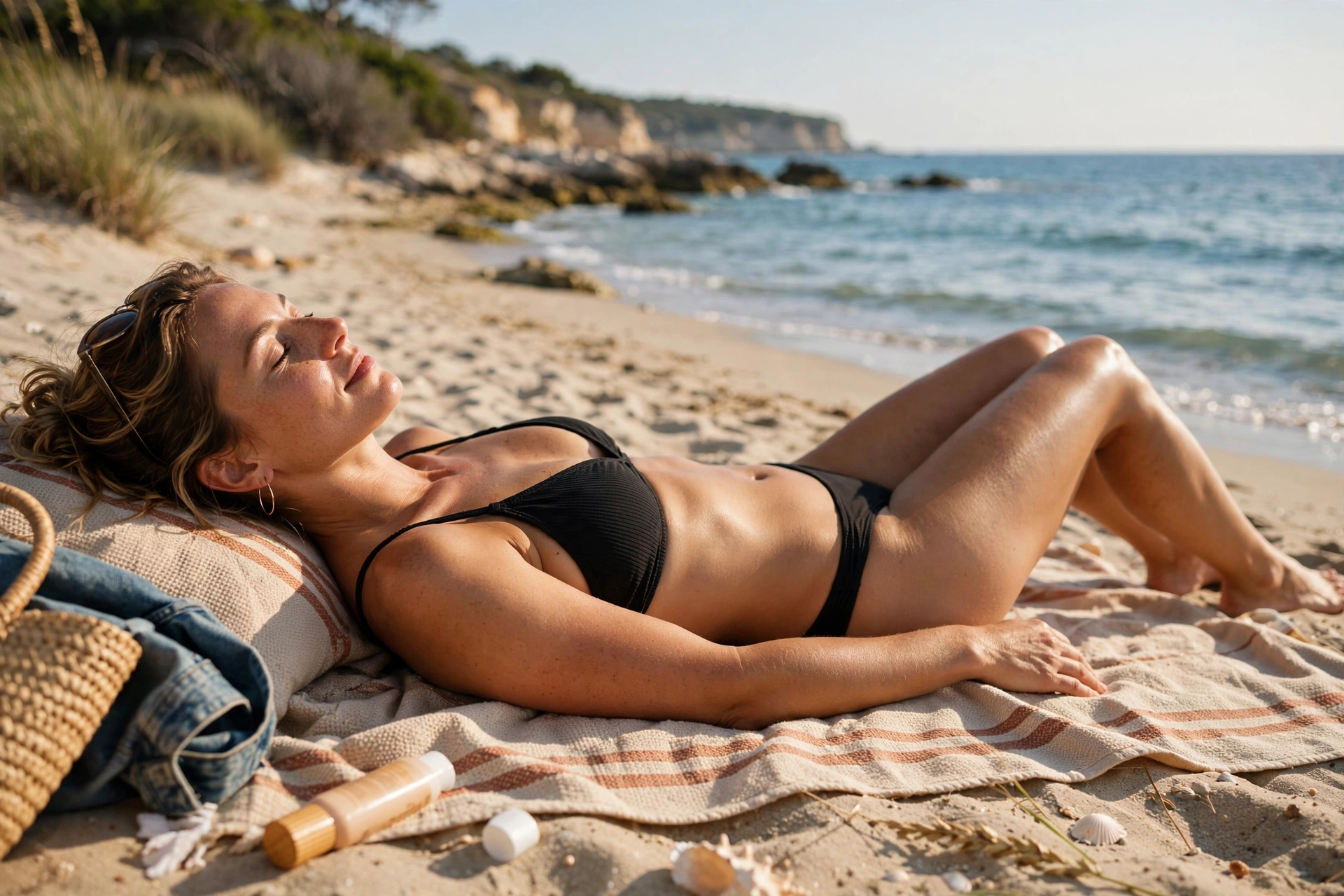
You have a beach trip, a wedding, or a vacation coming up, and you want that sun-kissed glow — but not the week-before panic. So how long does it take to be tan? The honest answer: it depends entirely on how you are tanning. A spray tan gives you color in hours. A self-tanner develops over one night. A natural sun tan builds over days to weeks. And each method comes with very different trade-offs for your skin.
In this guide, we will break down realistic timelines for every tanning method, what affects how fast you tan, and how to get color safely without wrecking your skin in the process.
How Long Does It Take to Be Tan? Timelines by Method
Spray Tan: 2 to 4 Hours (Fastest)
A professional spray tan is the fastest route to a full tan. The DHA (dihydroxyacetone) solution reacts with the amino acids in your dead skin cells, and color starts developing within 2 to 4 hours, reaching full depth by 8 to 12 hours. Most salons tell you to wait at least 8 hours before showering for the deepest result.
A spray tan lasts about 5 to 10 days, fading as your skin naturally exfoliates. It is the go-to choice when you need to be tan for a specific event — weddings, photoshoots, vacations — because the timing is completely predictable.
Self-Tanner (At Home): 4 to 8 Hours
Drugstore self-tanners use the same DHA chemistry as spray tans. Apply in the evening, let it develop overnight (most formulas need 4 to 8 hours), and rinse off in the morning. Gradual tanning lotions work more slowly — they build subtle color over 3 to 5 days of daily use, which makes them the most forgiving option for beginners.
Self-tanner results last roughly 5 to 7 days before fading. The color looks most natural when you exfoliate first and moisturize dry areas (elbows, knees, ankles) before applying.
Natural Sun Tanning: 1 to 3 Weeks
This is the slowest — and riskiest — method. Your skin produces melanin in response to UV exposure, and a visible tan typically takes several sessions over 1 to 3 weeks of moderate sun exposure. Fair skin may take longer and burns before it tans; deeper skin tones tan faster but still need time.
Here is what dermatologists want you to know: there is no safe way to tan in the sun. Every tan is a sign of skin DNA damage. The American Academy of Dermatology is blunt about this — tanning, indoors or outdoors, increases your risk of skin cancer and premature aging. If you want the look, the AAD recommends sunless tanning products instead. Their tanning facts page lays out the risks clearly.
Tanning Beds: Don’t
Indoor tanning beds deliver concentrated UV radiation and are classified as carcinogenic. They tan you in a handful of sessions, but the Mayo Clinic and every major dermatology organization advise against them entirely — indoor tanning before age 35 significantly raises melanoma risk. If speed is the goal, a spray tan is faster anyway, with zero UV damage. The Mayo Clinic’s tanning guide explains why the risks are not worth it.
What Affects How Fast You Tan
Your natural skin tone. Skin with more baseline melanin tans faster and burns less. Very fair skin (Fitzpatrick types I-II) burns easily and tans slowly — sometimes barely at all. Knowing your skin type helps set realistic expectations and keeps you from overdoing sun exposure chasing a tan your skin cannot safely produce.
UV intensity and timing. For natural tanning, UV rays are strongest between 10 a.m. and 4 p.m. But “strongest” also means “most damaging.” Shorter exposures with sunscreen still allow gradual tanning while reducing burn risk — though again, dermatologists recommend skipping sun tanning entirely.
Skin preparation. For sunless methods, exfoliated skin takes color more evenly and the tan lasts longer. Dead skin buildup causes patchiness and faster fading. Exfoliate 24 hours before a spray tan or self-tanner application.
Hydration. Well-moisturized skin holds a sunless tan longer. Dry, flaky skin sheds faster, taking your tan with it. Daily moisturizer after your tan develops is the simplest way to extend it.
How to Get Tan Faster (Safely)
If you want color quickly without UV damage, here is the fastest safe playbook:
For an event this week: book a spray tan. Schedule it 1 to 2 days before the event so the color fully develops and any initial bronzer washes off cleanly. Exfoliate and shave 24 hours before your appointment, arrive with clean skin (no lotion, deodorant, or makeup), and wear loose dark clothing afterward.
For gradual everyday color: use a gradual tanning lotion. These build natural-looking color over several days with almost zero streak risk. They are the best choice if you have never self-tanned before.
For overnight results: use a classic self-tanner mousse. Apply with a mitt in long strokes, go easy on joints, and sleep in it. Rinse in the morning. One application gives you a solid medium tan; a second coat the next night goes deeper.
Prep matters more than product. Whatever sunless method you choose, exfoliate first, moisturize dry spots, and apply evenly. Most self-tanner disasters are preparation failures, not product failures.
How Long Does a Tan Last?
Spray tan: 5 to 10 days. Fades as skin exfoliates; moisturizing daily extends it.
Self-tanner: 5 to 7 days, similar fade pattern.
Natural tan: 2 to 4 weeks after your last sun exposure, fading gradually as skin cells turn over. A natural tan fades unevenly and often leaves you with patchy areas — which is exactly how most people end up needing our guide on how to get rid of tan lines.
To make any tan last longer: moisturize daily, avoid long hot showers, skip harsh exfoliants while you want to keep the color, and pat dry instead of rubbing with your towel.
Protecting Your Skin While You Enjoy the Sun
Even if you are not actively trying to tan, everyday sun exposure adds up. Here is how to enjoy being outside without the damage:
Wear sunscreen every day. SPF 30 or higher, applied generously and reapplied every two hours outdoors. Yes, you can still get some color through sunscreen — it filters UV, it does not block it completely — but you will burn far less.
Seek shade during peak hours. Between 10 a.m. and 4 p.m., the sun is at its most intense. A hat, sunglasses, and shade breaks protect the areas that age fastest — your face, neck, and hands.
Never burn to tan. A sunburn does not “turn into” a tan. It is an injury — damaged skin peeling off. Repeated burns, especially blistering ones, significantly raise skin cancer risk. If you are burning, you are overdoing it, full stop.
Tanning and Your Overall Look
A tan is one piece of looking polished and healthy — and the safest tans (sunless) double as a shortcut to looking more vibrant without any of the downsides. Pair that glow with the fundamentals — good sleep, clean grooming, clothes that fit — and the effect multiplies. Our full breakdown of how to look great covers the complete picture, from skincare basics to the small habits that make the biggest visual difference.
Frequently Asked Questions
Can I get tan in one day?
With a spray tan or self-tanner, yes — full color in under 24 hours. With natural sun, one day gives you at most a slight darkening (or a burn). Real natural tans take weeks of gradual exposure.
Does sunscreen prevent tanning?
It reduces and slows tanning but does not prevent it entirely. You will still develop some color through SPF 30, just more gradually and with far less damage. That is a good trade.
Why do I burn instead of tan?
Fair skin has less melanin to begin with, so UV damages it before enough melanin builds up to show as a tan. If you burn easily, sunless tanning is genuinely the better option for you — faster, more even, and safer.
How soon before an event should I get a spray tan?
One to two days before. This gives the color time to fully develop and lets you rinse off the cosmetic bronzer, so what is left is the real, even tan.
Is a base tan protective?
No — this is a myth. A “base tan” provides the equivalent of about SPF 3, which is negligible protection. It does not prevent burning or skin damage. Do not rely on it.
The bottom line: a spray tan or self-tanner gets you tan in hours; a natural tan takes 1 to 3 weeks of sun exposure. If you want color fast, go sunless — it is quicker, more even, more predictable, and infinitely kinder to your skin.



