Fixer-Upper vs. Move-In Ready: Which Home Should You Buy?
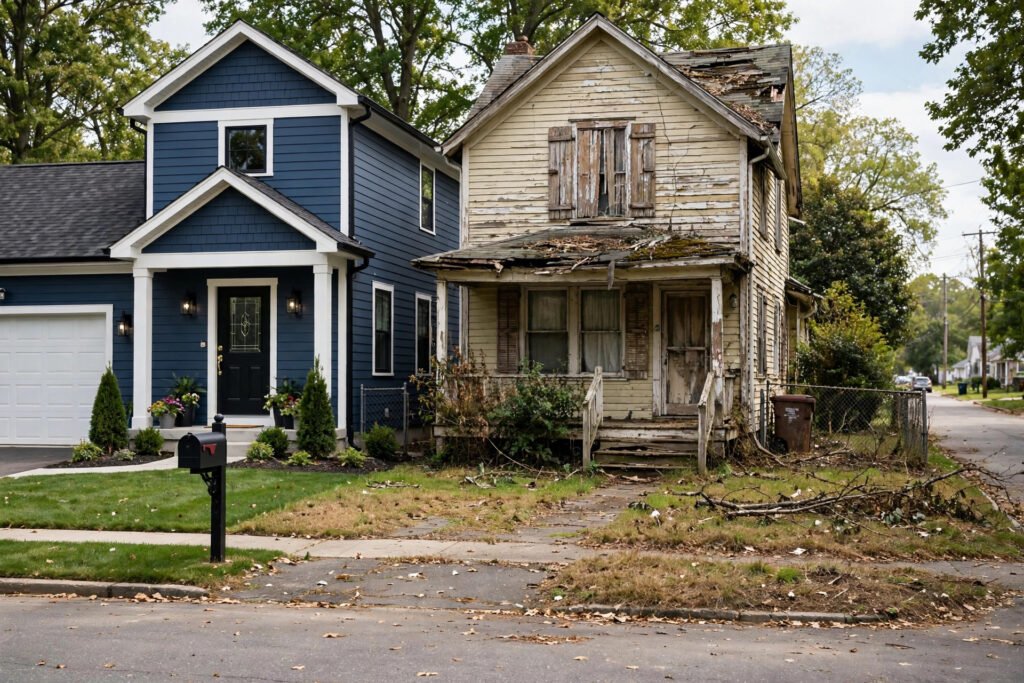
Two houses, same neighborhood, wildly different propositions. One is pristine — fresh paint, new appliances, a price that makes you wince. The other is $70,000 cheaper and needs “a little TLC,” which is real-estate speak for anything from cosmetic updates to a full mechanical overhaul. The fixer-upper promises equity and customization; the move-in ready promises sanity and certainty. Which one actually builds more wealth — and which one won’t ruin your weekends for two years? Here’s the honest comparison American buyers need, including the math both sides get wrong.
The Fixer-Upper Case: Where the Money Is Made
The financial argument for fixer-uppers is straightforward: buy below market, add value through renovation, and capture the spread as instant equity. In theory, a $300,000 fixer needing $60,000 of work becomes a $400,000 home — $40,000 of equity created, plus a home customized exactly to your taste. Fixers also face less competition: most buyers want turnkey, so you’re bidding against investors and flippers instead of emotional families, which means better prices and more negotiating leverage. And renovation lets you control quality — new electrical, new plumbing, new roof — so you know exactly what’s behind the walls in a way no move-in-ready buyer ever does.
The fixer-upper also forces a valuable discipline: learning what renovations actually cost. Buyers who’ve managed one renovation become dramatically smarter about every future property decision. Financing helps too — FHA 203(k) and Fannie Mae HomeStyle loans roll purchase and renovation into a single mortgage, so you don’t need the rehab cash upfront. The Department of Housing and Urban Development’s 203(k) program information details how these loans work. But the rosy math only holds if your cost estimates are honest — which is why getting real numbers from pros, per our guide to choosing the right contractor for a home renovation, is mandatory homework before you offer, not optional reading.
The Fixer-Upper Reality: What the Spreadsheets Hide
Now the part fixer-upper evangelists gloss over. Renovations take longer and cost more than estimated — almost always. Industry data consistently shows most residential remodels exceed budget by 10–30%, and timeline overruns of 50–100% are routine. That “three-month renovation” becomes seven months of living in construction chaos or paying rent elsewhere, which is a cost rarely included in the original math. Then there’s the stress: managing contractors, making a hundred decisions under time pressure, and discovering problems (rot, bad wiring, foundation issues) that no walkthrough revealed.
The skill question matters too. Are you handy enough to do meaningful work yourself, or will you pay retail for every task? Sweat equity is where fixer-upper profits really come from — buyers who pay contractors for everything often discover the “spread” evaporated into labor costs. And consider your life stage honestly: a young, flexible buyer with contractor friends and high risk tolerance is a different renovator than a family with toddlers, two jobs, and no margin for chaos. The National Association of Realtors’ Remodeling Impact Report provides realistic cost-versus-value data showing which renovations actually return their investment — essential reading before you assume every dollar of rehab becomes a dollar of value.
The Move-In Ready Case: The Underrated Wisdom of Boring
Move-in ready homes get mocked as the overpriced, unimaginative choice. That mockery is mispriced. What you’re buying is certainty: known costs, immediate livability, no contractor roulette, and your weekends back. For dual-income families, the “premium” for turnkey is often cheaper than the alternative when you price your time honestly — two professionals spending 200 hours managing a renovation have an opportunity cost that dwarfs the contractor savings. There’s also the financing simplicity: standard mortgages, no rehab loan paperwork, no drawing schedules or contractor approvals.
Move-in ready doesn’t mean overpaying stupidly, either. Dated-but-solid homes — the cosmetic fixer, needing only paint, flooring, and fixtures — occupy a sweet spot: priced below true turnkey, needing only the cheap, predictable, DIY-friendly updates. Our breakdown of the cheapest ways to update an old kitchen shows how dramatically cosmetic refreshes transform a home for relatively little money. And even full-price turnkey purchases build wealth the boring way: principal paydown, appreciation, and tax benefits, without a single 6 a.m. contractor call. For most buyers, most of the time, boring is a feature.
The Decision Math: A Framework That Works
Run this comparison for your specific situation. Calculate the fixer’s true all-in cost: purchase price + honest renovation estimate + 20% contingency + carrying costs during renovation (mortgage, taxes, insurance, plus rent if you can’t live there) + the value of your time. Compare that against the move-in ready price plus a cosmetic refresh budget — even turnkey homes usually want small updates like a bathroom refresh to feel like yours. If the fixer’s all-in number isn’t at least 10–15% below the comparable turnkey home’s value, the risk premium isn’t paying you enough.
Then score the non-financial factors honestly. Renovation tolerance: have you managed a project before, and did you enjoy it or endure it? Timeline flexibility: can you handle six months of disruption? Cash reserves: can you absorb a 30% cost overrun without distress? Life bandwidth: what’s your work and family load right now? A “yes” across the board means you’re a genuine fixer-upper candidate. Mixed answers point to the cosmetic fixer sweet spot. Mostly “no” means buy the boring house with zero shame — it’s the right financial decision wearing unglamorous clothes.
Hybrid Paths Worth Considering
The binary choice is often false. Consider buying the solid-but-dated home and renovating slowly while living there — one project per year, cash-funded, zero disruption debt. Or buy move-in ready now and build sweat-equity skills on small projects before attempting a real fixer on your next purchase. Some buyers purchase the fixer as a second property while renting, renovating on weekends without the pressure of living in it. And house hackers can buy small multifamily fixers where rental income subsidizes the renovation pain — the strategy we detail in our house hacking guide.
Whatever path you choose, protect yourself with the same fundamentals: professional inspection (never waived without a pre-inspection), contractor bids before closing on any fixer, permits pulled for all major work, and a contingency fund you don’t touch for anything else. The choice between fixer-upper and move-in ready isn’t a personality test — it’s a math problem with a lifestyle variable. Solve both parts honestly, and either answer can be the right one.
The Bottom Line
Fixer-uppers build wealth through bought-low equity and sweat, but demand honest cost estimates, real contingency funds, renovation tolerance, and life bandwidth. Move-in ready homes cost more upfront but deliver certainty, simplicity, and your time back — and the dated-but-solid middle ground often beats both. Run the all-in math with a 20% contingency, score your non-financial factors without flinching, and choose the path your actual life can sustain. The best house isn’t the cheapest or the prettiest — it’s the one whose total cost, in money and in life, you can genuinely afford.
Frequently Asked Questions
How much cheaper should a fixer-upper be to be worth it?
As a rule of thumb, the purchase price plus honest renovation costs (with 20% contingency) should come in at least 10–15% below the value of a comparable move-in ready home. Less than that and the risk premium isn’t compensating you.
Can I get a mortgage on a fixer-upper?
Yes — standard loans work if the home meets minimum property standards. For bigger rehabs, FHA 203(k) and Fannie Mae HomeStyle loans roll purchase and renovation into one mortgage, with the lender overseeing the work.
What’s the best type of fixer-upper for a beginner?
Cosmetic fixers: solid structure and systems, ugly surfaces. Paint, flooring, fixtures, and landscaping are cheap, predictable, and DIY-friendly. Avoid structural, electrical, and foundation projects until you have experience and reserves.
How long do fixer-upper renovations usually take?
Longer than estimated — plan for 50–100% beyond the contractor’s timeline. A “three-month” cosmetic renovation often takes five; whole-house rehabs routinely run 6–12 months. Budget carrying costs accordingly.