What Are the Best Outdoor Lighting Options for a Backyard
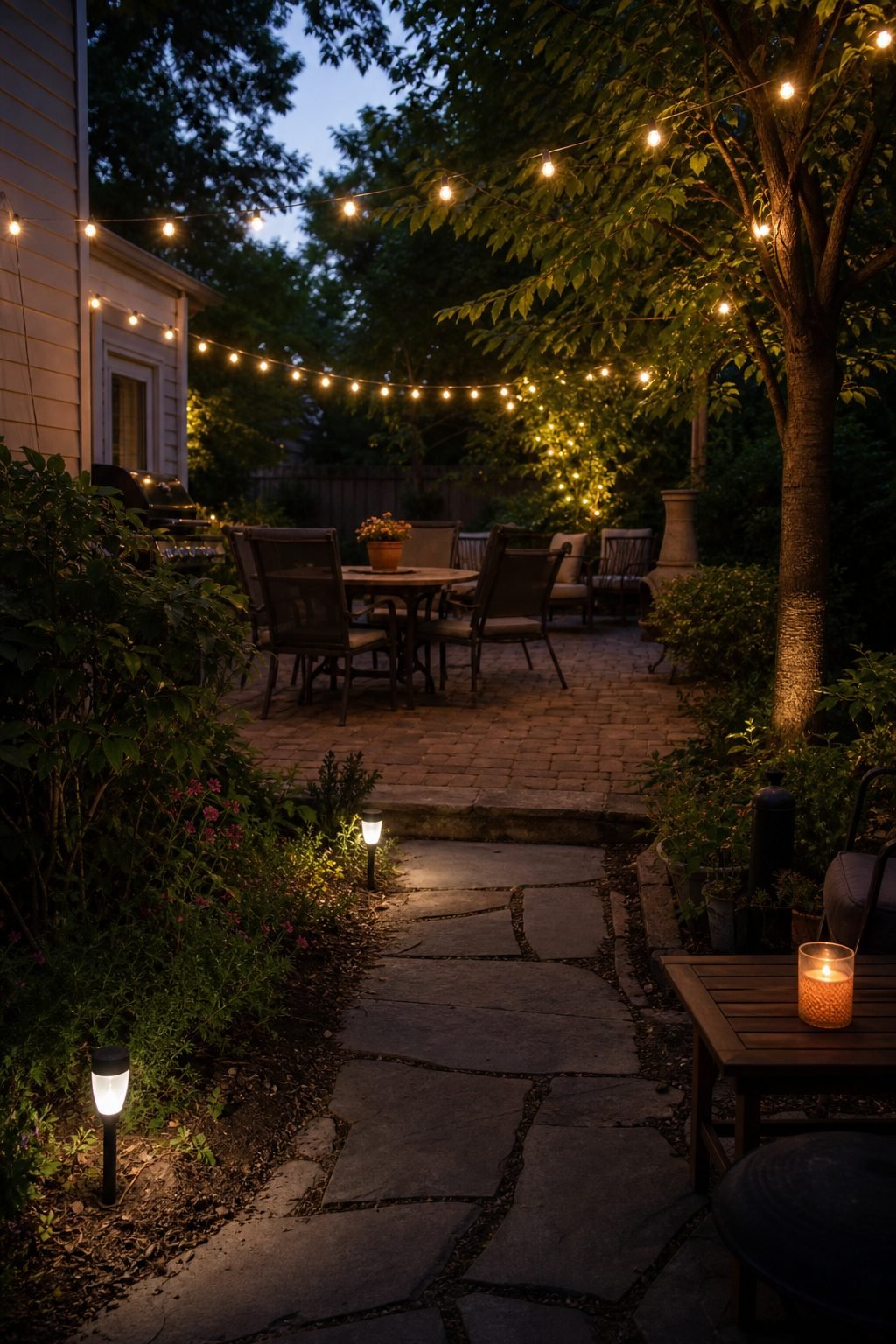
Outdoor lighting is the most underrated home upgrade. It extends your living space into the evening, makes the yard safer, showcases landscaping you paid good money for, and — according to real estate agents — dramatically improves how a home feels after dark. I added lighting to my backyard in phases over two summers, and the transformation from “dark void behind the house” to “favorite evening hangout” was remarkable. The whole project cost less than a single piece of patio furniture.
Here are the best outdoor lighting options for a backyard, from dead-simple solar to full low-voltage systems.
What Are the Best Outdoor Lighting Options for a Backyard?
Good backyard lighting uses layers, just like indoor lighting: ambient (general illumination), task (light where you do things — grill, steps, paths), accent (highlighting trees, architecture, garden features), and security (deterring intruders, preventing trips and falls). You don’t need all four on day one — but planning for layers prevents the “single harsh floodlight” look that plagues so many backyards.
1. Solar Lights — Easiest, Cheapest, Good Enough for Most
Solar path lights ($20–$40 for multi-packs) are the gateway drug of landscape lighting: stake them along walkways, no wiring, no electrician, working in minutes. Modern solar lights are vastly better than the dim blue ones from a decade ago — look for warm white (2700–3000K) LEDs and larger solar panels for decent brightness and runtime.
Limitations: they’re dimmer than wired options, depend on direct sun exposure (shaded spots won’t charge), and run 6–10 hours on a full charge — less in winter or cloudy stretches. They’re perfect for paths, garden bed edges, and decorative accents; insufficient for security or task lighting. Solar string lights ($15–$30) are the festive exception — draped over patios and pergolas, they create magical ambiance for almost nothing.
2. Low-Voltage Landscape Lighting — The Sweet Spot
12-volt low-voltage systems are the professional standard for residential landscape lighting, and they’re very DIY-friendly — the voltage is safe to handle without an electrician. A starter kit ($100–$200) includes a transformer (plugs into an outdoor outlet), cable, and 4–6 fixtures. Expansion is easy: the cable runs just under the mulch, and fixtures connect with simple pierce-connectors.
Fixture types and their uses:
- Path lights ($15–$40 each): spaced 6–8 feet apart along walkways. The workhorse of landscape lighting.
- Spotlights / uplights ($20–$50 each): aimed up at trees, architectural features, or the house facade. The most dramatic effect per fixture — uplighting a single beautiful tree transforms the entire yard at night.
- Well lights ($25–$60 each): recessed into the ground, nearly invisible by day. Great for washing walls or lighting from within garden beds.
- Deck and step lights ($15–$35 each): surface-mounted on steps, railings, and deck perimeters. Critical for safety — falls on dark steps are a top backyard injury.
- Floodlights ($30–$60 each): for security and large-area coverage. Use sparingly for ambiance — they’re functional, not beautiful.
LED is mandatory now — 80 percent less energy than halogen, 25,000+ hour lifespan (versus 2,000 for halogen), and no bulb changes for a decade. A 45-watt transformer handles 6–10 LED fixtures easily; size up (150–300W) if you plan to expand.
3. String Lights and Decorative Lighting — Instant Ambiance
Outdoor string lights (Edison-style LED strands, $25–$60 per 48-foot strand) are the fastest way to make a patio feel magical. Hang them in catenary swags (draped curves between posts or trees) rather than straight lines — the swag is what creates the festive look. Use guide wires for long spans so the strands don’t sag excessively. Plug-in versions are brighter and more reliable than solar for permanent installations.
Lanterns and flameless candles ($10–$30 each) add tabletop warmth without fire risk. Tiki torches (real flame, $5–$15 each, plus fuel) create ambiance and the citronella versions deter mosquitoes — but they’re an open flame, so position carefully away from structures and never leave unattended.
4. Security Lighting — Safety First
Motion-sensor floodlights ($30–$60 each) at entry points, dark corners, and the garage: the sudden light startles intruders and alerts you. Choose LED models with adjustable sensitivity and duration to avoid false triggers from every passing cat. Smart security lights ($50–$100) add phone alerts and camera integration.
Placement principle: light the approaches, not just the house. Intruders avoid lit paths to entry points. But avoid light pollution — aim fixtures downward, use shields, and choose warm color temperatures. Your neighbors (and local dark-sky ordinances) will thank you.
5. Smart Controls — The Convenience Layer
Smart plugs and timers ($10–$25) automate any plug-in lighting — set dusk-to-dawn schedules once and forget. Low-voltage smart transformers ($80–$150) offer app control, scheduling, and dimming for wired systems. Solar lights with smart features are emerging but still limited. Automation matters more outdoors than in — nobody wants to walk the yard flipping switches every evening.
Design Principles That Make It Look Professional
- Less is more. The biggest amateur mistake is too much light. Aim for pools of light with darkness between — contrast creates depth and drama. A yard lit like a parking lot looks terrible.
- Warm white (2700–3000K) everywhere. Cool white outdoors looks harsh and institutional. Consistency in color temperature matters — mixing warm and cool looks accidental.
- Hide the fixtures. The best landscape lighting shows effects, not sources. Tuck fixtures behind plants, under eaves, into mulch.
- Light in odd numbers and asymmetrically. Symmetrical lighting looks formal and flat; asymmetric looks natural.
- Start with the house and work outward. Light the architecture first (it anchors the composition), then key landscape features, then paths.
Budget Scenarios
$100 evening transformation: solar path lights along the walkway + a strand of string lights over the patio. Dramatic difference, one afternoon. $400–$600 proper system: low-voltage starter kit with 6–8 fixtures (paths, one uplighted tree, step lights) + smart timer. Professional-looking results. $1,500+ full design: expanded low-voltage system (15–25 fixtures), security lighting, smart controls, professional layout. Still far less than most hardscaping projects, with comparable impact on how the home feels.
For the front yard’s evening appearance, our guide to curb appeal on a budget covers lighting’s role in first impressions. And if you’re planning the yard itself, low-maintenance landscaping ideas pairs well — lighting showcases the landscaping you install.
Practical Takeaway
Start with solar path lights and string lights for instant impact under $100. Graduate to a low-voltage LED system for the real transformation — uplight one great tree, light your paths and steps, layer in security lighting at entries. Keep it warm white, hide the fixtures, embrace darkness between pools of light, and automate everything. Great backyard lighting doesn’t just illuminate the yard — it creates an entirely new room you didn’t know you had. Better Homes & Gardens’ outdoor lighting ideas show these layering principles in real backyards.