How to Get Back Into Fitness After Years Off
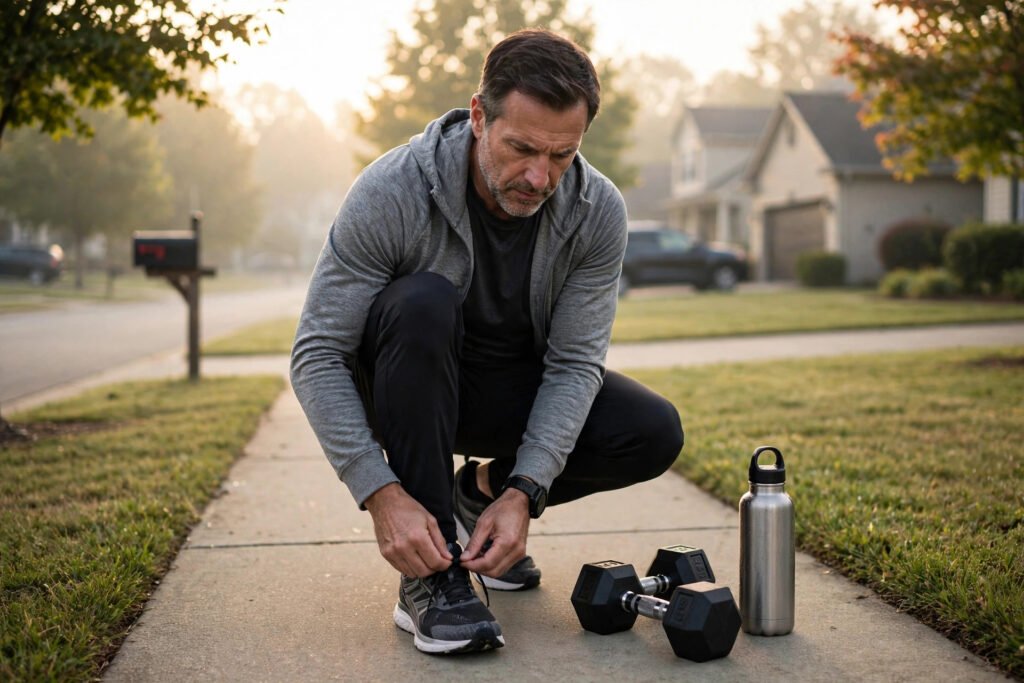
It’s been five years — or ten, or twenty — since you exercised regularly. Maybe kids arrived, a career consumed you, an injury sidelined you, or motivation just quietly evaporated. Now you’re looking at workout clothes that feel like artifacts from someone else’s life, and the gap between where you are and where gym culture says you should be feels enormous.
Here’s what nobody tells you at this stage: returning to fitness after years away is physiologically easier than starting from zero. Your body remembers. Muscle nuclei gained from past training persist for years — a phenomenon researchers call “muscle memory” — which means regaining lost fitness happens measurably faster than building it the first time. The barrier isn’t your body. It’s the approach. Here’s how to restart without getting hurt, burned out, or humiliated.
Step 1: get medical clearance (and actually mean it)
If you’re over 40, have cardiovascular risk factors, or any chronic condition, see your doctor before restarting vigorous exercise. This isn’t boilerplate — the American Heart Association notes that sedentary adults ramping up intense exercise face elevated cardiac event risk during the transition period. A basic physical, blood pressure check, and honest conversation about your plans takes an hour and removes the biggest tail risk of restarting.
For everyone else, the self-screen is simple: chest pain, unexplained dizziness, or severe shortness of breath with mild exertion means see a doctor first. Otherwise, you’re cleared to start easy and progress gradually — which is the plan anyway.
Step 2: start embarrassingly easy (the 50% rule)
The number one error of returning exercisers: doing what you used to do. Your 32-year-old self’s workout is poison for your 45-year-old restarting self. The 50% rule: whatever you think you can handle in week one, cut it in half. If you used to run 5 miles, start with walk-run intervals totaling 2. If you benched 185, start with the bar and dumbbells.
This isn’t about fitness — it’s about connective tissue. Your muscles remember training, but your tendons, ligaments, and bones decondition faster and recondition slower. Most restart injuries (Achilles issues, rotator cuff flare-ups, shin splints) come from loading connective tissue that isn’t ready, not from muscular failure. Two to three weeks of deliberately easy training lets the slow-adapting tissues catch up. Walking is the perfect re-entry tool — the benefits of walking 30 minutes a day make it the highest-ROI first step for returning exercisers.
Step 3: build the minimum viable routine
Forget the optimal program. You need the program you’ll actually do for 12 weeks. For most returning adults, that’s:
- 2–3 full-body strength sessions weekly (30–40 min): goblet squats, push-ups (elevated if needed), dumbbell rows, Romanian deadlifts, planks. Light weights, perfect form, 2–3 sets of 8–12.
- 2–3 easy cardio sessions weekly (20–30 min): brisk walking, cycling, swimming — conversational pace only.
- Daily movement: a 10-minute walk after dinner. Non-negotiable, nearly effortless, surprisingly powerful for habit formation.
That’s it. No HIIT, no two-a-days, no six-day splits. The goal of months 1–3 is not transformation — it’s becoming a person who exercises consistently. Everything else stacks on that identity. If staying consistent is the hard part, our guide to staying motivated to exercise regularly covers the behavioral systems that make training stick.
Step 4: manage soreness and expectations
Delayed-onset muscle soreness (DOMS) will hit harder than you remember. It’s normal, it’s not damage, and it peaks 24–72 hours after unfamiliar exercise. The cure is light movement, not rest — a walk or easy cycle increases blood flow and clears soreness faster than the couch. What isn’t normal: sharp joint pain, pain that worsens over days, or soreness that doesn’t improve with movement. Those mean back off and assess.
Expectation management is the psychological half of this step. You will not look different in three weeks. You will feel different — better sleep by week two, more energy by week three, clothes fitting differently by week eight. Track process metrics (sessions completed, weights lifted) rather than mirror metrics for the first two months. The mirror is a lagging indicator; your training log is the leading one.
Step 5: navigate the gym (or skip it entirely)
Gym anxiety is the silent killer of restarts. Two legitimate options: brave it or bypass it. If braving it, go at off-peak hours (mid-morning or early afternoon), wear what you have, and remember that experienced gym-goers are overwhelmingly focused on themselves — the fear of judgment vastly exceeds actual judgment. Most commercial gyms also offer a free orientation session; take it.
If bypassing it, home training has never been more viable. A pair of adjustable dumbbells, a bench, and a pull-up bar covers 90 percent of beginner-to-intermediate programming. The pandemic permanently normalized home fitness, and the equipment market reflects it — quality adjustable dumbbells that once cost a fortune are now widely available under $300.
Step 6: progress like a scientist, not a hero
After 3–4 weeks of easy base-building, start progressive overload: add a little weight, a few reps, or a few minutes each week. The 10% rule (weekly increases under 10%) keeps connective tissue safe. Keep one “deload” week monthly at 60% volume. Log everything — the lifters who track progress are the lifters who keep progressing, because the log makes plateaus visible and solvable instead of demoralizing.
By month four, reassess: what’s working, what’s boring, what hurts. This is the time to specialize — add the sport, class, or training style that genuinely excites you. The restart phase is over; now you’re just a person who trains, choosing how to train better.
Conclusion
Getting back into fitness after years inactive isn’t a comeback story — it’s a rebuilding project, and rebuilding is faster than building. Get cleared, start at half of what your ego suggests, build a minimum viable routine around strength plus easy cardio, manage soreness with movement, and progress gradually. Your body kept the blueprints. You just need to give it a sensible construction schedule. For authoritative guidance, see the American Heart Association activity recommendations and the CDC physical activity guidelines.
Frequently Asked Questions
How do I start exercising again after 10 years?
Start with walking and light full-body strength work 2–3 times weekly, at half the intensity you think you can handle. Get medical clearance if you’re over 40 or have risk factors. Progress gradually — connective tissue needs 2–3 weeks to catch up to your muscles.
Will I regain muscle faster the second time?
Yes. Muscle nuclei gained from previous training persist for years, so regaining lost muscle happens measurably faster than building it initially. Strength often returns within 2–3 months of consistent training, compared to 6+ months the first time.
How sore should I expect to be when restarting exercise?
Expect significant DOMS (delayed-onset muscle soreness) peaking 24–72 hours after your first sessions — it’s normal and not a sign of damage. Manage it with light movement. Sharp joint pain or pain that worsens over days is different: back off and get assessed.
Should I get a personal trainer when getting back into fitness?
It’s one of the highest-ROI moves for returners — even 4–6 sessions to relearn safe form on major lifts. Your movement patterns have degraded during the layoff, and expert eyes catch compensations you’d never feel yourself.
How long until I feel fit again after years off?
Most returners feel meaningfully better (energy, sleep, mood) within 3–4 weeks and see visible changes within 8–12 weeks. Full restoration of previous fitness typically takes 3–6 months of consistent training — roughly half the time it took to build originally.