Older Dog Drinking Excessive Water? Causes and Next Steps
You’re refilling the water bowl three times a day. Your senior dog, who drank normally for years, is suddenly draining it dry — and asking to go out at 3 a.m. Increased thirst in an older dog is one of those symptoms owners notice but often dismiss: “she’s just getting old.” Here’s what American veterinarians want you to know: sudden excessive drinking in a senior dog is rarely “just age.” It’s one of the most diagnostically valuable symptoms in veterinary medicine — a flashing indicator pointing at a short list of specific, often treatable conditions. Here’s what it means and what to do.
How Much Is Too Much? The Numbers
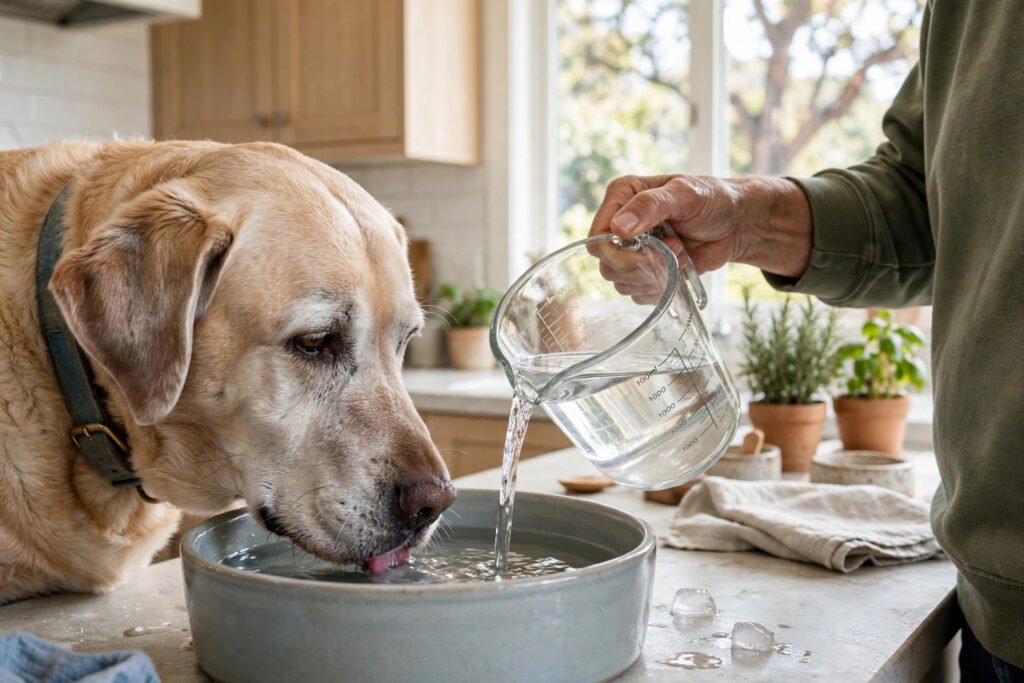
Normal canine water intake is roughly 1 ounce per pound of body weight per day — a 50-pound dog drinks about 50 ounces (under 7 cups). Excessive drinking (polydipsia) is generally defined as consistently exceeding 100ml per kg daily — about 1.5 ounces per pound, or roughly 50% above normal. A 50-pound dog suddenly drinking 10+ cups daily is polydipsic.
Measure for 2–3 days: fill a measured container each morning and track what’s consumed (account for multiple pets). Note concurrent changes — appetite, urination frequency, energy, weight — because the pattern narrows the diagnosis enormously. And don’t restrict water to “test” it; restricting water in a dog with kidney disease or diabetes can cause dangerous dehydration. If intake is truly excessive, the vet visit comes first.
The Usual Suspects: What Excessive Thirst Signals
Kidney disease
The most common cause in senior dogs. Failing kidneys lose the ability to concentrate urine — the dog urinates dilute, copious amounts and drinks excessively to compensate. Early kidney disease is often manageable for years with diet, hydration support, and monitoring; caught late, options narrow. This is the single most important reason not to dismiss increased thirst as aging.
Diabetes mellitus
Excess blood sugar spills into urine, dragging water with it — the dog urinates heavily and drinks to keep up. Classic triad: increased thirst, increased urination, and weight loss despite good appetite. Canine diabetes is very manageable with insulin, diet, and routine, but undiagnosed it progresses to a life-threatening crisis (ketoacidosis). The pattern mirrors human diabetes closely — the same early warning signs of diabetes (thirst, urination, weight change) apply across species.
Cushing’s disease (hyperadrenocorticism)
Excess cortisol from a pituitary or adrenal tumor — common in older dogs, especially small breeds. Beyond thirst: increased appetite, pot-bellied appearance, hair loss, thin skin. Diagnosable with specific blood tests and manageable with daily medication (trilostane) that many dogs take for years.
Liver disease, infections, and medications
Liver dysfunction, uterine infection (pyometra) in unspayed females — a genuine emergency — and tick-borne diseases can all drive thirst. And check the medicine cabinet: steroids (prednisone), diuretics, and some anti-seizure drugs famously increase thirst and urination. If the thirst started with a new medication, call your vet before changing anything — but know the drug is a prime suspect.
Less common: psychogenic polydipsia, hypercalcemia, rare tumors
Some dogs develop compulsive water drinking (often bored, under-stimulated dogs); elevated calcium and certain cancers round out the differential. These are diagnoses of exclusion after the big three are ruled out.
Dietary Support for Senior Dogs With Kidney Issues
If bloodwork points to kidney disease — the most common finding behind senior polydipsia — diet becomes a cornerstone of management, and it’s an area where owners have real agency. Prescription kidney diets (reduced phosphorus and sodium, controlled high-quality protein, added omega-3s) are the most evidence-backed intervention in veterinary nephrology — studies show they significantly extend survival time compared to regular food. The challenge is palatability: kidney diets taste different, and a dog that won’t eat the prescription food gets no benefit from it.
Transition gradually over 7–10 days, mixing increasing amounts with the old food. Warm the food slightly to enhance aroma — smell drives canine appetite more than taste. If your dog refuses prescription diets entirely, work with your vet on the best over-the-counter compromise rather than letting her go hungry; an imperfect diet she eats beats a perfect diet she refuses. Add water to meals (canned food or soaked kibble) to support hydration — every bit of dietary moisture helps kidneys doing a harder job. And maintain the monitoring: kidney management is a long game of rechecks and adjustments, but dogs diagnosed early and managed well often enjoy years of good quality life. The water bowl told you first — listen to what the follow-up care is saying too.
What the Vet Visit Involves
Don’t delay — increased thirst with increased urination in a senior dog warrants a prompt appointment (within days, not weeks). Expect: a thorough history (your measurements and timeline are invaluable), bloodwork (CBC, chemistry panel checking kidney/liver values, glucose), and urinalysis — the single most informative test here, revealing concentration ability, glucose, protein, and infection. Depending on results: blood pressure check, abdominal ultrasound, or specific endocrine testing (ACTH stimulation test for Cushing’s).
Come prepared: your water intake measurements, timeline of onset, current medications and supplements, appetite and weight changes, and urination pattern. This history often points the vet at the answer before the lab work returns. VCA’s guide to excessive thirst in senior dogs and PetMD’s overview of polydipsia causes cover the same diagnostic path in more depth. The same triage logic applies as with any symptom — knowing when symptoms need professional attention is about trajectory and combinations, and new polydipsia in a senior dog clears that bar easily.
Managing Life With a Thirsty Senior Dog
While working toward diagnosis — and after, for chronic conditions — practical management helps: ensure constant fresh water access (multiple bowls, never restrict), more frequent outdoor breaks or indoor potty options (increased urination means accidents aren’t misbehavior), waterproof bedding protection, and nighttime access to water and a late potty break. For diagnosed conditions, follow the treatment plan precisely — diabetic dogs need strict insulin timing, kidney dogs need their diet — and keep recheck appointments; these are managed conditions, not cured ones, and management needs adjust over time.
Conclusion
Sudden excessive drinking in an older dog is a symptom with a short, specific suspect list — kidney disease, diabetes, Cushing’s, liver issues, infection, or medication effects — and most are manageable when caught early. Measure the intake, note the pattern, don’t restrict water, and get to the vet within days. It’s not “just old age.” It’s your dog’s body sending one of the clearest early-warning signals in veterinary medicine — and acting on it promptly can add comfortable years to her life.
Frequently Asked Questions
How much water should an older dog drink per day?
Roughly 1 ounce per pound of body weight daily. Consistently exceeding 1.5 ounces per pound (100ml/kg) qualifies as excessive and warrants a vet visit.
What causes sudden increased thirst in senior dogs?
Most commonly kidney disease, diabetes, or Cushing’s disease, plus liver disease, infections like pyometra, and medications (especially steroids). Bloodwork and urinalysis usually identify the cause.
Should I limit my dog’s water intake?
No — never restrict water without veterinary direction. Restricting water in a dog with kidney disease or diabetes risks dangerous dehydration. Address the cause, not the symptom.
Is increased thirst an emergency?
It’s urgent (vet visit within days), and emergent if combined with vomiting, lethargy, collapse, or suspected pyometra in an unspayed female. Don’t wait weeks to investigate.
Can diabetes in dogs be managed?
Yes — canine diabetes is very manageable with twice-daily insulin, consistent diet and schedule, and regular monitoring. Many diabetic dogs live full, comfortable lives with proper management.