
How to Make Takeout-Style Fried Rice at Home
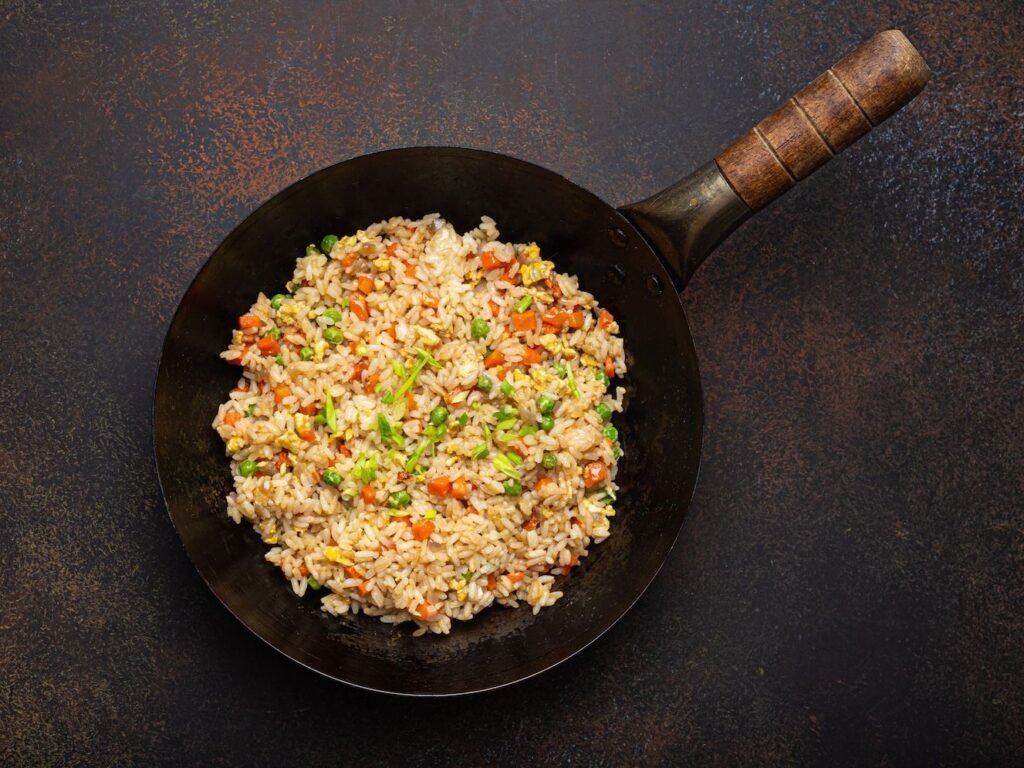
Homemade fried rice usually disappoints. It comes out soft, pale, and a little mushy, nothing like the smoky, distinct-grained fried rice from your favorite takeout spot. But takeout-style fried rice at home is absolutely achievable. Restaurant fried rice is not magic; it is a set of specific techniques, and every one of them works in a home kitchen.
The gap between sad homemade fried rice and great fried rice comes down to five things: day-old rice, high heat, the right pan, sauce discipline, and speed. Nail those and you will stop ordering it.
How Can I Make Takeout-Style Fried Rice at Home?
1. Start With Day-Old Rice
This is the single biggest factor. Freshly cooked rice is too moist; the grains clump and steam instead of frying. Rice that has spent a night in the fridge dries out on the surface, so each grain fries up separate and slightly chewy. Cook your rice a day ahead, spread it on a sheet pan to cool quickly, then refrigerate uncovered or loosely covered overnight. If you forgot to plan ahead, spread fresh rice on a sheet pan and freeze it for 30 to 45 minutes; it is not as good as overnight, but it is far better than using it fresh.
Long-grain white rice or jasmine rice works best. And remember that the rice only behaves this well if you cook rice on the stove properly in the first place, then cool and store it promptly.
2. Use Maximum Heat
Restaurant wok burners are ferociously hot, and that heat creates wok hei, the smoky breath-of-the-wok flavor that defines great fried rice. At home, get your burner as hot as it goes and preheat your pan until it is smoking slightly before any oil goes in. A carbon steel wok is ideal, but a large cast iron skillet or even a big stainless skillet works. What does not work is a crowded nonstick pan over medium heat; that steams the rice instead of frying it.
3. Cook in Batches and Keep It Moving
Do not overcrowd the pan. For a standard home burner, cook no more than two to three cups of rice at a time. Add oil, then aromatics, then rice, and keep everything moving with a tossing motion. The rice should sizzle loudly on contact. If it does not sizzle, your pan was not hot enough.
4. The Right Sauce, in the Right Amount
Less is more. Two to three tablespoons of soy sauce for four cups of rice is plenty; you are seasoning, not souping. Add a teaspoon of toasted sesame oil at the very end, off the heat, for aroma. A pinch of white pepper gives that distinctive takeout flavor that black pepper does not quite replicate. Oyster sauce adds depth; a teaspoon of it transforms the dish. Taste and adjust, but add sauce gradually. You can always add more.
5. The Egg Technique
Scramble beaten eggs separately in the hot wok first, break them into ribbons, and set aside. Or push the rice to the sides, pour beaten egg into the center, let it set for a few seconds, then scramble it into the rice. Either way, the eggs should be just-set ribbons, not rubbery chunks. Knowing how to make fluffy scrambled eggs helps here more than you would expect.
The Order of Operations
- Prep everything before the heat goes on. Fried rice moves fast; there is no time to chop mid-cook.
- Heat the wok until smoking, add oil, swirl to coat.
- Aromatics first: minced garlic, ginger, and the white parts of scallions, 30 seconds.
- Protein if using: diced chicken, shrimp, or char siu, cooked through and set aside.
- Rice in, spread it out, let it sit undisturbed for 30 seconds to develop some browning, then toss.
- Soy sauce around the edges of the wok so it sizzles and caramelizes slightly.
- Eggs, frozen peas, diced carrots; toss everything together for a minute.
- Sesame oil and scallion greens off the heat. Serve immediately.
Common Mistakes
- Fresh rice. The number one cause of mushy fried rice.
- Too much soy sauce. It makes the rice soggy and over-salted. Start with less.
- Overcrowding. Cook in batches rather than steaming a mountain.
- Low heat. If it is not sizzling aggressively, it is not frying.
- Adding vegetables too early. Quick-cooking vegetables go in near the end so they stay bright.
For protein variations and sauce ratios, Serious Eats has a definitive fried rice guide, and The Kitchn covers weeknight variations well.
Regional Variations Worth Trying
Once you have the basic technique, the world of fried rice opens up. Yangzhou fried rice from China adds char siu pork, shrimp, and peas in a delicate, lightly seasoned style. Thai khao pad brings fish sauce, lime, and sometimes pineapple for a sweet-savory balance. Japanese chahan is buttery and subtle, often with tiny diced vegetables. Indonesian nasi goreng uses sweet kecap manis soy sauce for a caramelized, deeply savory result topped with a fried egg. Kimchi fried rice adds chopped kimchi and gochujang for funky heat, finished with sesame oil and a fried egg. Each follows the same day-old-rice, hot-wok principles with different flavor accents.
Adapting for Dietary Needs
Fried rice is naturally adaptable. For gluten-free, use tamari instead of soy sauce and check your oyster sauce label. For vegetarian, skip the meat and load up on mushrooms, edamame, and extra egg; the technique does not change. For lower sodium, use half the soy sauce and boost flavor with ginger, garlic, and white pepper instead. Cauliflower rice works for a low-carb version, though it needs higher heat and less time since it releases more water; spread it thin and let it get some color before tossing. The method is the constant; the ingredients are variables.
Fried Rice FAQs
What is the best rice variety? Long-grain white or jasmine. Their grains stay separate when fried. Short-grain rice is too sticky for this purpose.
Can I use a regular skillet instead of a wok? Yes. A large cast iron or stainless skillet over maximum heat works well; the key is heat and not overcrowding, not the pan shape.
Light or dark soy sauce? Light soy sauce for everyday seasoning; it is saltier and thinner. Dark soy sauce adds color and a hint of sweetness; a little goes a long way.
Why does restaurant fried rice taste smoky? Wok hei, the flavor from extreme heat and vaporized oil. Home burners cannot fully replicate it, but maximum heat and a smoking-hot pan get you surprisingly close.
Can I make it ahead? Fried rice is best fresh, but leftovers reheat well in a hot skillet. The rice itself, though, must be made a day ahead for the best texture.
The takeaway: day-old rice, ripping-hot pan, small batches, restrained sauce, fast hands. Master that sequence and takeout fried rice becomes something you make, not something you order.







1 thought on “How to Make Takeout-Style Fried Rice at Home”