
Can AI Help Me Create a Resume That Gets Noticed
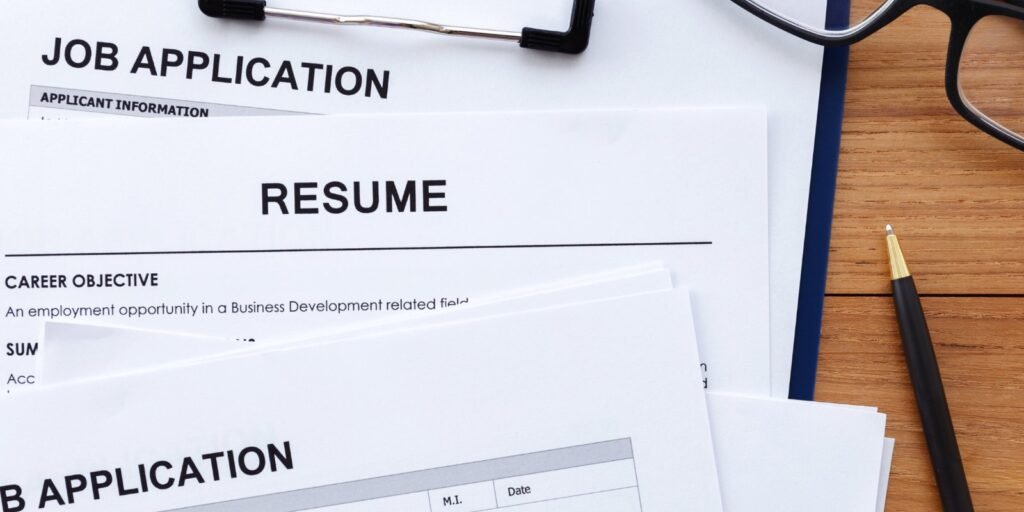
Recruiters spend an average of six to eight seconds on an initial resume scan. Six seconds. Your carefully crafted two pages get less attention than a TikTok. So can AI help me create a resume that gets noticed? Yes — but not the way most people think. AI will not magically get you hired, but used strategically, it can transform a forgettable resume into one that survives both the robots and the humans.
Here is the honest, practical guide.
Can AI Help Me Create a Resume That Gets Noticed? Where AI Actually Helps
Beating the ATS (Applicant Tracking System)
Over 90 percent of large companies use ATS software to filter resumes before a human sees them. AI helps you:
- Mirror the job posting: paste the job description and ask AI to identify the key skills and keywords — then make sure your resume naturally includes them
- Translate your experience: “Rewrite these bullet points using strong action verbs and quantifiable results” turns “helped with sales” into “Drove 23% revenue growth across a 4-person territory”
- Check formatting: ask AI to review whether your resume is ATS-friendly — no tables, no graphics, no headers/footers with critical info, standard section titles
Writing Bullet Points That Actually Impress
The formula AI can help you apply relentlessly: action verb + specific task + measurable result. Feed AI your raw experience — “I worked the register and sometimes trained new people” — and ask it to rewrite as achievement bullets: “Trained 12 new cashiers on POS systems and customer service protocols, reducing onboarding time by 30%.” You provide the facts; AI provides the framing.
Tailoring for Each Application
The number one resume mistake is sending the same resume everywhere. AI makes tailoring fast: paste the job posting plus your resume and ask “suggest specific changes to align my resume with this posting.” Ten minutes per application, dramatically higher hit rates.
What AI Cannot Do for Your Resume
- Invent experience: AI will happily fabricate impressive-sounding achievements — using them is lying, and background checks exist
- Replace your judgment: only you know which accomplishments actually matter for the role
- Guarantee interviews: a great resume gets you past filters; networking and relevant experience get you hired
- Write your cover letter’s soul: AI drafts are fine starting points, but genuine enthusiasm and specific company knowledge must come from you
The Resume Structure That Works in 2026
- Contact info: name, phone, email, LinkedIn, city (no full address needed)
- Professional summary (3-4 lines): who you are, years of experience, key strengths, what you are targeting — tailored per application
- Experience: reverse chronological, achievement bullets with numbers, most recent 10-15 years
- Skills: a clean list matching the job posting’s keywords
- Education: brief unless you are entry-level
- Length: one page if under 10 years experience; two max for senior roles
Ask AI to critique your resume against this structure — it is brutally honest about fluff, and fluff is the enemy.
Beyond the Resume: The Full AI Job Search
AI helps across the whole search: drafting tailored cover letters, preparing for interviews with mock questions, writing follow-up thank-you emails (see using AI to write better emails), and optimizing your LinkedIn profile. My guide on whether AI can help you find a better job covers the broader strategy — resume is just one piece.
Also worth noting: some employers now ask whether you used AI on your application. Honesty is the policy — using AI as a writing assistant is standard practice; presenting AI-generated content as purely your own work in a writing test is not.
Prompts to Steal
- “Here is my work history: [paste]. Write 4 achievement-focused bullet points per role with strong action verbs.”
- “Here is a job posting: [paste]. List the top 10 keywords and skills I should reflect in my resume.”
- “Critique this resume for a [role] position. Be harsh. What’s weak, what’s missing, what should I cut? [paste resume]”
- “Rewrite this summary for a [specific role] at a [company type]: [paste]”
Resume Mistakes AI Cannot Fix
AI polishes presentation, but these fundamental problems need human action:
- Employment gaps with no explanation: AI cannot invent your story — but you should tell it. Caregiving, education, health, travel, freelancing — briefly address gaps rather than hoping nobody notices. Unexplained gaps invite worst-case assumptions.
- Job-hopping without narrative: six jobs in four years needs a through-line — contracting, startups, industry exploration. AI can help articulate the narrative, but you must own it honestly in interviews.
- No quantifiable achievements: if your bullets are all responsibilities (“responsible for…”), AI can rephrase but cannot invent impact. The real fix: start tracking your numbers now — revenue influenced, costs cut, time saved, people led. Future resumes thank present tracking.
- Targeting the wrong roles: the best resume in the world will not get you hired for jobs you are not qualified for (or are overqualified for). AI helps you assess fit honestly — ask it “what roles am I actually competitive for with this background?”
- Lying: AI makes fabrication eloquent, which makes it more dangerous. Background checks, reference calls, and technical interviews catch lies reliably. The short-term gain is never worth the career-ending risk.
- Neglecting LinkedIn: recruiters check LinkedIn before interviews — an AI-polished resume paired with a neglected profile creates dissonance. Optimize both consistently.
The through-line: AI maximizes the presentation of your real story. Invest equally in having a story worth presenting — skills, achievements, and honest positioning. That combination is unbeatable.
Key Takeaways
AI is an excellent resume coach: it beats ATS filters, sharpens bullets, and tailors each application in minutes. But the substance — real achievements, quantified honestly — must come from you.
- Mirror the job posting’s keywords naturally, keep formatting ATS-friendly (no tables or graphics), and tailor per application.
- Apply the formula relentlessly: action verb plus specific task plus measurable result. AI reframes; you supply the facts.
- Five tailored applications beat fifty generic ones — and ten minutes of AI-assisted tailoring each is all it takes.
- AI cannot fix fundamental problems: unexplained gaps, targeting wrong roles, or fabrication. Invest in the story, not just the presentation.
Further reading: the Bureau of Labor Statistics Occupational Outlook Handbook for authoritative career and salary data.
The Bottom Line
AI is an excellent resume coach: it beats the blank page, sharpens your bullets, tailors each application, and checks ATS compatibility. But the substance — your real achievements, quantified honestly — has to come from you. Combine genuine experience with AI-polished presentation, and those six seconds start working in your favor.







1 thought on “Can AI Help Me Create a Resume That Gets Noticed”