Townhouse vs. Single-Family Home: Which Should You Buy?
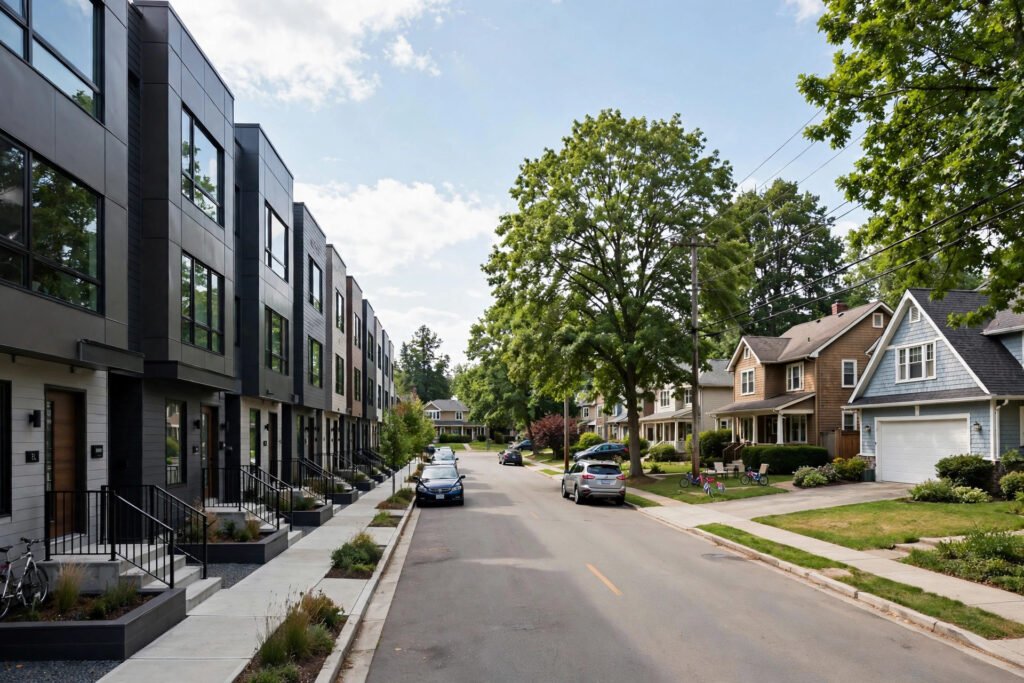
It’s the classic American homebuying fork in the road: the townhouse with its manageable price and lock-and-leave lifestyle, or the single-family home with its yard, privacy, and higher ceiling on appreciation. There’s no universally right answer — only the right answer for your budget, your stage of life, and how you actually want to live day to day. This guide breaks down the real trade-offs: costs beyond the sticker price, lifestyle differences that matter more than buyers expect, and how each choice performs as an investment over time.
The Money Math: It’s Not Just the Purchase Price
Townhouses typically cost 10–20% less than comparable single-family homes in the same area — that’s the headline attraction, and it’s real. A $400,000 townhouse versus a $475,000 detached home means a smaller down payment, lower monthly mortgage, and an easier entry into expensive markets. But the sticker price isn’t the whole story. Townhouses come with HOA fees — commonly $200–$500+ per month — covering exterior maintenance, landscaping, amenities, and insurance on shared structures. Over 30 years, those fees can exceed $100,000, substantially narrowing the price gap.
Single-family homes skip the HOA (usually) but hand you every maintenance bill: roof ($10,000–$20,000), exterior paint, landscaping, driveway, sewer line — all yours. Budget roughly 1–2% of the home’s value annually for maintenance, and understand that big-ticket items arrive in clusters, not conveniently spaced. Property taxes and insurance also run higher on detached homes since you’re insuring the full structure and often carrying more land value. The honest comparison: townhouse PITI plus HOA versus single-family PITI plus a maintenance reserve. Run both for your specific properties — the “cheaper” option flips more often than buyers expect. And don’t forget resale math: single-family homes have historically appreciated faster in most American markets, partly because you own the land, which is the component that actually gains value while structures depreciate.
Lifestyle: The Differences That Actually Affect Daily Life
This is where the decision is really made, because lifestyle mismatches cause more regret than financial ones. Townhouse life means shared walls — you’ll hear neighbors, and they’ll hear you. End units mitigate this substantially and command a premium for good reason. You’ll also live with HOA rules: restrictions on exterior paint, fences, pets, rentals, and even the color of your front door. For some buyers this is welcome structure (no neighbor can paint their house neon green); for others it’s an intolerable loss of autonomy. Read the HOA’s CC&Rs and meeting minutes before offering — special assessments, litigation, and underfunded reserves hide in those documents.
Single-family life means privacy, a yard, and total control — plus total responsibility. The yard that charmed you in May needs mowing, weeding, and watering all summer; that “character” in an older detached home means weekend projects forever. But you can also build the deck, plant the garden, and park the project car without asking a committee. Consider your stage honestly: young professionals who travel often love the lock-and-leave townhouse; families with kids and dogs usually crave the yard; remote workers should weigh the townhouse’s smaller footprint against the detached home’s potential for a real office. Noise-sensitive light sleepers should think very carefully about shared walls. If outdoor space matters but maintenance doesn’t appeal, low-maintenance landscaping ideas can make even a single-family yard nearly carefree.
The HOA Question: Amenity or Anchor?
HOAs deserve their own section because they inspire such strong feelings — and both sides have a point. A well-run HOA maintains property values: consistent exteriors, cared-for common areas, amenities like pools and gyms you’d never afford alone, and someone else handling the roof and landscaping. In new developments, HOAs are nearly universal, and buyers accept them as the price of modern construction.
But HOAs can also be badly run, underfunded, or tyrannical. Before buying into one, investigate: review two years of meeting minutes (look for conflict, deferred maintenance, and special assessment discussions), check the reserve study (is the HOA saving adequately for future roof and exterior replacements, or will you get hit with a $15,000 special assessment?), confirm the delinquency rate (high non-payment by owners signals dysfunction), and understand rental caps if you might ever lease the property. A $300 monthly fee from a healthy HOA is a service; the same fee from a HOA facing a lawsuit and a crumbling parking lot is a liability. The National Association of Realtors’ buyer resources include HOA evaluation checklists worth using before you commit.
Investment and Resale: Which Builds More Wealth?
As pure investments, single-family homes have structural advantages: land ownership, broader buyer demand at resale, no HOA dragging on appreciation, and easier renting (many HOAs cap or ban rentals, which handcuffs investors). In most markets, detached homes appreciate faster and sell more easily in downturns — when buyers get picky, they pick privacy and land.
Townhouses aren’t bad investments, though — they’re different ones. They rent well to young professionals, their lower entry price means better cash-flow ratios in some markets, and in dense urban areas where detached homes are unaffordable, townhouses are the appreciating asset class. The key variables are location quality and HOA health, not property type alone. A townhouse in a walkable, job-rich neighborhood with a solid HOA will outperform a detached home on a busy arterial in a stagnant area every time. Either way, protect your resale with smart upkeep: even simple moves like improving curb appeal on a budget pay disproportionate dividends when it’s time to sell. And run long-term scenarios with Bankrate’s housing calculators — the wealth gap between the two choices over 10–15 years is often smaller than the lifestyle gap, which tells you where to weight your decision.
A Decision Framework That Actually Works
Score yourself on five questions. Budget: does the single-family payment (plus maintenance reserve) fit comfortably, or does the townhouse’s lower entry price meaningfully change your financial stress? Lifestyle: do you crave autonomy and outdoor space, or convenience and low maintenance? Time: do you have weekends for yard and house projects, or is your scarcest resource hours? Tenure: will you stay 7+ years (favoring the detached home’s appreciation) or is this a 3–5 year stepping stone (favoring the townhouse’s lower carrying costs)? Control: do HOA rules feel like welcome order or unacceptable interference?
If you scored mostly townhouse, buy the end unit in the best HOA you can find. If mostly single-family, buy the smallest acceptable house in the best neighborhood you can afford — land and location drive the long-term value. And if you’re genuinely torn, consider that the “wrong” choice here is rarely catastrophic: both build equity, both beat renting in most long-term scenarios, and you can always sell and switch. The catastrophic choice is analysis paralysis that keeps you renting for three more years while prices climb.
The Bottom Line
Townhouse versus single-family isn’t a debate with a winner — it’s a trade between price and autonomy, convenience and control, lower entry cost and higher appreciation ceiling. Run the full monthly math including HOA fees and maintenance reserves, interrogate the HOA’s finances like an auditor, and weight lifestyle fit at least as heavily as investment return, because you’ll live the lifestyle every single day. Buy the home that fits the life you actually have, not the one you imagine having, and either choice will serve you well.
Frequently Asked Questions
Do townhouses appreciate as fast as single-family homes?
Generally no — single-family homes have historically appreciated faster in most U.S. markets because land (which appreciates) makes up more of their value. But well-located townhouses with healthy HOAs still build substantial equity over time.
Are HOA fees worth it?
It depends on the HOA’s health and what the fee covers. Fees funding real maintenance, amenities you use, and adequate reserves are a fair service charge. Fees from a mismanaged HOA facing special assessments are a red flag — always review finances before buying.
Can I rent out my townhouse?
Sometimes — many HOAs cap rentals or require owner-occupancy periods. Check the CC&Rs before buying if landlording is even a remote possibility; rental restrictions are among the most common HOA rules.
Is an end-unit townhouse worth the premium?
Usually yes. End units have only one shared wall (less noise), more windows and natural light, and often slightly larger lots. They also resell better, which typically justifies the 3–7% premium.