
How to Get Rid of Apron Belly Without Surgery: Honest Guide
Learning how to get rid of apron belly without surgery is a goal for many people, especially after significant weight loss or pregnancy. An apron belly — medically called a panniculus — is the overhanging fold of skin and fat that drapes over the lower abdomen. While surgery (a panniculectomy or tummy tuck) is the only way to remove excess skin completely, there are real, meaningful steps you can take without going under the knife to reduce its appearance, improve comfort, and feel better in your body.
What Causes Apron Belly?
An apron belly develops when the skin and tissue of the lower abdomen stretch beyond their ability to snap back. Common causes include:
- Significant weight loss: losing 50+ pounds, especially quickly, often leaves stretched skin that does not fully retract.
- Pregnancy: carrying a baby stretches the abdominal wall; after multiple pregnancies, skin elasticity may not fully recover.
- Aging: collagen and elastin naturally decline, making skin less able to bounce back.
- Genetics: some people are simply more prone to loose abdominal skin.
It is important to be honest: if the issue is mostly loose skin rather than fat, no diet or exercise will make that skin disappear entirely. But most apron bellies involve both, and the fat component absolutely responds to lifestyle changes.
1. Lose Fat Gradually and Sustainably
If excess fat contributes to your apron belly, steady fat loss is the foundation. Aim for 1 to 2 pounds per week — faster loss increases the odds of more loose skin.
- Create a moderate calorie deficit through a mix of eating slightly less and moving more. Extreme crash diets backfire.
- Prioritize protein (about 0.7 to 1 gram per pound of body weight daily) to preserve muscle while losing fat. Muscle fills out the frame and improves how everything looks.
- Eat mostly whole foods — vegetables, fruits, lean proteins, whole grains, healthy fats — and limit ultra-processed foods, sugary drinks, and alcohol.
- Stay hydrated. Water supports skin elasticity and helps you distinguish true hunger from thirst.
2. Build Core and Full-Body Strength
You cannot spot-reduce fat, but you can absolutely build the muscle underneath, which changes how your midsection looks and feels:
- Compound lifts (squats, deadlifts, rows, presses) build the most total muscle and burn the most calories.
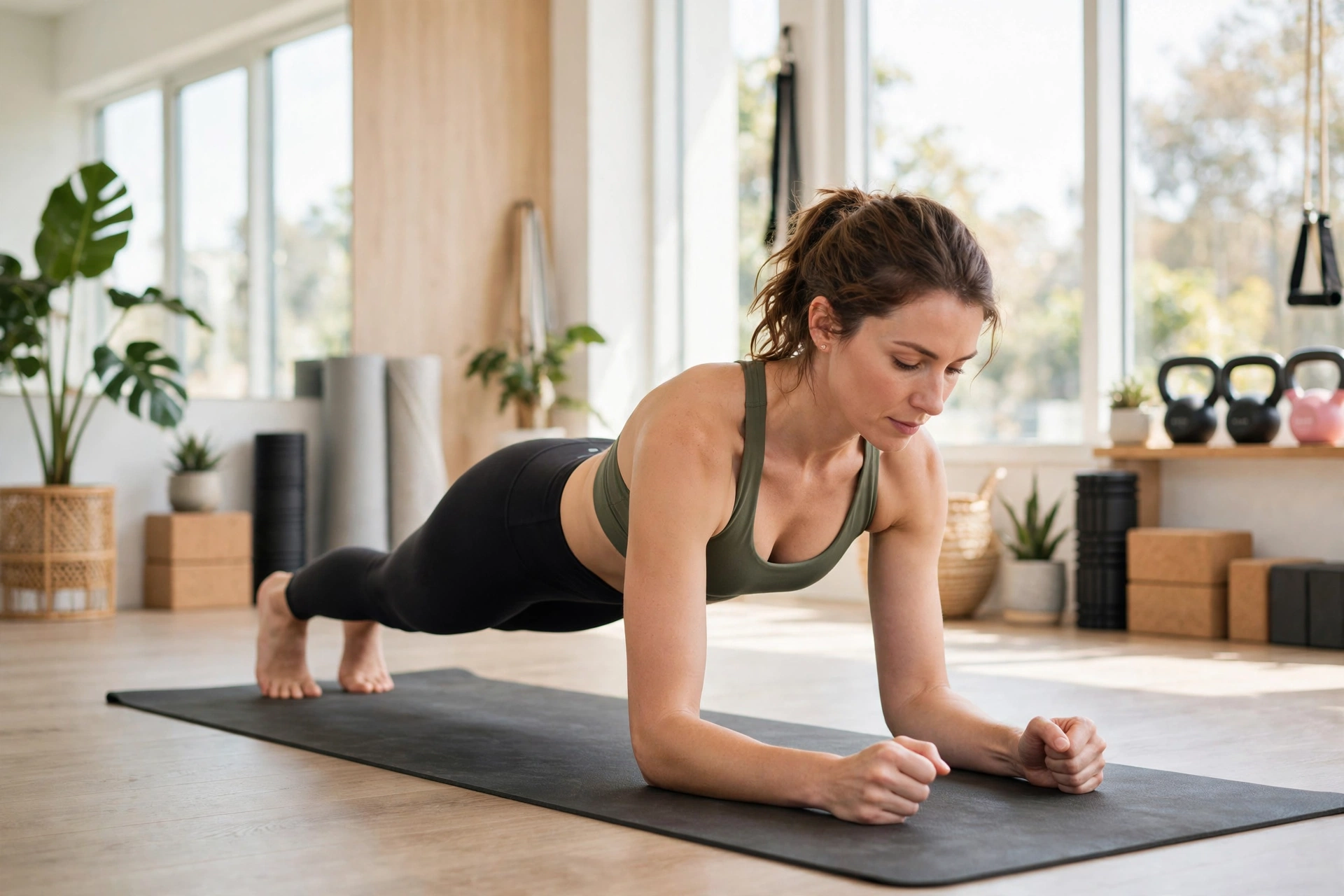
- Core work (planks, dead bugs, bird dogs, Pallof presses) strengthens the deep abdominal wall, improving posture and how your belly sits. Skip endless crunches — they do little for an apron belly.
- Progressive overload: gradually increase weight or reps over time. Muscle is what gives your body shape as fat comes off.
- Train 3 to 5 times per week, covering all major muscle groups.
3. Add Regular Cardio
Cardio accelerates fat loss and improves circulation, which supports skin health. Aim for 150+ minutes of moderate cardio (brisk walking, cycling, swimming) or 75+ minutes of vigorous cardio weekly. Walking is underrated — a daily 45-minute walk is one of the most sustainable fat-loss tools that exists. Swimming is especially good because the water supports your body while giving a full workout.
4. Support Your Skin From the Inside and Out
While no cream melts away an apron belly, supporting skin health maximizes whatever natural tightening is possible:
- Stay hydrated — dehydrated skin is less elastic.
- Eat collagen-supporting nutrients: vitamin C (citrus, bell peppers), zinc, and adequate protein all support collagen production.
- Moisturize daily. Well-hydrated skin looks and feels better, even if creams cannot fundamentally tighten significant loose skin. A consistent routine matters — our guide on how to test perfume helps you exfoliate without overdoing it.
- Consider firming ingredients like retinoids (for body) or caffeine-based creams — they offer modest temporary tightening at best, so keep expectations realistic.
- Protect skin from sun damage, which further degrades elasticity.
5. Improve Posture
Poor posture — slouched shoulders, anterior pelvic tilt — pushes the belly outward and makes an apron belly look worse. Strengthening your glutes, core, and upper back while stretching tight hip flexors can visibly change your silhouette. Many people are surprised how much difference standing tall makes in photos.
6. Try Compression Garments Strategically
High-waisted compression garments, abdominal binders, or shapewear will not reduce an apron belly, but they provide support, improve comfort during exercise, reduce skin-on-skin chafing and rashes underneath the fold, and create a smoother silhouette under clothes. For daily comfort while you work on the underlying causes, they are genuinely useful — just do not expect them to change the tissue itself.
7. Address the Skin Fold Itself
The fold under an apron belly is prone to irritation, rashes, and fungal infections (intertrigo) because moisture gets trapped. Keep the area clean and dry, use antifungal powder if needed, wear breathable fabrics, and see a doctor if you develop persistent redness, odor, or cracking. Managing this is about health and comfort, and it matters regardless of your long-term plan.
Non-Surgical Professional Options
Several in-office treatments claim to tighten skin or reduce fat without surgery. Be realistic about what they deliver:
- Radiofrequency and ultrasound treatments (like Morpheus8, Ultherapy): can produce modest skin tightening over several sessions. Best for mild looseness, not significant apron bellies.
- Cryolipolysis (CoolSculpting): reduces fat in treated areas by about 20 to 25 percent per session. It does not tighten loose skin, so it helps most when fat (not skin) is the main issue.
- Laser treatments: similar story — modest tightening for mild cases.
These treatments are expensive (often thousands of dollars for a course), require multiple sessions, and deliver subtle rather than dramatic results. For significant loose skin, even providers will tell you surgery is the definitive answer. The American Society of Plastic Surgeons offers balanced information on both surgical and non-surgical body contouring options.
Setting Realistic Expectations
Honesty matters here. If your apron belly is primarily loose skin after major weight loss or multiple pregnancies, diet and exercise will improve your health, reduce the fat component, build supportive muscle, and make you feel dramatically better — but they will not make excess skin vanish. That is not failure; it is anatomy. Many people find that reaching a healthy weight, building strength, and caring for their skin gets them to a place where they feel good — and for those who want the skin itself addressed, a surgical consultation is a reasonable next step, not a defeat.
Taking care of your skin as part of the process also helps everything else look its best — a simple habit like knowing how to use body wash properly keeps the skin you are working with healthy.
Frequently Asked Questions
Can exercise alone get rid of apron belly?
Exercise reduces the fat component and builds muscle that improves appearance, but it cannot remove loose skin. Think of it as maximizing everything that is changeable without surgery.
How long does it take to see results?
Fat loss results typically become noticeable in 8 to 12 weeks of consistent effort. Skin retraction, where it happens at all, is slower — give it 6 to 12 months, especially after major weight loss, since skin continues to adapt.
Do waist trainers work?
Waist trainers compress temporarily but do not reduce fat or tighten skin permanently. They can also restrict breathing and weaken core muscles if overused. Compression garments for comfort are fine; waist trainers as a “solution” are not supported by evidence.
Will my skin tighten on its own after weight loss?
It depends on your age, genetics, how much weight you lost, and how quickly. Younger skin with good elasticity after moderate weight loss often retracts significantly over 6 to 18 months. After very large losses, some loose skin typically remains.
The Bottom Line
Getting rid of apron belly without surgery means playing the long game: sustainable fat loss, serious strength training, good nutrition, skin care, and patience. You can meaningfully reduce its appearance and eliminate the discomfort it causes. And if loose skin remains after you have done the work, that is a sign of how far you have come — not a problem you failed to solve. For evidence-based guidance on body contouring options, the American Academy of Dermatology is a solid resource.



