
How to Thin Out Nail Polish: Save Your Favorite Bottle
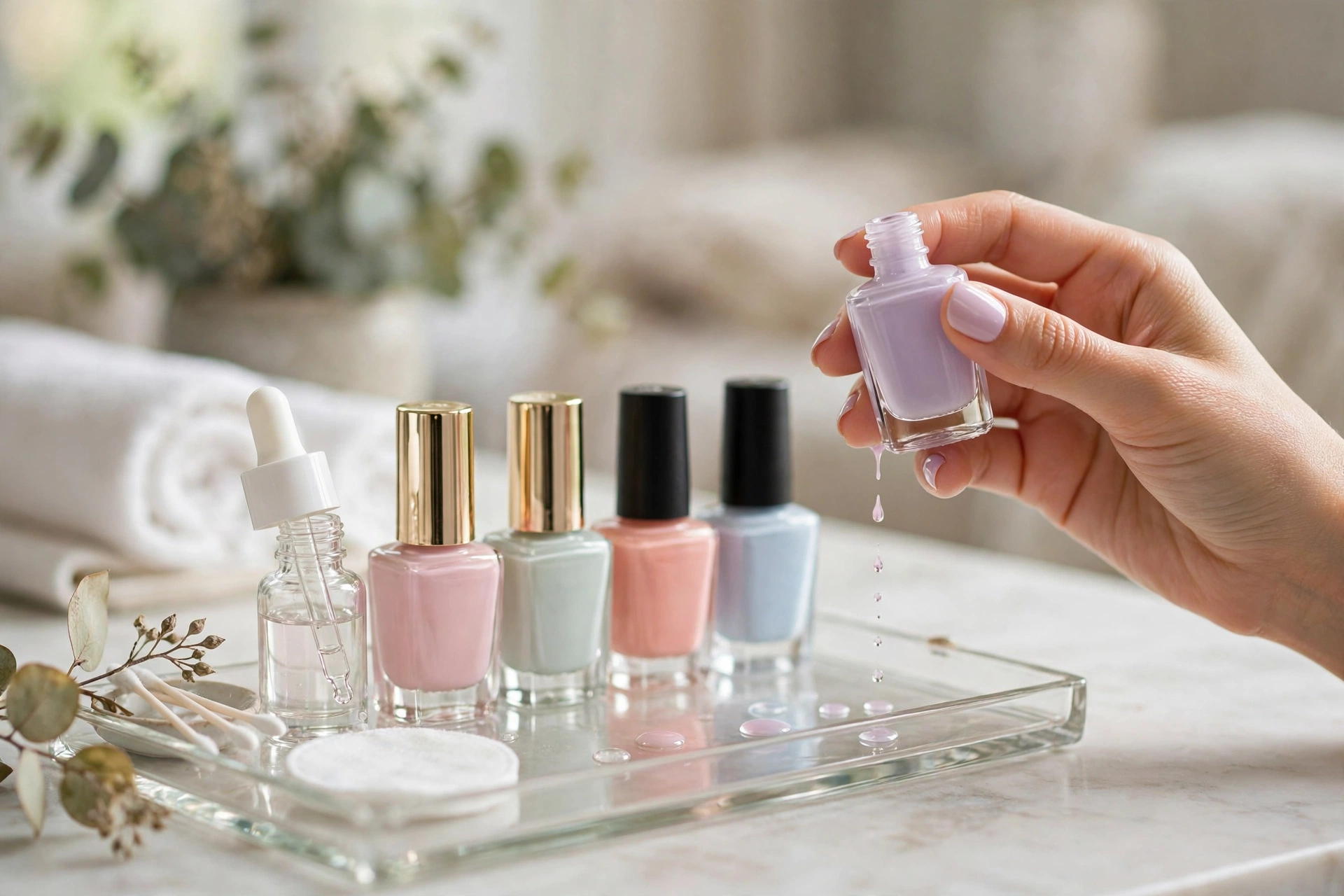
Learning how to thin out nail polish can save your favorite bottle from the trash. Nail polish naturally thickens over time as solvents evaporate every time you open the bottle. Thick, goopy polish applies streaky, takes forever to dry, and bubbles — but in most cases, it is completely salvageable. This guide covers the right way to thin polish, what to avoid, and when to accept that a bottle is done.
Why Nail Polish Gets Thick
Nail polish is a suspension of pigments and resins in volatile solvents (typically butyl acetate and ethyl acetate). Every time you open the bottle, some solvent escapes into the air. Over weeks and months, the ratio shifts — less solvent, more solids — and the polish gets thicker. Heat, sunlight, and leaving the cap loose accelerate the process. This is normal chemistry, not a sign of a bad product, and it happens to every brand from drugstore to luxury.
The Right Way: Nail Polish Thinner
The correct product for the job is nail polish thinner — a small bottle of pure solvent designed to restore polish to its original consistency. It is inexpensive (usually a few dollars) and lasts for years since you only need a drop or two at a time.
How to use it
- Add 2 to 3 drops of thinner to the thick polish. Less is more — you can always add another drop.
- Close the bottle tightly and roll it gently between your palms for 30 seconds. Do not shake — shaking creates air bubbles that will transfer to your nails.
- Test the consistency on a nail or a piece of paper. It should flow smoothly off the brush in an even ribbon.
- If still too thick, add one more drop and roll again. Repeat sparingly.
Thinner restores the original solvent balance without changing the polish formula, so color, finish, and wear time stay the same. One bottle of thinner can rescue dozens of polishes.
What NOT to Use
Nail polish remover (acetone or non-acetone)
This is the most common mistake. Nail polish remover seems logical — it is a solvent, after all — but it breaks down the polish formula rather than restoring it. Remover contains ingredients that dissolve polish for removal, and adding them changes the chemistry: color can shift, finish turns dull, and wear time drops dramatically. Your polish may apply okay once, but it will chip within a day. Use proper thinner instead.
Rubbing alcohol
Similar problem — it thins temporarily but disrupts the formula and ruins the finish.
Shaking the bottle vigorously
Shaking does not thin polish; it just introduces air bubbles. Always roll, never shake.
Heating the bottle
Running the bottle under hot water or microwaving it is sometimes suggested online. Heat temporarily lowers viscosity, but it also accelerates solvent evaporation (making the problem worse long-term) and can be dangerous with flammable polish. Skip it.
Prevention: Keep Polish Fresh Longer
- Close the bottle promptly. Do not leave it open while you do all ten nails — open, apply to one hand, close, then reopen for the other.
- Clean the neck with a cotton pad dampened in polish remover before closing. Dried polish on the threads prevents an airtight seal.
- Store upright in a cool, dark place. Heat and light degrade polish faster. A drawer or cabinet beats a sunny bathroom shelf.
- Do not store in the refrigerator. Despite persistent myths, cold storage can cause condensation inside the bottle and does not meaningfully extend life.
- Use thinner preventively. A drop of thinner every few months in frequently used polishes keeps them at ideal consistency.
When to Give Up on a Bottle
Thinner cannot save everything. Toss the polish if:
- It is separated and will not remix — pigment settled into a hard layer at the bottom that rolling will not redistribute.
- It has a stringy, glue-like texture even after thinner — the resins have degraded.
- It smells sharply different from when new — chemical breakdown has occurred.
- It is more than 2 to 3 years old and has been thick for a long time. Old polish also carries a higher risk of bacterial contamination.
- The color has visibly changed in the bottle.
As a rule of thumb, unopened polish lasts about 2 years; opened polish is best within 1 to 2 years. If you are doing your nails regularly, proper nail care makes every manicure look better — and keeping your tools clean matters too, which is why knowing how to clean makeup brushes properly follows the same hygiene principles — learning how to push back cuticles is a simple step that makes polish application cleaner and longer-lasting.
Thinning Different Types of Polish
Regular lacquer
Responds perfectly to standard thinner. The most straightforward case.
Quick-dry and gel-effect polishes
These contain extra resins and can be trickier. Use thinner sparingly — one drop at a time — since over-thinning ruins the plumping effect these formulas are designed for.
Glitter polishes
Glitter polish thickens faster because of the high solid content. Thinner works, but glitter polishes have a naturally shorter lifespan. If the base has gone stringy, it is done.
Breathable/halal polishes
Water-permeable formulas use different solvent systems. Standard thinner may not be compatible — check the brand’s recommendations or use their specific thinner if available.
How Thinner Affects Different Finishes
Not all nail polish finishes respond identically to thinner. Crème finishes are the most forgiving — they return to smooth, even application with just a drop or two. Shimmer and metallic polishes need careful mixing after thinning, since the reflective particles can settle unevenly; roll the bottle a full minute and test on paper first. Matte top coats are the trickiest — over-thinning a matte formula can accidentally turn it satin or glossy, so use half the thinner you normally would and test carefully. Holographic polishes contain delicate pigments that degrade with age regardless of thinning; if your holo has lost its rainbow effect, thinner will fix the texture but not bring back the full holographic punch. When in doubt, thin conservatively and build up — you can always add another drop, but you cannot take thinner back out.
Frequently Asked Questions
Can I use thinner on any brand?
Yes — nail polish thinner is universal. It is just solvent, so it works across brands and formulas (with the breathable-polish exception noted above).
How many drops is too many?
If you have added 6 to 8 drops to a standard 15ml bottle and it is still thick, the polish is probably beyond saving. Over-thinned polish becomes watery, sheer, and chips immediately.
Does thinner expire?
Thinner itself is just solvent in a sealed bottle — it lasts essentially indefinitely. Keep the cap tight so it does not evaporate.
Why does my polish get thick even when I barely use it?
Time and temperature matter more than use. A bottle opened once and stored in a warm bathroom will thicken almost as fast as a heavily used one. Storage conditions are everything.
The Bottom Line
Thinning nail polish is easy when you use the right product: a few drops of proper nail polish thinner, rolled gently, restores smooth application without damaging the formula. Never use polish remover as a substitute, store bottles properly to slow thickening, and know when to let a dead bottle go. A two-dollar bottle of thinner will save you many times its cost in rescued polish. For general guidance on cosmetic product safety, the FDA’s cosmetics information page is a useful reference. For more nail care fundamentals, the American Academy of Dermatology’s nail care tips cover healthy habits that make any manicure look better.



