What Is a Rug Pull and How Do You Spot One Early?
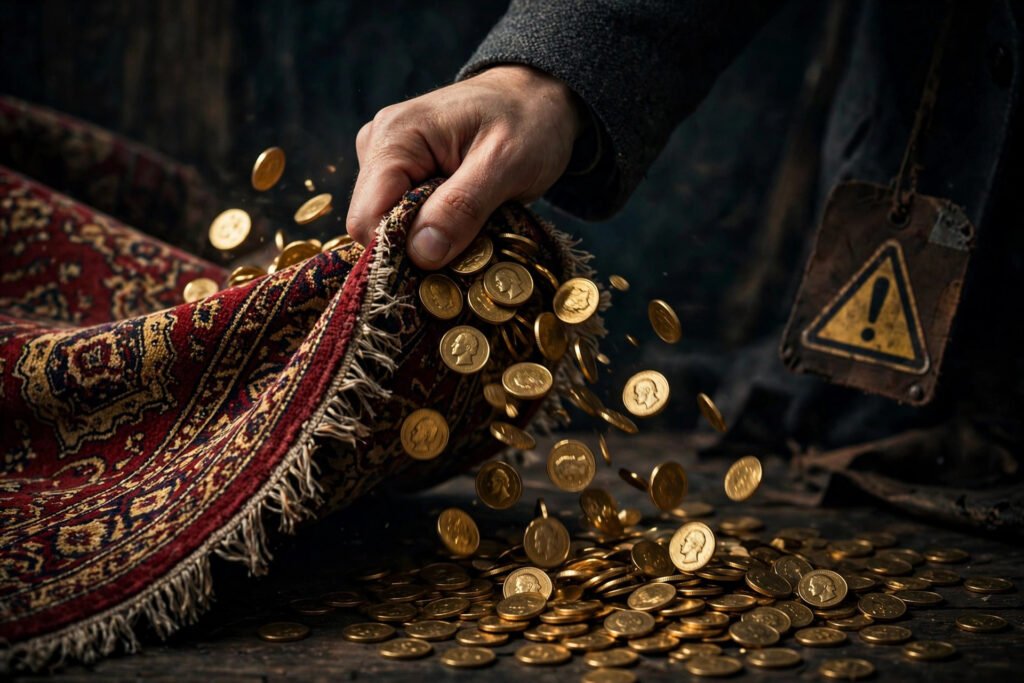
A new token launches. Influencers hype it. The price rockets 500% in a day. Then — in minutes — the price collapses 99%, the developers vanish, and the liquidity is gone. You’ve just witnessed a rug pull: crypto’s most infamous scam, and one that has stolen billions from investors. The good news? Rug pulls follow recognizable patterns, and learning to spot them early is one of the highest-value skills in crypto.
What a rug pull actually is
A rug pull is a scam where crypto developers abandon a project and run off with investors’ funds — “pulling the rug” out from under them. The mechanics vary, but the core is always the same: the people in control take the money and disappear. Common variants:
- Liquidity theft: developers list a token on a decentralized exchange paired with real crypto (like ETH), wait for buyers to pile in, then withdraw all the liquidity — leaving holders with tokens nobody will buy.
- Sell-off dump: developers hold most of the token supply, hype the price up, then sell everything at once, crashing it to zero.
- Malicious contract functions: hidden code lets developers mint unlimited tokens, block selling (honeypot), or drain funds. The contract was a trap from day one.
- Fake projects: no real development at all — just a website, social accounts, and marketing, designed to collect presale or launch funds before disappearing.
Notable examples include Squid Game token (2021), which blocked holders from selling while developers cashed out, and countless smaller tokens that follow the same script weekly. The FBI and SEC both track this fraud category — it’s among the most common crypto crimes reported.
Red flags: how to spot a rug pull early
1. Anonymous or fake team
Legitimate projects have verifiable founders with track records. If the team is anonymous, uses stock photos, or has no LinkedIn/GitHub history — walk away. Anonymity isn’t proof of fraud, but combined with other flags, it’s damning.
2. No audit (or a meaningless one)
Reputable projects get smart contract audits from known firms. No audit on a project holding your money is a hard pass. And verify the audit is real — scammers fake these too. Verify claims independently rather than trusting badges on the project’s own site.
3. Concentrated token ownership
Check the token distribution on a block explorer: if a handful of wallets (especially the deployer wallet) hold most of the supply, they can crash the price at will. Healthy projects have broad distribution and locked team allocations with vesting schedules.
4. Unlocked or developer-controlled liquidity
On DEXs, check whether liquidity is locked (via a reputable locker) and for how long. If developers can withdraw liquidity at any time, they can rug at any time. Short lock periods or no locks are major warnings.
5. Honeypot mechanics
Some scam tokens let you buy but not sell — the contract blocks sales from everyone except the developers. Test with a tiny amount first, or use honeypot-detection tools before buying. If you can’t sell a small test amount, you’ll never sell a large one.
6. Absurd promises and manufactured urgency
“100x guaranteed,” “last chance,” countdown timers, influencer shills paid in tokens — legitimate investments don’t need hype mechanics. As our guide to spotting scams emphasizes, urgency is a manipulation tool.
7. No real product or plagiarized materials
Read the whitepaper (or lack thereof). Copy-pasted documentation, a website thrown together in days, zero working code, and a roadmap of pure promises signal a cash grab, not a project.
8. Fake community and engagement
Bot-filled Telegram/Discord groups, bought followers, and moderators who ban anyone asking hard questions. Real projects tolerate skepticism; scams suppress it.
The pre-investment checklist
Before putting money into any new token, run through this — and be ruthless about it. Every rug pull victim either skipped these checks or saw the red flags and invested anyway:
- Team: doxxed, verifiable, experienced? (If no, stop here.)
- Audit: real audit from a reputable firm? Read the findings, not just the badge.
- Tokenomics: check distribution — broad holders, locked liquidity, vested team tokens.
- Contract: scan for malicious functions (mint, blacklist, trading pauses controlled by one wallet). Tools like Token Sniffer flag common traps.
- Liquidity: locked, for a meaningful duration, by a reputable locker.
- Community: real discussion, critical questions allowed, organic growth.
- Yourself: are you buying because of research or FOMO? Be honest — FOMO is the rug pull’s best friend.
The two-minute version for busy people
If you remember nothing else: anonymous team plus unaudited contract plus unlocked liquidity equals stay away. That single heuristic would have saved victims of the majority of documented rug pulls. Legitimate projects are proud of their teams, pay for audits, and lock their liquidity — because they plan to be around. Scammers optimize for speed: launch fast, hype hard, exit faster. Any pressure to buy right now is itself a signal. When in doubt, wait a month and revisit — real projects will still be there, and scams usually won’t.
What to do if you’re already in one
- Try to exit immediately — sell whatever you can, even at a huge loss. Partial recovery beats total loss.
- Don’t “buy the dip” hoping for recovery. There is no recovery from a rug pull.
- Document everything — transactions, addresses, communications.
- Report it: FBI’s IC3 (ic3.gov), the FTC, and the CFPB. Recovery is unlikely, but reports help track patterns.
- Warn others in communities you trust — with evidence, not just anger.
- Learn the lesson cheaply: most victims either skipped the checklist or knew the flags and ignored them. Make it a rule, not a suggestion.
And zoom out: rug pulls are one reason crypto position sizing matters so much. Our guide to avoiding scams generally covers the universal principles, and how investors lose everything in crypto puts rug pulls in the full risk picture.
The bottom line
A rug pull is developers stealing investors’ funds by abandoning a project — and it’s detectable. Anonymous teams, unaudited contracts, concentrated ownership, unlocked liquidity, honeypot mechanics, and manufactured hype are the warning signs; a disciplined pre-investment checklist catches most of them. The investors who get rugged are rarely unlucky — they’re usually rushed. Slow down, verify everything, never invest more than you can lose, and remember: in crypto, if it looks too good to be true, it’s not just probably a scam — it’s probably a rug pull.
Frequently Asked Questions
What is a rug pull in crypto?
A scam where project developers abandon the project and steal investors’ funds — typically by withdrawing all trading liquidity, dumping their token holdings, or exploiting malicious smart contract functions, then disappearing.
How common are rug pulls?
Extremely common among new, small tokens — they happen weekly. They’re rare among established, major cryptocurrencies with verifiable teams and audited code, which is why beginners should stick to those.
Can you recover money from a rug pull?
Almost never. Crypto transactions are irreversible and scammers launder funds quickly. Report to the FBI’s IC3 and FTC, but treat the money as gone and focus on prevention.
What’s a honeypot token?
A scam token whose smart contract allows buying but blocks selling for everyone except the scammers. Always test-sell a tiny amount before any meaningful purchase of an unfamiliar token.
Are all new crypto projects rug pulls?
No — legitimate new projects launch regularly. But the base rate of fraud among hyped micro-cap tokens is high enough that the checklist in this article should be non-negotiable before investing.