Selling Your Car Privately: How to Get the Best Price
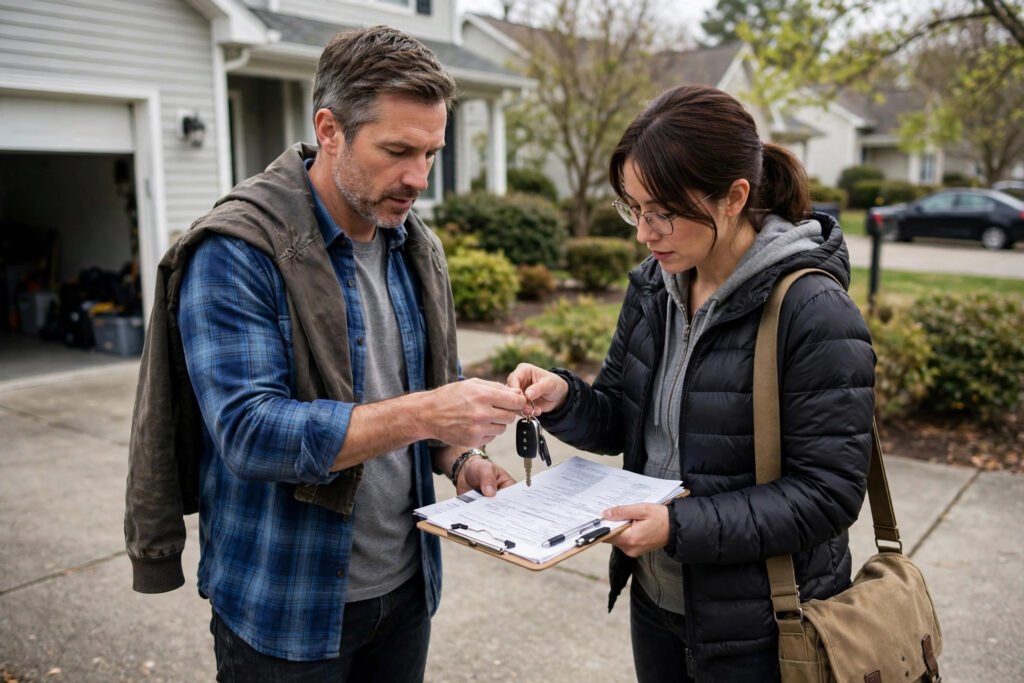
Trading in your car is convenient — and it costs you, typically $2,000–$4,000 versus a private sale. Dealers buy at wholesale and sell at retail; that spread is their profit, and it’s your money if you sell privately. But private selling intimidates most Americans: pricing it right, writing the ad, handling strangers, managing the paperwork and payment safely. Done well, it’s a straightforward process that puts thousands extra in your pocket. Here’s exactly how to sell your car privately for the best price in the U.S. — from valuation to the moment the title transfers.
Step 1: Price It Like a Professional
Pricing is where private sellers leave the most money on the table — usually by guessing. Get your number from data: check Kelley Blue Book’s private party values for your exact year, make, model, trim, mileage, and condition (be brutally honest about condition — “excellent” means showroom, and yours probably isn’t). Cross-reference with Edmunds and actual asking prices for comparable cars within 50 miles on major listing sites. Your price should sit in the upper-middle of the private-party range if your car is genuinely above average — documented maintenance, new tires, clean history — and squarely in the middle if it’s average.
Price psychology matters: $14,900 attracts more views than $15,000 (the left-digit effect is real), and round numbers signal “I guessed” while precise numbers ($14,750) signal “I researched.” Build in 5–8% negotiation room above your minimum acceptable price — buyers expect to haggle, and a seller who won’t budge at all often loses buyers who need the ritual discount to feel good. Set your walk-away floor in advance and write it down; the number you decide calmly at home beats the number you accept under pressure in your driveway. And time your sale: convertibles sell best in spring, 4WD vehicles in fall, and tax-refund season (February–April) brings the year’s most motivated buyers with cash in hand.
Step 2: Prepare the Car (The $200 That Earns $2,000)
Buyers pay for perception, and perception is cheap to manufacture. Start with a professional detail ($150–$250) — interior shampoo, exterior wash and wax, engine bay wipe-down. For stained interiors, our guide to removing old carpet stains can save you a professional detailing fee. A detailed car photographs better, smells better, and signals “this owner maintained everything” in a way words can’t. Fix the cheap, visible stuff: burnt-out bulbs, worn wiper blades, missing trim pieces, the check engine light (diagnose and fix it — a lit warning light kills buyer confidence instantly and invites lowball offers).
Gather your documentation into a folder: maintenance records (the single most persuasive selling tool — a thick service history justifies premium pricing), the title (if you have a lien, contact your lender now about the payoff process — it adds steps but is entirely manageable), emissions/safety inspection certificates if your state requires them, and a vehicle history report you pull yourself (offering a clean Carfax upfront eliminates the buyer’s biggest fear and speeds decisions). Address cosmetic issues proportionally: a $300 bumper touch-up on a $20,000 car is worth it; a $2,000 paint job on a $6,000 car is not. The goal is “obviously cared for,” not “better than new.” This preparation discipline mirrors what smart sellers do in any market — just as factory resetting your phone before selling it maximizes its resale value, presenting a clean, documented car maximizes yours.
Step 3: Write the Ad and Take Photos That Sell
Your ad competes with dozens of others — most of them terrible, which is your opportunity. Photos first: shoot in daylight (golden hour is ideal), in a clean uncluttered location, with 20–30 photos covering every angle — exterior all four corners, interior front and back, dashboard (showing mileage), trunk, engine bay, tires (tread close-up), and any flaws disclosed honestly. Bad photos (dark, blurry, 3 pictures total) are the number one reason good cars get ignored; great photos are free and transformative.
The ad copy formula: year/make/model/trim + mileage + key features + maintenance highlights + reason for selling + honest condition notes + price + contact preference. Lead with differentiators (“One owner, dealer serviced every 5k miles, new tires and brakes in 2025”) not generics (“runs great!”). Disclose flaws plainly — “small dent on rear bumper, pictured” builds trust and filters out buyers who’d walk over it anyway. List on multiple platforms: Facebook Marketplace (largest audience, free), Craigslist (still effective, beware scammers), Autotrader/Cars.com (serious buyers, small fee), and enthusiast forums for specialty cars. Refresh or repost weekly to stay visible. And never put your home address in the ad — meet at a public location or the buyer’s bank.
Step 4: Handle Buyers, Test Drives, and Negotiation
Screen before you meet: ask buyers if they have financing arranged or cash ready, and decline the classic time-wasters (lowball texts from flippers, “what’s your lowest price” without seeing the car — respond “come see it and we’ll talk”). For test drives, always go along — ride passenger, bring a friend if possible, and hold the buyer’s driver’s license during the drive (photograph it first). Plan a 15–20 minute route mixing city and highway. Serious buyers often want a pre-purchase inspection at their mechanic ($150–$250, their cost) — welcome it; it signals seriousness and rarely kills deals on well-prepared cars.
Negotiate from your researched position: when they offer low, counter with specifics (“KBB private party for this condition is $X, and I’ve got new tires and full records — I can do $Y”). The most powerful phrase in private sales is “I have someone else coming to see it tomorrow” — but only say it if true. Know your state’s rules on “as-is” sales (most private sales are as-is by default, but some states imply warranties). And trust your instincts on buyers: the rushed buyer pressuring you to decide tonight, the one who won’t show ID, the one proposing complicated payment schemes — walk away. There are always more buyers; there’s only one you getting scammed.
Step 5: Payment and Paperwork (Where Scams Live)
This is the highest-risk stage — handle it with paranoia. The only safe payment methods: cash (verify bills at your bank), cashier’s check verified by calling the issuing bank (not the number on the check — look it up independently), or wire transfer / meeting at the buyer’s bank where funds transfer visibly. Never accept personal checks, never accept overpayment with a refund request (the classic scam — the check bounces after you’ve sent the “difference”), never accept payment plans, and never release the car before funds are confirmed. Meet at the buyer’s or your bank during business hours — the bank verifies funds, provides a notary, and offers security cameras.
Paperwork: sign over the title correctly (every state has specific fields — mistakes void transfers), complete a bill of sale with both parties’ information, sale price, VIN, mileage, date, and “as-is” language (your DMV website has templates), and file the release of liability / notice of transfer with your DMV immediately — this protects you from tickets, tolls, and liability incurred by the new owner. Remove your license plates (required in most states — the buyer gets their own), cancel your insurance only after the transfer is filed, and remove personal items and paired phones from the infotainment system. Keep copies of everything for your tax records. Edmunds’ private seller guides provide state-specific paperwork checklists.
The Bottom Line
Selling privately for the best price means pricing from real data (not guesses), investing $200 in detailing and documentation, photographing like a professional, screening buyers and controlling test drives, negotiating from your researched floor, and handling payment with bank-level paranoia — cash, verified cashier’s check, or bank-to-bank transfer, never anything else. The $2,000–$4,000 premium over trade-in is your payment for a few weekends of work. For most sellers, it’s the highest hourly rate they’ll earn all year.
Frequently Asked Questions
How much more can I get selling privately vs. trading in?
Typically $2,000–$4,000 more than trade-in value, sometimes more on desirable models. Dealers buy at wholesale; private buyers pay retail. The spread is your compensation for the extra effort.
What paperwork do I need to sell my car privately?
The vehicle title, a bill of sale, your state’s release of liability / transfer notice, and a valid ID. If there’s a lien, coordinate payoff with your lender. Check your DMV website for state-specific requirements.
How do I avoid scams when selling my car?
Accept only cash, verified cashier’s checks, or bank wire transfers — never personal checks, overpayments, or payment plans. Meet at a bank during business hours, verify funds before signing anything, and file the DMV transfer notice immediately.
Should I fix everything before selling?
Fix cheap, visible issues (bulbs, wipers, warning lights, detailing) that disproportionately affect perception. Skip expensive repairs that won’t return their cost — disclose them honestly and price accordingly instead.