
How Long Does Dermaplaning Last? Real Timelines and Tips
Dermaplaning has become one of the most popular skin treatments in America, promising instantly smoother, brighter skin with zero downtime. But before you book a session or try it at home, you probably want to know one thing: how long does dermaplaning last?
The short answer is that most people enjoy the results for about 3 to 4 weeks. But the full answer depends on your skin, your hair growth cycle, and how well you take care of your skin afterward. Here is everything you need to know.
What Dermaplaning Actually Does
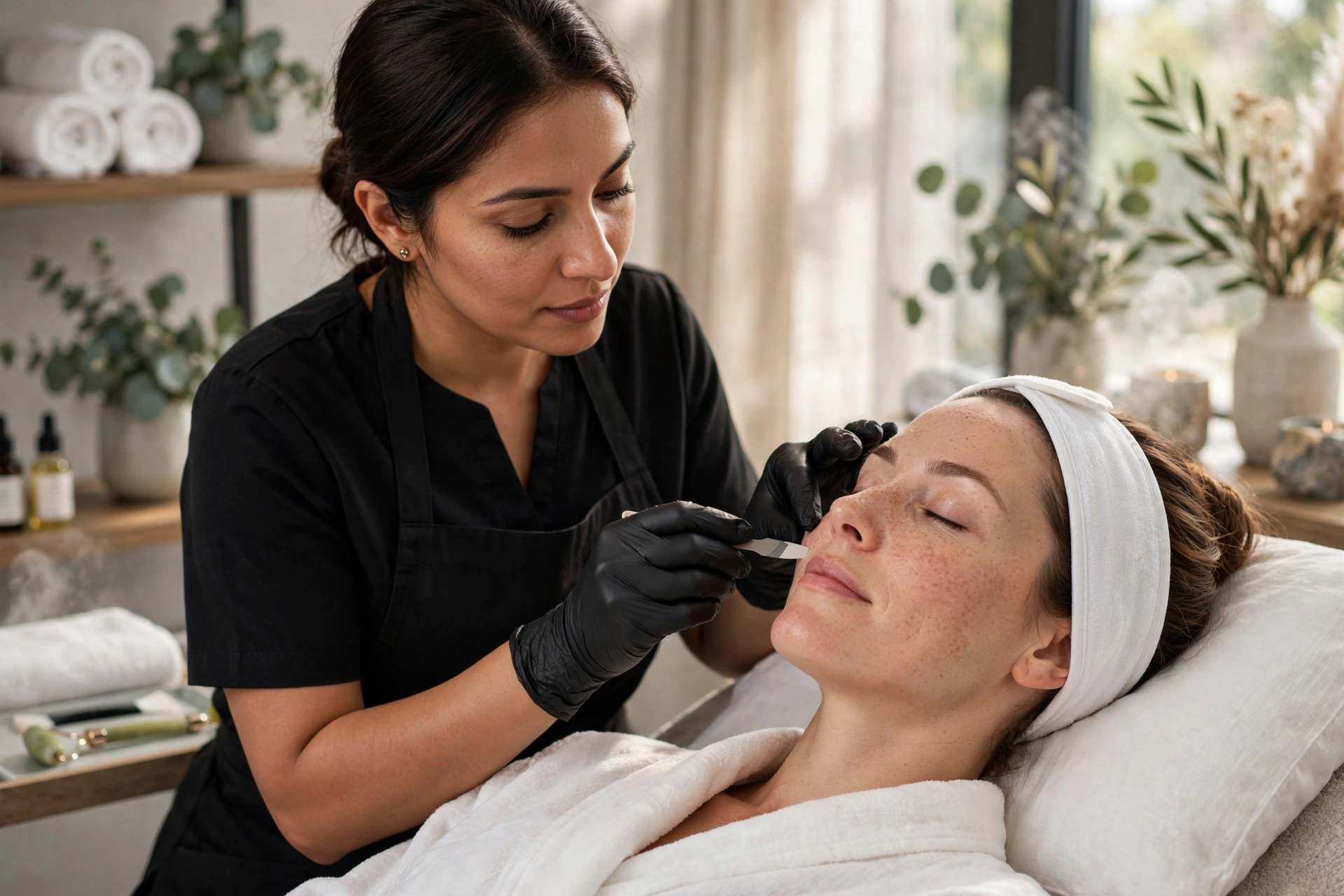
Dermaplaning is a manual exfoliation treatment. A trained professional uses a sterile surgical blade to gently scrape away dead skin cells and fine vellus hair (peach fuzz) from the surface of the face. It sounds intense, but when done correctly it is painless and takes about 30 minutes.
The treatment instantly removes the dull outer layer of skin, which is why your face looks brighter the moment you walk out. It also removes peach fuzz, which allows makeup to sit more smoothly and helps skincare products absorb better.
How Long Does Dermaplaning Last? The Honest Answer
For most people, dermaplaning results last 3 to 4 weeks. That is roughly one full skin cell turnover cycle, which means it takes about that long for a new layer of dead skin cells to build back up on the surface.
The peach fuzz does not grow back thicker or darker, despite the persistent myth. It grows back at its normal rate, usually within 3 to 4 weeks as well, and feels the same as before. Some people notice their results fading closer to the 3-week mark, while others with slower cell turnover or drier skin types may enjoy smooth skin for up to 5 weeks.
Factors That Affect How Long Results Last
Your Skin Type
Oily skin tends to accumulate dead cells and buildup faster, so results may fade a little sooner. Dry or normal skin often holds onto that smooth feeling longer. If your skin is very oily, you may notice the glow fading around week 3, while drier skin types might stretch it to week 5.
Your Hair Growth Cycle
Everyone’s vellus hair grows at a different rate. If your peach fuzz grows quickly, you may feel stubble returning sooner. This is completely normal and has nothing to do with the treatment making hair grow back thicker.
Your Skincare Routine
What you do after dermaplaning matters enormously. A good routine with gentle exfoliation between sessions helps maintain the smoothness. Poor habits, like skipping sunscreen or using harsh products, can make results fade faster and even cause irritation.
Sun Exposure
Freshly exfoliated skin is more vulnerable to UV damage. Unprotected sun exposure can undo the brightness dermaplaning gave you and even cause dark spots. Daily sunscreen is non-negotiable after this treatment.
What Happens When Results Fade
Nothing dramatic. Your skin simply returns to its normal state as dead cells rebuild and peach fuzz grows back. There is no rebound effect, no sudden breakout wave, and no dependence on the treatment. You can simply enjoy your skin as it is until you decide to book another session.
Some people do notice that their regular exfoliating products work better after dermaplaning because the barrier of dead skin is gone. That benefit fades gradually too, which is why many people schedule sessions monthly.
How Often Should You Get Dermaplaning?
Most dermatologists and estheticians recommend dermaplaning once every 4 to 6 weeks. This spacing lets your skin fully recover and complete a natural cell turnover cycle between sessions. Going more often does not give better results; it just increases the risk of irritation, sensitivity, and damage to your skin barrier.
If you have very sensitive skin, rosacea, or active acne, you may need longer gaps or may not be a good candidate at all. Check with a dermatologist first. And if you are dealing with active breakouts, learn how long to keep a pimple patch on so you can treat pimples safely without disrupting exfoliated skin.
How to Make Dermaplaning Results Last Longer
Moisturize Immediately
After dermaplaning, your skin drinks up moisture. Use a gentle, fragrance-free moisturizer right away to support your skin barrier. Hyaluronic acid serums work well because they draw water into the freshly exfoliated skin.
Wear Sunscreen Every Single Day
This is the single most important step. Use a broad-spectrum SPF 30 or higher every morning, even on cloudy days. Sun protection preserves the brightness and prevents the hyperpigmentation that exfoliated skin is prone to. The American Academy of Dermatology’s skincare advice emphasizes daily sunscreen as the foundation of any routine.
Avoid Harsh Actives for a Few Days
Skip retinoids, strong AHAs and BHAs, and benzoyl peroxide for 3 to 5 days after treatment. Your skin barrier needs time to settle. Reintroduce active ingredients slowly, starting with lower strengths.
Use Gentle Exfoliation Between Sessions
A mild chemical exfoliant used once or twice a week can help maintain smoothness between dermaplaning sessions. Lactic acid and polyhydroxy acids are good gentle options. Do not combine heavy physical scrubs with recent dermaplaning, as that is a recipe for irritation.
Keep Up With Hydration
Drinking water and using hydrating skincare both contribute to that plump, glowing look. Dehydrated skin looks dull faster, which shortens the visible benefit of the treatment.
At-Home Dermaplaning vs. Professional Treatment
At-home dermaplaning tools are widely sold, but they are not the same as a professional treatment. Professional blades are surgical-grade and sharper, the technique is more thorough, and the environment is sterile. At-home tools can still give decent results, but they require careful technique to avoid nicks and irritation.
Professional sessions typically cost 75 to 200 dollars, while at-home tools cost a few dollars each. If you choose the at-home route, use a fresh blade every time, hold skin taut, and use light downward strokes. Never dermaplane over active acne, rashes, or broken skin. For a full comparison of risks and technique, see Healthline’s guide to dermaplaning benefits and risks.
Who Should Skip Dermaplaning
Dermaplaning is not for everyone. Skip it if you have active cystic acne, cold sores, eczema flare-ups, psoriasis, or very sensitive skin that reacts to everything. People with darker skin tones can safely get dermaplaning, but should be extra careful with sun protection afterward to avoid post-inflammatory hyperpigmentation.
If you are unsure whether your skin can handle it, a dermatologist consultation is worth the visit. Simple everyday habits that keep your skin looking great can also get you surprisingly far without any treatment at all.
Frequently Asked Questions
Will dermaplaning make my facial hair grow back thicker?
No. This is the most common myth about dermaplaning, and it is not true. Dermaplaning only removes fine vellus hair at the surface. It does not change the hair follicle, so hair grows back at the same thickness, color, and speed as before. If it feels stubbly as it grows in, that is just the blunt tip of the cut hair, and it softens within a few days.
Can I wear makeup right after dermaplaning?
It is best to wait at least 24 hours before applying makeup. Freshly exfoliated skin has a temporarily weakened barrier, and makeup products, especially those with fragrance or heavy actives, can cause irritation. When you do resume makeup, you will notice it applies more smoothly than ever.
Is dermaplaning safe during pregnancy?
Dermaplaning itself is generally considered safe during pregnancy because it is a purely mechanical treatment with no chemicals. However, pregnancy hormones can make skin more sensitive and reactive, so let your esthetician know you are pregnant and ask them to use an extra-gentle touch.
Does dermaplaning hurt?
Most people describe it as painless. You feel a light scraping sensation, like a butter knife gliding over the skin, but no pain. The treatment usually takes 20 to 30 minutes, and there is no numbing required. Any mild redness afterward fades within a few hours.
The Bottom Line
So, how long does dermaplaning last? Expect about 3 to 4 weeks of noticeably smoother, brighter skin, with some people stretching it to 5 weeks. Monthly sessions keep results consistent, and good aftercare with sunscreen and gentle hydration makes each session count for more. Treat it as part of a steady routine rather than a one-time fix, and your skin will thank you.



